Checking into a hotel usually means one thing: you finally get to relax.
After a long flight, road trip, business meeting, or day of sightseeing, there is something comforting about closing the hotel room door, dropping your bags, taking a shower, and getting into bed.
But before you turn off the lights, take a few minutes to look around.
You don't need to be paranoid, and you certainly don't need to assume that something is wrong with the room. Most hotel stays are completely uneventful. Still, a few simple checks can improve your privacy, security, and comfort—and they take only a couple of minutes.
Here are three things worth checking before you go to sleep in a hotel room.

1. Check the Door, Lock, and Secondary Security Features
The first thing you should check is surprisingly simple:
Make sure your door is actually secured.
Hotel doors are designed to lock automatically when they close, but it's still worth testing yours.
After entering the room, close the door firmly and try the handle from inside.
Then check whether the room has additional security features, such as:
-
A deadbolt
-
Security latch
-
Door chain
-
Swing bar
-
Secondary locking mechanism
If your room has one, make sure you understand how it works.
Why does this matter?
A hotel room may feel private because you have a key card, but several people may have legitimate access to hotel rooms, including housekeeping staff, maintenance workers, managers, and other authorized personnel.
That doesn't mean these people are likely to enter your room improperly. Hotels have procedures designed to protect guests.
Still, using the available locking mechanism is a simple additional layer of protection.
Don't forget connecting doors
Some hotel rooms have connecting doors that allow two neighboring rooms to be joined.
If your room has one, check that it is fully closed and locked from your side.
You don't need to assume that the person in the neighboring room can simply open it. Connecting doors are normally designed with locks on both sides.
But checking it takes seconds and gives you peace of mind.
What about the balcony or patio door?
If your room has a balcony, terrace, or exterior access door, check that it is completely closed and secured.
This is particularly important if you're staying on a lower floor or in a location where another person could potentially reach the balcony.
Don't leave exterior doors open while sleeping simply because the weather feels pleasant.
2. Check the Room for Anything That Could Affect Your Safety or Sleep
Once the door is secure, take a quick look around the room.
This isn't about searching every corner.
Instead, look for obvious issues that could become inconvenient—or potentially dangerous—during the night.
Check the smoke detector
Look at the ceiling and identify the smoke detector.
Don't remove it, cover it, or tamper with it.
You're simply confirming that there is a functioning detector where you would expect one.
If you notice a damaged detector, missing device, unusual warning light, or anything that appears unsafe, contact hotel staff.
Locate the fire exit information
Most hotels provide emergency information inside the room or near the door.
Take a few seconds to identify:
-
Your floor
-
The nearest emergency exit
-
The location of the stairs
-
The route you would take if the elevators weren't available
You may never need this information.
But if there is an emergency at 3 a.m., you'll be much better off knowing where to go before you're trying to figure it out in darkness, smoke, or confusion.
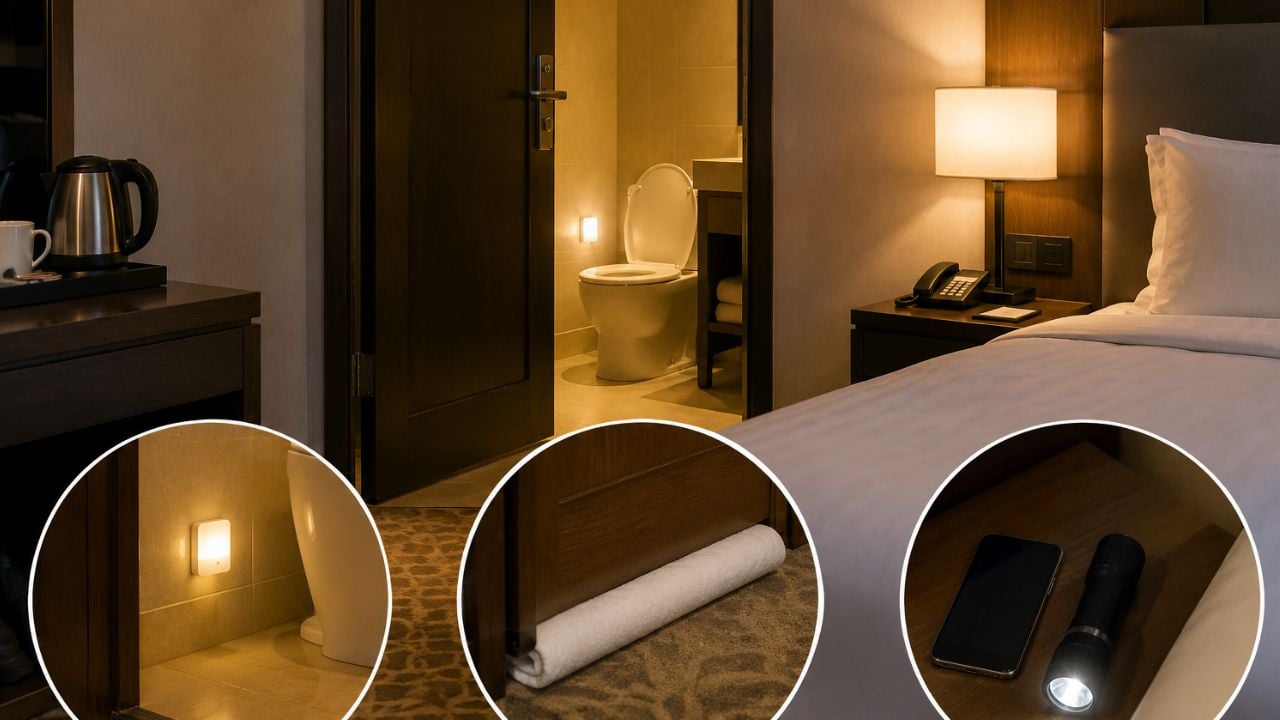
Find the flashlight or emergency lighting
Many hotels have emergency lighting systems, while some rooms may provide a flashlight or similar equipment.
Know where your phone is, too.
If you wake up because of an alarm or power outage, you don't want to spend several minutes searching through luggage for a light source.
Look Under the Bed—But Keep It Practical
This is one of the most common pieces of hotel-safety advice online:
“Always check under the bed before sleeping.”
There is nothing wrong with taking a quick look if it makes you feel more comfortable.
But you don't need to turn it into a dramatic investigation.
Look for obvious problems such as:
-
Personal belongings left behind
-
Trash
-
Items that could cause someone to trip
-
Maintenance problems
-
Anything obviously out of place
If you discover something genuinely concerning, don't confront anyone or investigate further yourself.
Step out of the room if appropriate and contact hotel staff.
The same principle applies to closets, bathrooms, and other areas.
A quick visual check is reasonable.
A lengthy search based on frightening stories you've seen online usually isn't necessary.
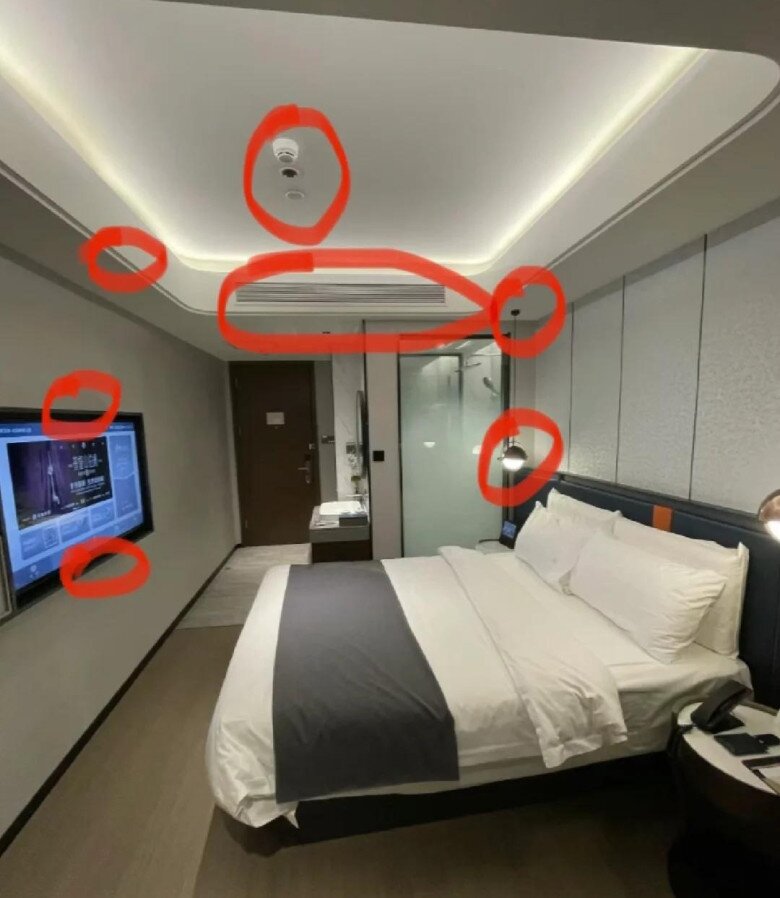
3. Check the Windows, Curtains, and Your Privacy
The third check is about something many travelers forget until it's too late:
privacy.
Hotel rooms can have large windows, glass doors, balconies, and bathrooms with windows.
Before going to bed, close the curtains or blinds as needed.
Then take a quick look at the room from the perspective of the window.
Could someone outside easily see inside?
This is particularly important at night because interior lights can make it surprisingly easy for people outside to see into a room.
Check the curtains properly
Many hotel curtains have two layers:
-
A decorative or blackout curtain
-
A lighter privacy curtain
Make sure they overlap properly if you want complete privacy.
Some curtains can also drift apart during the night because of air conditioning or airflow.
If necessary, close them fully and make sure there aren't large gaps.
Don't forget the bathroom
If the bathroom has a window, make sure the blind or curtain is positioned appropriately.
This is a small detail, but it's exactly the kind of thing people may overlook when they're tired.
What About Hotel Room Cameras?
This topic has generated enormous amounts of misinformation online.
You may have seen social media videos telling travelers to search every hotel room for hidden cameras or use complicated phone-camera tricks to find them.
Some of those methods are unreliable.
For example, simply pointing your smartphone camera around a dark room does not provide a dependable way to detect every hidden camera.
Likewise, random electronic devices aren't automatically surveillance equipment.
If you have a legitimate reason to suspect unauthorized recording, don't dismantle fixtures or start touching electrical equipment.
Instead, document anything genuinely suspicious from a safe position and contact hotel management or appropriate authorities.
The important distinction is between reasonable privacy awareness and unnecessary fear.
Don't Ignore Strange Noises—But Don't Panic Either
Hotels are noisy environments.
You might hear:
-
Doors closing
-
Elevators moving
-
Plumbing
-
Air-conditioning systems
-
Footsteps
-
People talking in hallways
-
Traffic outside
-
Ice machines
-
Cleaning equipment
A strange noise doesn't automatically mean something is wrong.
However, if you hear repeated sounds suggesting that someone is attempting to enter your room, don't open the door just to investigate.
Keep the door locked and contact the front desk or hotel security.
If you believe you're facing an immediate threat, contact emergency services.
What You Should Do If Someone Knocks on Your Door
This is another simple rule worth remembering:
You don't have to open the door just because someone knocks.
If you're not expecting a visitor, look through the peephole if one is available.
If someone claims to be hotel staff, you can call the front desk using the hotel's official contact information and verify the reason for the visit.
You can say something as simple as:
“Someone is at my door claiming to be hotel staff. Could you confirm who they are and why they need access?”
A legitimate employee should not object to reasonable verification.
And if something feels wrong, don't open the door.
Keep Your Phone and Important Items Within Reach
Before sleeping, put your phone somewhere you can easily reach it.
This sounds obvious, but travelers sometimes leave their phone charging across the room.
Having it nearby means you can quickly:
-
Call the front desk
-
Contact emergency services
-
Use it as a flashlight
-
Check emergency information
-
Communicate with someone if needed
If you have important medication, identification, or other essential items, keep them somewhere accessible rather than buried inside your luggage.
A Few Extra Checks That Take Less Than a Minute
The three main checks—door security, room safety, and privacy—are the most useful.
But a few additional habits can make your stay more comfortable.
Check the temperature
Hotel rooms can become surprisingly cold or warm overnight.
Adjust the thermostat before sleeping rather than waking up uncomfortable several hours later.
Keep walkways clear
Don't leave shoes, bags, chargers, or luggage directly beside the bed where you could trip over them in darkness.
Know where the bathroom light is
If you wake up at night, you don't want to stumble around searching for the switch.
Keep valuables out of sight
Don't leave passports, cash, expensive electronics, or jewelry sitting openly near windows or doors.
A hotel room isn't the place to advertise what you have.
What You Shouldn't Do
Hotel safety doesn't require extreme behavior.
In fact, some popular “hotel safety hacks” online can create new problems.
Don't:
-
Tamper with smoke detectors
-
Disable security systems
-
Block emergency exits
-
Use dangerous homemade door barricades
-
Tamper with electrical equipment
-
Crawl into inaccessible spaces
-
Confront strangers
-
Accuse hotel employees without evidence
If something appears genuinely unsafe, the best response is usually to contact hotel management and ask for assistance or a different room.
What If You Don't Feel Comfortable in the Room?
Trusting your judgment doesn't mean assuming the worst.
Maybe the room has a broken lock.
Maybe the window doesn't close properly.
Maybe there's an unexplained maintenance issue.
Maybe you simply feel uncomfortable for a reason you can't quite articulate.
You are allowed to ask for another room.
If you notice something objectively concerning, take a photo if it's safe to do so and explain the issue to hotel staff.
A reputable hotel should have procedures for dealing with maintenance and safety concerns.
A Two-Minute Routine Before Bed
If you want to make this incredibly simple, use this routine every time you stay somewhere unfamiliar.
First: Secure the room
Lock the main door, use the deadbolt or secondary lock if available, and check connecting and exterior doors.
Second: Scan the room
Identify the smoke detector, emergency exit information, and any obvious hazards.
Third: Protect your privacy
Close curtains and blinds, check windows, and make sure bathroom privacy features are positioned correctly.
Then put your phone somewhere accessible, clear the floor around the bed, and relax.
That's it.
You don't need to spend an hour inspecting your hotel room.
The Real Purpose of These Checks
The point isn't to make you afraid of hotels.
Quite the opposite.
A simple routine can help you stop worrying and start relaxing.
When you know the door is secured, the room is reasonably safe, and your privacy is protected, you can put your phone down and enjoy your night.
Most hotel stays are completely ordinary.
There is no hidden danger waiting behind every curtain, under every bed, or outside every window.
But unfamiliar environments deserve a little awareness.
And two or three minutes of preparation can be worthwhile.
Final Thoughts
A hotel room may feel like a temporary home, but it's still an unfamiliar environment.
Before you turn off the lights, take a moment to check three things:
Secure the door.
Check the room for obvious safety issues.
Protect your privacy by securing windows and curtains.
Then keep your phone nearby, know where the emergency exit is, and contact hotel staff if something genuinely concerns you.
These aren't complicated precautions, and they don't require paranoia.
They're simply good habits when you're sleeping somewhere unfamiliar.
Because the best hotel night isn't the one where you spend hours worrying about everything that could go wrong.
It's the one where you take a few sensible precautions, close the curtains, lock the door, turn off the light—and finally get some sleep.