The butterfly is not only helpful for parents.
It can also help healthcare professionals.
A NICU can be a busy environment.
Different nurses, doctors, specialists, therapists, and support staff may interact with the same family.
A small visual symbol can provide important context.
It can remind staff to choose their words carefully.
For example, a nurse who sees the butterfly may understand that asking casually about “the other twin” could be distressing.
Another healthcare worker may recognize that the family may be grieving even while caring for a surviving newborn.
That kind of awareness can make a significant difference.
Grief Does Not Follow a Schedule
One misconception about grief is that it follows a predictable timeline.
It does not.
A parent may seem strong one day and overwhelmed the next.
They may laugh.
They may cry.
They may feel numb.
They may experience guilt.
They may feel angry.
They may feel grateful.
They may experience several of these emotions within the same hour.
None of this necessarily means they are “moving backward.”
Grief can change shape over time without completely disappearing.
Certain moments can bring it back unexpectedly:
-
A birthday
-
A holiday
-
A sibling's milestone
-
A hospital visit
-
A photograph
-
A song
-
A pregnancy announcement
-
A child's birthday
-
Seeing twins together
-
Returning to a place associated with the pregnancy
The butterfly can therefore become more than a hospital symbol.
For some families, it can become part of how they remember their child.
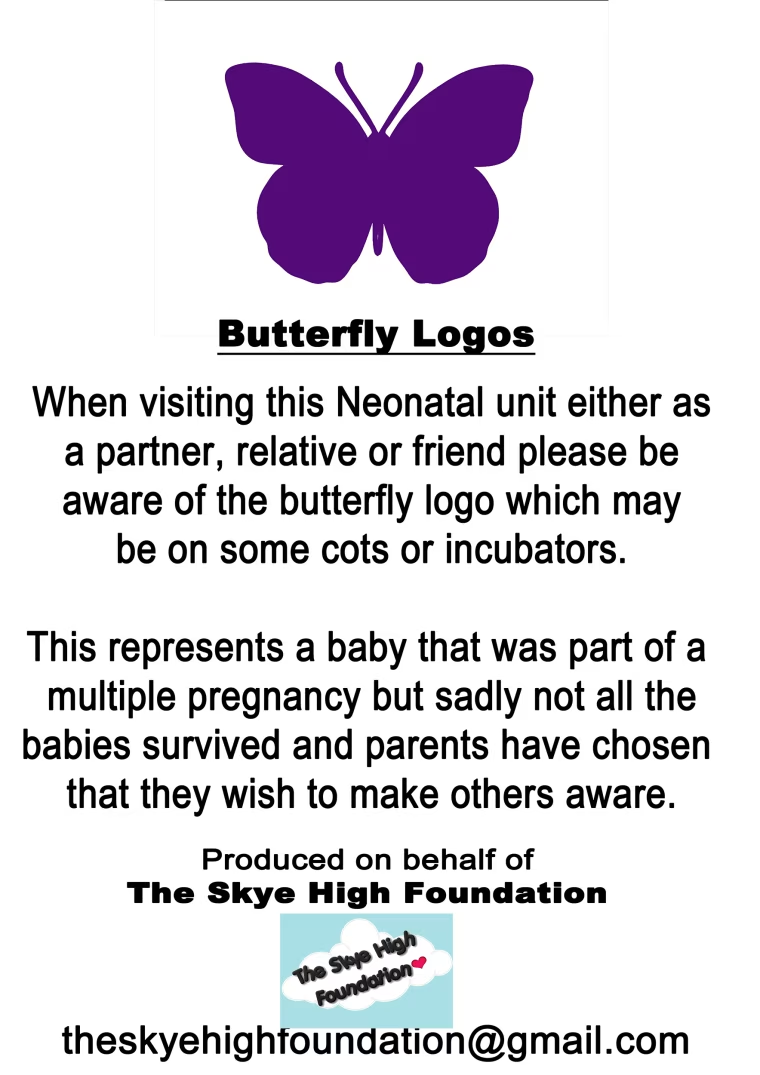
Why Purple?
Purple is often associated with remembrance, compassion, dignity, and grief.
It also provides a recognizable visual identity for the Purple Butterfly Project.
The color itself is not a medical indicator.
Its importance comes from the meaning attached to the symbol.
The combination of a butterfly and purple color creates a gentle visual message that can communicate something incredibly difficult without using words.
The Butterfly Does Not Mean the Family Has Forgotten
Sometimes people misunderstand grief because they assume that once a family begins celebrating the surviving child, the deceased baby is no longer being remembered.
That is not necessarily true.
A parent can move forward without moving on from their child.
Those are different things.
Moving forward might mean:
-
Bringing the surviving baby home
-
Returning to work
-
Raising other children
-
Celebrating birthdays
-
Going on vacation
-
Laughing again
-
Making future plans
None of these actions erase the child who died.
Love does not work like a limited resource.
A parent does not have to choose between loving the child who survived and remembering the child who did not.
The Deeper Meaning of the Purple Butterfly
At its heart, the purple butterfly tells a story about recognition.