It looks harmless.
A simple root pulled from the ground.
Brown on the outside.
White or pale inside.
It can be boiled, fried, dried, fermented, grated, ground into flour, or turned into countless traditional foods.
For hundreds of millions of people, it is not a strange or exotic ingredient.
It is a staple.
It is affordable.
It grows in difficult conditions.
It can provide a valuable source of calories when other crops struggle.
And yet, this ordinary-looking root has a dangerous secret.
When certain varieties are eaten raw or improperly processed, they can release cyanide.
The food is cassava—also known as manioc, yuca, or, in some contexts, tapioca root.
Cassava has consequently earned the dramatic nickname "the world's deadliest food."
But that description needs an important qualification.
Cassava itself is not inherently a poison that people must avoid.
People have safely eaten properly processed cassava for centuries.
The danger comes from naturally occurring cyanogenic glycosides, compounds that can break down and release hydrogen cyanide when cassava is improperly prepared.
So how can a food that potentially contains cyanide also be a staple for hundreds of millions of people?
And why would anyone continue eating it if it can be dangerous?
The answer is a fascinating combination of chemistry, traditional food preparation, agriculture, food security, and human adaptation.
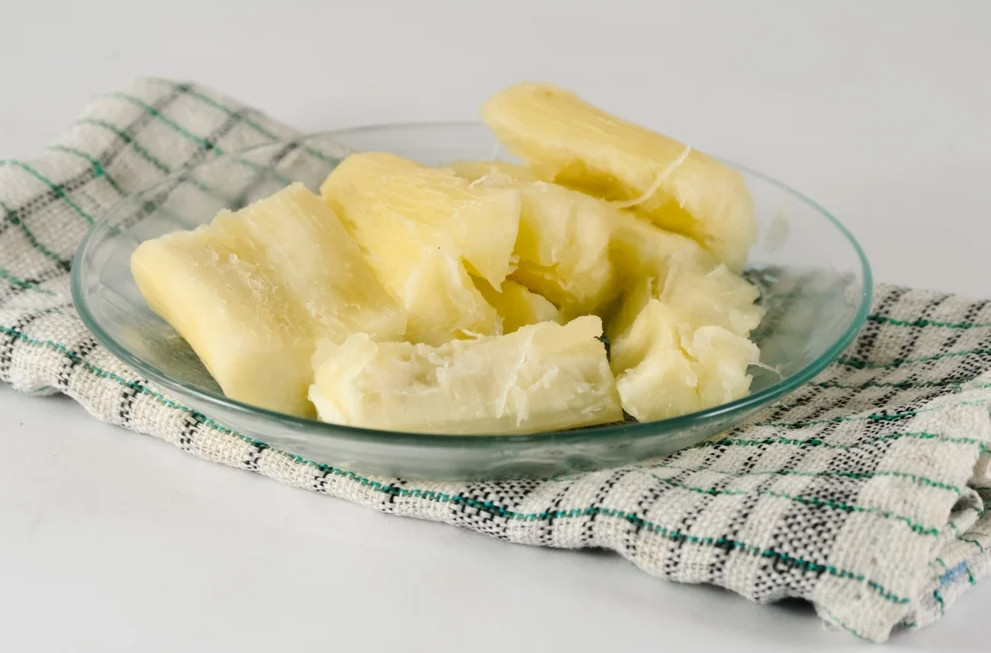
What Exactly Is Cassava?
Cassava is a tropical root crop scientifically known as Manihot esculenta.
It originated in South America and eventually spread throughout tropical regions of Africa and Asia.
Today, it is an important food crop across many parts of the world.
Cassava is particularly valuable because it is remarkably resilient.
It can tolerate relatively poor soils.
It can survive periods of drought better than some other crops.
And the roots can remain underground for extended periods, providing farmers with a form of food security.
That resilience is one reason cassava became so important in regions where environmental conditions make agriculture difficult.
It is not simply another vegetable.
For many communities, cassava is a major source of calories.
Historical scientific literature has described cassava as a staple food for more than 500 million people.
That number helps put the controversy into perspective.
We're not talking about a rare poisonous plant that only a few adventurous people consume.
We're talking about one of the world's major food crops.
So Why Is Cassava Called "Deadly"?
The answer lies in plant chemistry.
Cassava naturally contains compounds called cyanogenic glycosides.
One of the major compounds is called linamarin.
When plant tissue is damaged—such as when cassava is cut, grated, crushed, chewed, or otherwise processed—enzymatic reactions can cause these compounds to break down.
One of the resulting products can be hydrogen cyanide.
And cyanide is highly toxic.
It interferes with the body's ability to use oxygen at the cellular level.
In sufficiently high amounts, cyanide poisoning can be life-threatening.
This sounds terrifying.
But there is an important distinction.
The presence of cyanogenic compounds does not mean properly prepared cassava is automatically dangerous.
Traditional processing methods evolved specifically to reduce these compounds.
Modern food processing can also dramatically reduce cyanide exposure.
The problem occurs when cassava containing high levels of cyanogenic compounds is consumed without adequate processing.
Not All Cassava Is Equally Dangerous
This is another important detail.
Cassava varieties differ in their cyanogenic potential.
Some are commonly described as sweet cassava, while others are known as bitter cassava.
The terminology can be misleading.
"Sweet" does not mean sugar-rich.
And "bitter" does not simply refer to taste.
The categories generally reflect differences in cyanogenic compound levels.
Some bitter varieties can contain substantially higher concentrations of cyanogenic compounds than many sweet varieties.
This is why knowing the variety and using an appropriate preparation method are important.
A root that looks completely ordinary may have a very different chemical profile from another variety.
You cannot reliably judge cyanide content simply by looking at the outside of the root.
Where Is the Cyanide Found?
Cassava plants contain cyanogenic compounds in different tissues.
The roots are particularly important because they are the part most commonly eaten.
The peel can contain significant amounts of these compounds.
The leaves can also contain cyanogenic compounds.
This is why preparation matters.
Simply peeling a root and eating the raw interior is not an adequate safety strategy for cassava varieties that contain significant cyanogenic potential.
The goal is to process the cassava in a way that reduces the cyanogenic compounds to safer levels.
What Happens When Cyanide Enters the Body?
Cyanide is dangerous because of how it interferes with cellular respiration.
Your cells need oxygen to produce energy.
Oxygen is transported through the bloodstream, delivered to tissues, and ultimately used by mitochondria—the energy-producing structures inside cells.