Others require fertile soil.
Others need constant irrigation.
Cassava can tolerate conditions that would challenge many other staple crops.
It can provide a reliable source of carbohydrates and calories.
For households facing food insecurity, that resilience can be enormously important.
The question is therefore not:
"Why do people eat a dangerous food?"
A better question is:
"How did people learn to safely transform a chemically defensive plant into a reliable source of food?"
The answer is generations of agricultural and culinary knowledge.
Cassava Is More Than a Root Vegetable
Cassava can be transformed into an enormous variety of foods.
Depending on the region, it may be:
-
Boiled
-
Fried
-
Mashed
-
Dried
-
Fermented
-
Ground into flour
-
Processed into granules
-
Used to make starch
-
Incorporated into breads
-
Used in porridges
-
Processed into traditional beverages
Cassava starch is also widely used in food manufacturing.
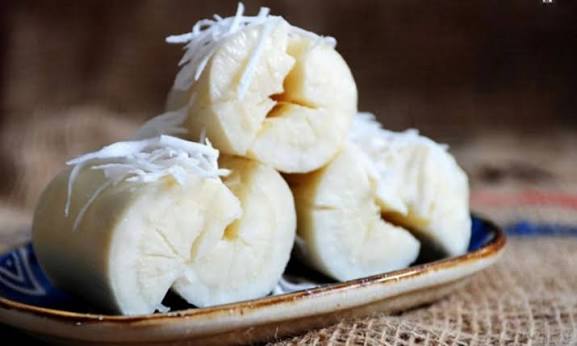
And one familiar cassava-derived product is tapioca.
Tapioca is essentially starch extracted from cassava.
It appears in puddings, desserts, drinks, and other foods.
The transformation from root to processed starch is another example of how processing changes the characteristics of the plant.
What About Cassava Leaves?
Cassava leaves can also be eaten in some cultures.
But they contain cyanogenic compounds as well.
Therefore, they require appropriate preparation.
The fact that cassava leaves are eaten in some regions does not mean that raw leaves are safe.
Preparation methods vary by culture and dish.
This is another reason people should not experiment casually with unfamiliar cassava plant parts.
Why Raw Cassava Is a Bad Idea
Raw cassava is not something you should treat like a raw carrot or cucumber.
The plant's cyanogenic compounds are precisely why appropriate processing matters.
The risk is particularly relevant for bitter varieties.
Children may be especially vulnerable because a smaller body mass means a given amount of cyanide can represent a larger dose per kilogram of body weight.
That is one reason food preparation should be taken seriously.
Is Cassava Poisoning Common?
Globally, cassava poisoning is not an everyday event for most people.
Millions upon millions of people eat properly prepared cassava without experiencing cyanide poisoning.
But outbreaks can occur.
The World Health Organization has documented cassava-related cyanide exposure and associated neurological syndromes in affected populations.
Reported mortality figures in popular articles often cite around 200 deaths per year.
However, that number should be interpreted carefully.
Surveillance of foodborne disease is incomplete in many regions, and the global burden of cassava-related cyanide exposure is difficult to quantify precisely.
There are also chronic neurological effects that may not appear in mortality statistics.
So the real public-health burden may be broader than the headline number suggests.
The Disease That Can Cause Permanent Neurological Damage
One of the most important health consequences associated with chronic cassava cyanide exposure is konzo.
Konzo is a neurological disorder characterized by sudden or relatively rapid onset of weakness and paralysis, particularly affecting the legs.
It has been documented in populations consuming insufficiently processed, high-cyanide cassava, particularly under conditions of food insecurity.
Children and women of childbearing age can be particularly affected in some endemic settings.
The disease is not simply about one meal.
Chronic exposure and nutritional factors can contribute.
This is an important distinction.
Cassava-related health problems aren't limited to dramatic acute poisoning.
Repeated exposure to cyanide can also have longer-term consequences.
Why Protein Intake Matters
Nutrition can influence the body's response to cyanide exposure.
The body's detoxification pathways require certain nutrients, including sulfur-containing amino acids.
If a population is consuming a cassava-heavy diet while also experiencing protein deficiency, the body's ability to detoxify cyanide may be compromised.
This creates a particularly dangerous combination:
High-cyanide cassava + inadequate processing + poor nutrition.
That combination is much more concerning than simply eating properly prepared cassava as part of a diverse diet.
Cassava and Food Security
Cassava is a fascinating example of the tension between food security and food safety.
It is one of the crops that can help communities survive difficult environmental conditions.
It can grow where other crops struggle.
It can provide calories when food availability is limited.
But those same circumstances can increase the risk of improper processing.
This is why cassava safety is not just an individual cooking issue.
It is also a public-health issue.
Education matters.
Agricultural practices matter.
Processing infrastructure matters.
Food availability matters.
Nutrition matters.
And access to safe processing methods matters.