Your orthopaedic specialist may perform a procedure called aspiration, in which a fluid sample is removed from the cyst with a needle for analysis. This can help confirm the diagnosis and relieve symptoms.
Complications of Ganglion
Ganglion cysts are generally benign and do not lead to serious complications. However, in some cases, they can cause minor issues, including:
- Pain and Discomfort: Larger or symptomatic ganglion cysts can cause pain, discomfort, and limited joint movement.
- Nerve Compression: Rarely, a ganglion cyst may press on nearby nerves, causing tingling or numbness in the hand.
- Cosmetic Concerns: Some individuals may be concerned about the appearance of a visible lump on the hand or wrist.
Treatment Options for Ganglion
When dealing with a ganglion cyst, your orthopaedic specialist may recommend one of the following treatment options based on the size, location, and symptoms:
Observation
Small, painless ganglion cysts that don’t interfere with daily activities may be monitored without immediate treatment.
Aspiration
An orthopaedic specialist can use a needle to drain the fluid from the cyst, reducing its size and relieving symptoms.
Corticosteroid Injection
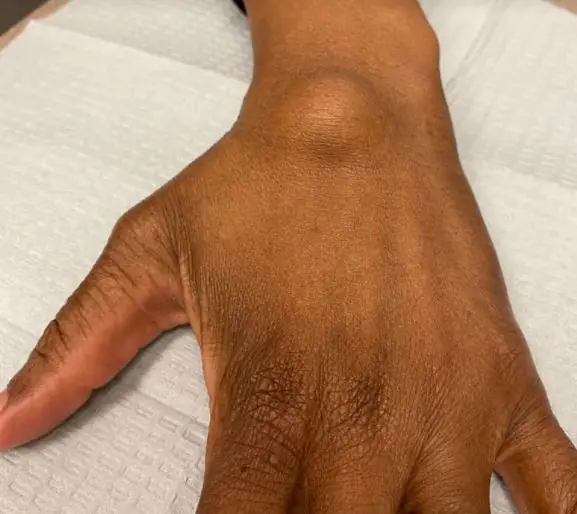
Injecting a corticosteroid medication into the cyst can help reduce inflammation and alleviate pain.
Immobilisation
Wearing a wrist splint or brace can limit movement and reduce irritation of the cyst.
Surgery
In some cases, when the cyst is large, painful, or recurrent, surgical removal may be recommended.
Preventing Ganglion
Preventing ganglion cysts can be challenging, but you can take some precautions to reduce the risk of developing them:
- If you engage in activities or sports that involve repetitive hand and wrist movements, consider wearing protective gear like wrist supports or braces.
- Maintain proper hand and wrist ergonomics during activities that require repetitive hand movements.
- Regularly practice hand and wrist exercises to improve strength and flexibility.
- Take regular breaks during activities that strain your hands and wrists to prevent overuse.
- If you notice any unusual lumps or bumps on your hands or wrists, or experience pain or discomfort, seek medical attention promptly.
Living with Ganglion
Living with a ganglion cyst typically involves these strategies:
- If your ganglion is small, painless, and does not interfere with daily activities, you may observe it without treatment.
- If your ganglion becomes painful or causes discomfort, you can manage it with over-the-counter pain relievers or other treatments recommended by your orthopaedic specialist.
- Your orthopaedic specialist may suggest draining the cyst through aspiration to alleviate symptoms.
- Wearing a wrist splint or brace can help limit the movement of the joint and reduce irritation of the cyst.
- Keep scheduled appointments with your orthopaedic specialist to monitor any changes in the cyst and receive guidance on managing your condition.
- If you have concerns about the appearance of the cyst, discuss cosmetic treatment options with your orthopaedic specialist.
Ganglion cysts are common, usually benign, fluid-filled lumps that can affect the hands and wrists. While they are generally not a cause for concern, they can cause discomfort and may benefit from treatment. If you or someone you know is experiencing symptoms related to a ganglion cyst, it’s important not to ignore your health and seek professional advice. We encourage you to request an appointment with The Orthopaedic Practice and Surgery Clinic for expert care and consultation regarding ganglion cysts. Our specialised team can provide personalised treatment and guidance, helping you alleviate symptoms and make informed decisions about managing your ganglion.