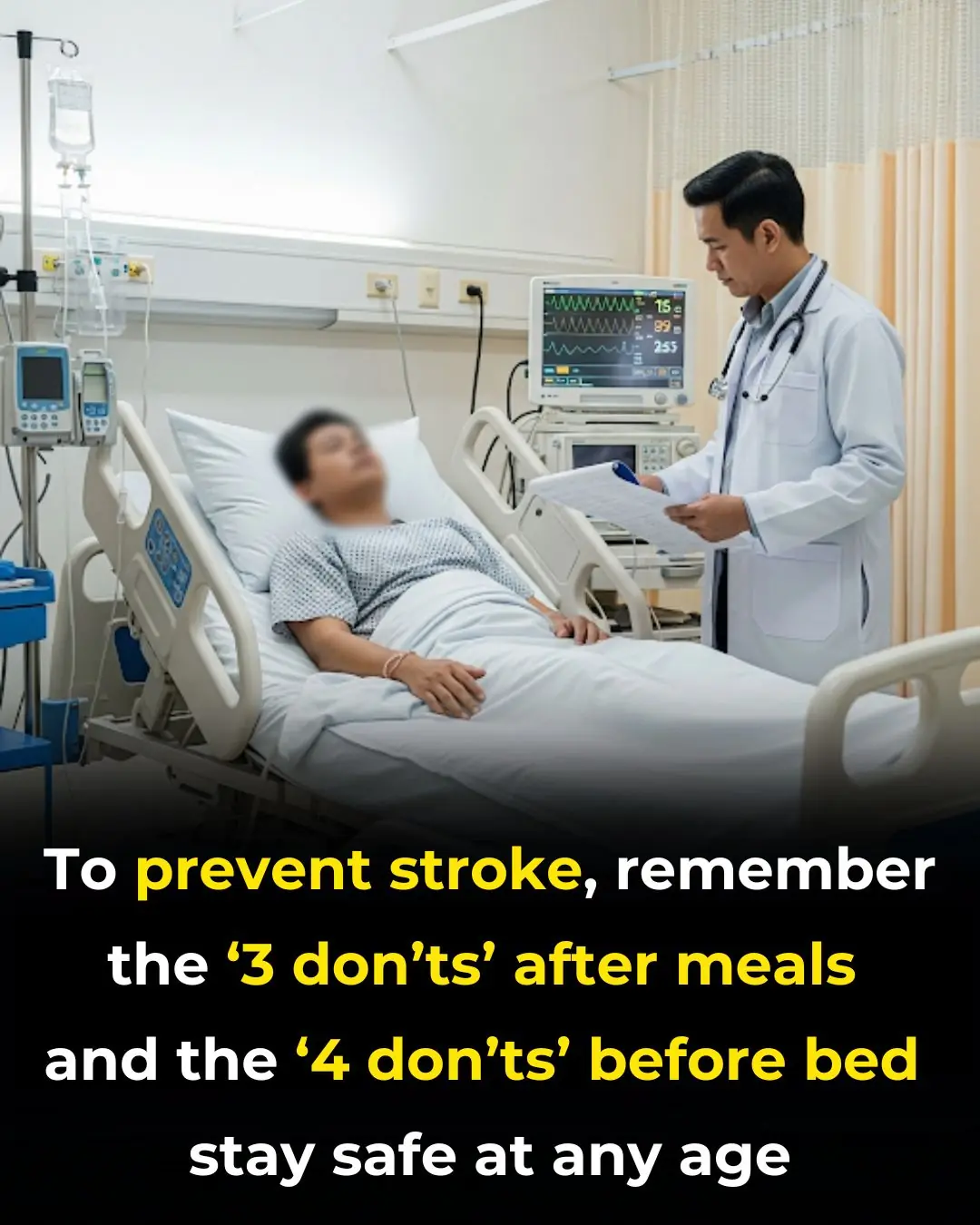
Remember the “3 Don’ts” After Meals and the “4 Don’ts” Before Bed to Help Reduce Stroke Risk
Stroke is one of the leading causes of serious disability and death worldwide. While genetics and age play a role, daily habits strongly influence stroke risk at any stage of life. Surprisingly, what you do after eating and before going to bed can have a meaningful impact on your heart and blood vessel health.
Medical experts emphasize that small lifestyle choices, practiced consistently, may help support healthy blood pressure, circulation, and overall cardiovascular function. Below are three things to avoid after meals and four things to avoid before bed that may help reduce stroke risk.
The 3 Things You Should Avoid After Meals

1. Don’t Lie Down or Go to Sleep Immediately After Eating
Lying down right after a meal can interfere with digestion and increase the risk of acid reflux. It also prevents proper blood circulation as the body works to digest food.
What to do instead:
Stay upright for at least 30–60 minutes after eating. Light activities such as walking can help digestion and stabilize blood sugar levels.
2. Don’t Drink Alcohol Right After Eating
Alcohol consumed after meals can cause sudden changes in blood pressure and heart rhythm. Over time, this may increase strain on blood vessels and elevate stroke risk.
What to do instead:
Limit alcohol intake and avoid drinking close to mealtimes, especially in the evening.
3. Don’t Eat Late-Night Meals
Eating too late forces the digestive system to work when the body should be slowing down. This can disrupt blood sugar control, sleep quality, and blood pressure regulation.
What to do instead:
Try to finish dinner at least 2–3 hours before bedtime.
The 4 Things You Should Avoid Before Bed
1. Don’t Drink Alcohol Before Sleeping
While alcohol may make you feel sleepy, it disrupts natural sleep cycles and can cause blood pressure fluctuations during the night.
Health impact:
Poor sleep quality and unstable blood pressure are both linked to increased stroke risk.
2. Avoid Caffeine Late in the Evening
Caffeine stimulates the nervous system, making it harder for the body to relax and regulate heart rate and blood pressure during sleep.
Tip:
Avoid coffee, energy drinks, and strong tea at least 6 hours before bedtime.
3. Don’t Stay Up Late or Keep an Irregular Sleep Schedule
Irregular sleep patterns can disrupt hormones that control blood pressure and inflammation, increasing strain on the cardiovascular system.
Best practice:
Go to bed and wake up at consistent times each day to support heart and brain health.
4. Don’t Eat Heavy or Large Meals Right Before Bed
A heavy meal before sleep can cause indigestion, raise blood pressure, and interfere with the body’s ability to fully rest and recover overnight.
What to do instead:
If you’re hungry, choose a light, healthy snack rather than a full meal.
Final Thoughts
Preventing stroke is not about one single action, but about building healthy daily habits over time. Avoiding certain behaviors after meals and before bed can help support digestion, improve sleep quality, stabilize blood pressure, and protect cardiovascular health.
Small, consistent changes can make a meaningful difference. By paying attention to these simple “don’ts,” you give your body better conditions to rest, repair, and stay resilient—at any age.