The reports described a likely temporary or localized pigment shortage.
That explanation is plausible within the broader biology of hair pigmentation, but it should not be expanded into a definitive diagnosis without further evidence.
The distinction between a reported medical opinion and a confirmed genetic cause is important.
A responsible article can explain the science while acknowledging the limits of the available information.
Could the white hair have been visible before birth?
One of the most fascinating details in the original Hungarian reporting was that the baby's unusually light hair may have been noticed even before delivery.
A contemporary report stated that the hair's color had apparently been visible during a prenatal examination.
24.hu+1
This detail makes the story even more unusual.
Most parents first discover their newborn's hair color when they see the baby after birth. In Bence's case, the reports suggested that the striking color was so distinctive that it could be noticed during an examination before he was born.
However, prenatal imaging is not designed to diagnose hair pigmentation in detail.
The appearance of hair in an ultrasound image can be influenced by lighting, image quality, and the angle of the scan.
Therefore, this detail should be understood as something reported by the family or medical professionals at the time, rather than as a general medical method for determining a baby's future hair color.
The main point remains that Bence's hair was unusually pale from the beginning.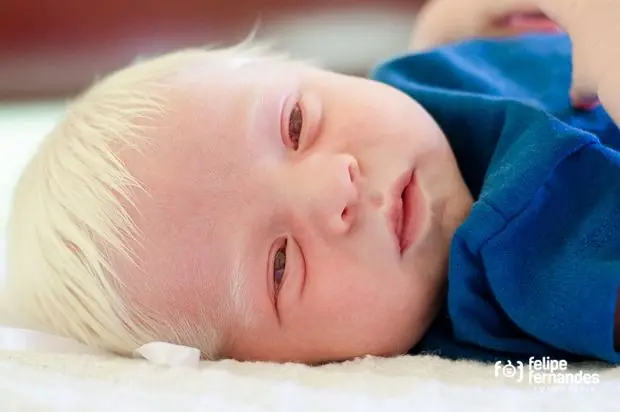
Why his story is different from ordinary childhood blond hair
Many children are born with blond hair that later becomes darker.
That is a familiar process, especially in families where light hair is common.
Bence's appearance was different because the hair was described as almost completely white.
The color was so unusual that hospital staff reportedly noticed it immediately and gave him a nickname.
The difference between pale blond and white hair may seem small, but it was precisely what made the photographs so striking.
A typical blond newborn may have golden, beige, or light yellow hair.
Bence's hair appeared to have almost no visible color at all.
The distinction also explains why people initially wondered whether he had albinism.
The appearance was unusual enough to raise a medical question, but the reports described a reassuring examination.
His story therefore sits at the intersection of natural variation and medical curiosity.
It reminds readers that human appearance does not always follow the patterns they expect.
The story behind the nickname “Prince Charming”
The nickname given to Bence was one of the details that helped the story become memorable.
The nurses reportedly called him “Prince Charming” because of his unusually pale hair and delicate appearance.
In Hungarian reports, he was also described using a nickname that translated roughly to “blond prince.”
The name was affectionate and reflected the reaction of people who saw him in the maternity ward.
It was not a formal title or a medical description.
Rather, it was the kind of playful nickname that can emerge when a newborn captures everyone's attention.
The name also helped the story spread online.
People could easily remember the baby with snow-white hair who had been called a little prince.
But the nickname should not overshadow the more important details.
Bence was a newborn whose appearance surprised people, whose doctors reportedly found no serious abnormality, and whose hair was expected to possibly change as he grew.
That is what made the story meaningful.
What the original reports actually tell us
Looking back at the original coverage helps separate the established facts from later online speculation.
The most consistently reported details are:
-
Bence was born in Székesfehérvár, Hungary, in December 2015.
-
His hair was exceptionally white, with a milky or silver-like appearance.
-
Hospital staff reportedly gave him the nickname “Prince Charming.”
-
Contemporary local reporting described him as healthy.
-
Doctors believed the unusual hair color could be related to a rare pigmentation variation.
-
They reportedly expected that his hair might become darker over time.
The original reporting does not provide a verified account of his appearance in 2026.
It also does not establish a confirmed genetic diagnosis or prove exactly how his hair changed during childhood.
These limits do not make the story less interesting.
They simply mean that the article should not claim to know more than the available evidence supports.
A remarkable beginning, with a future that remains private
Bence's birth became memorable because he looked different from almost every newborn people had seen.
His snow-white hair immediately attracted attention, and the nickname “Prince Charming” made the story even more recognizable.
But behind the photographs was a family welcoming a child and trying to understand an unusual physical feature.
The reassuring message from the medical reports was that his appearance did not appear to indicate a serious health problem.
Doctors believed the hair color was likely related to pigmentation and might change as he grew.
Today, Bence would be around ten or eleven years old. Yet the available reliable reporting does not establish what his hair looks like now or provide a detailed account of his personal life.
That uncertainty should be respected.
The story does not need an invented transformation to remain fascinating.
A healthy baby was born with remarkably white hair. His appearance surprised the hospital staff, captured the attention of readers, and raised questions about how pigmentation works.
The photographs remain a reminder of how extraordinary natural variation can be.
And perhaps the most important lesson is that an unusual appearance should be met with curiosity, kindness, and accurate information—not assumptions.
Bence's story began with a head of snow-white hair. What made it truly memorable was the reassurance that, despite his extraordinary appearance, he was simply a little boy beginning his life.