Chapter 1: The Traditional Foot Soak That Begins With a Handful of Cloves
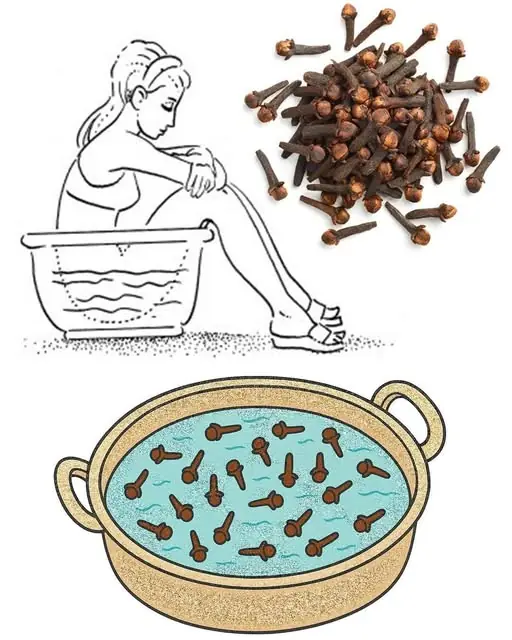
After a long day of walking, standing, or completing household chores, many people look for a simple way to relax their feet. A warm basin of water, a comfortable chair, and a few minutes of quiet can turn an ordinary evening into a peaceful self-care routine.
The image accompanying this story shows a traditional practice involving cloves, a familiar spice found in kitchens around the world. The dried flower buds are placed in water, creating an aromatic infusion that can be used as part of a foot-soaking ritual.
Cloves have a long history in traditional medicine and cooking. They are commonly used to flavor soups, sauces, teas, and baked foods. Their distinctive fragrance comes partly from eugenol, a naturally occurring compound found in clove oil.
Eugenol has attracted scientific interest because laboratory studies have demonstrated several biological activities. However, laboratory findings do not automatically mean that a home remedy produces the same effects in the human body.
According to MedlinePlus, clove has been used traditionally for many purposes, but reliable scientific evidence is insufficient to establish its effectiveness for most health conditions.
This distinction is especially important when discussing foot soaks.
A warm clove infusion may provide a pleasant aroma and create a relaxing experience. The warmth of the water may temporarily soothe tired feet, while sitting quietly gives the body an opportunity to rest.
But there is no strong clinical evidence showing that soaking the feet in clove water cures arthritis, removes toxins, eliminates infections, or treats poor circulation.
The traditional practice should therefore be understood as a possible relaxation ritual rather than a medical treatment.
For someone who enjoys natural scents, cloves may make a simple foot bath feel more special. Their warm, spicy aroma is familiar to many people and can create a comforting atmosphere.
The preparation does not need to be complicated.
A small number of whole cloves can be steeped in hot water separately. Once the infusion has cooled to a comfortably warm temperature, it can be strained and added to a clean basin of water.
The most important part of this process is not the number of cloves used. It is making sure that the water is not too hot and that the skin is healthy enough for soaking.
People with sensitive skin should be especially cautious because clove contains compounds that may irritate the skin in some individuals.
Clove essential oil is much more concentrated than an infusion made from whole cloves. It should not be poured directly into a foot basin or applied undiluted to the skin.
The National Library of Medicine notes that clove oil can cause burning and skin irritation when applied topically.
For this reason, a simple warm-water foot bath remains the gentler option for many people.
The appeal of this traditional remedy is its simplicity. It does not require expensive equipment, complicated ingredients, or a lengthy preparation process.
However, the benefits should remain realistic.
A clove foot soak may help someone enjoy a quiet moment after a busy day, but it should not replace proper foot care, medical treatment, or professional advice when symptoms persist.
The best approach is to appreciate the tradition while understanding what science has—and has not—confirmed.
Chapter 2: What Cloves Contain and Why Their Aroma Is So Distinctive
Cloves are the dried flower buds of a tropical tree known scientifically as Syzygium aromaticum. They are harvested before the flowers open and dried until they develop their familiar dark brown color.
Although cloves are small, they contain several naturally occurring compounds that contribute to their fragrance and flavor.
The best-known of these is eugenol.
Eugenol is responsible for much of the characteristic warm, slightly sweet, and spicy aroma associated with cloves. It is also present in certain other aromatic plants, although the concentration varies.
Scientists have studied eugenol because it has demonstrated antioxidant, antimicrobial, and other biological activities under laboratory conditions.
These findings have led to interest in the possible uses of clove extracts in food preservation, dental products, cosmetics, and other applications.
However, it is important to separate laboratory research from practical health claims.
A substance that affects microorganisms in a laboratory dish does not necessarily eliminate bacteria or fungi when added to a bowl of water.
The concentration may be different, the exposure time may be shorter, and the human skin may respond differently from laboratory materials.
This is why claims that a clove foot bath can destroy every harmful microorganism on the feet should be treated cautiously.
Cloves also contain aromatic oils that can be released when the buds are crushed or steeped in hot water.
The resulting fragrance may be pleasant for people who enjoy warm herbal scents.
For some individuals, the aroma itself is an important part of the relaxation experience. A familiar smell can make a routine feel comforting and encourage someone to slow down.
Nevertheless, aroma alone does not establish a medical benefit.
There is no reliable evidence that the smell of cloves can remove toxins from the body, repair damaged nerves, or directly improve the function of internal organs through the soles of the feet.
The body already has systems responsible for processing and removing waste, primarily involving the liver and kidneys.
A foot soak does not replace these functions.
Another point worth understanding is that natural ingredients are not automatically harmless.
Clove oil contains concentrated eugenol, and high concentrations may irritate or damage skin. Some people may also develop an allergic reaction.
A published medical case report described a skin injury following the topical use of cloves, illustrating why concentrated plant products should not be applied casually.
For a traditional foot bath, the safest approach is to avoid concentrated essential oils and unnecessary additives.
Whole cloves steeped in water produce a less concentrated preparation than essential oil, but even this should not be assumed to be suitable for every person.
If the skin becomes itchy, red, swollen, or uncomfortable, the soak should be stopped immediately.
The feet should then be rinsed with clean water and dried gently.
People with a known allergy to cloves or related fragrance ingredients should avoid the preparation.
Ultimately, cloves are an interesting botanical ingredient with a long culinary and traditional history.
Their aroma may enhance a relaxing foot bath, but their chemical properties should not be exaggerated into promises of medical treatment.
Understanding the difference between a traditional practice and a proven therapy allows people to enjoy familiar ingredients more safely.
Chapter 3: How to Prepare a Gentle Clove Foot Bath at Home
For people with healthy feet who enjoy traditional home-care rituals, a simple clove infusion can be prepared without complicated equipment.
The goal should be to create a comfortable, mild, and hygienic experience—not a powerful medicinal mixture.
Before beginning, make sure that the basin is clean and large enough to hold both feet comfortably.
A stable chair should be placed nearby so that the person can sit without bending awkwardly or risking a fall.
The water should feel comfortably warm rather than hot.
A conservative preparation can begin with a small number of whole cloves steeped in hot water. Allow the mixture to cool before adding it to the basin.
The cloves should be strained out so that small pieces do not remain between the toes or against the skin.
There is no clinically established recipe for a therapeutic clove foot soak, so the following should be considered a simple household preparation rather than a medically tested treatment.
A simple preparation
-
Place a few whole cloves in a heat-resistant container.
-
Add hot water and allow the cloves to steep.
-
Let the infusion cool until it is comfortably warm.
-
Strain the liquid to remove the cloves.
-
Add the infusion to a clean basin of warm water.
-
Check the water temperature before placing the feet inside.
For people with healthy skin and normal sensation, a short soak may be enough to enjoy the warmth and aroma.