Chapter 1: What Happens When Bed Bugs Share Your Sleeping Space?
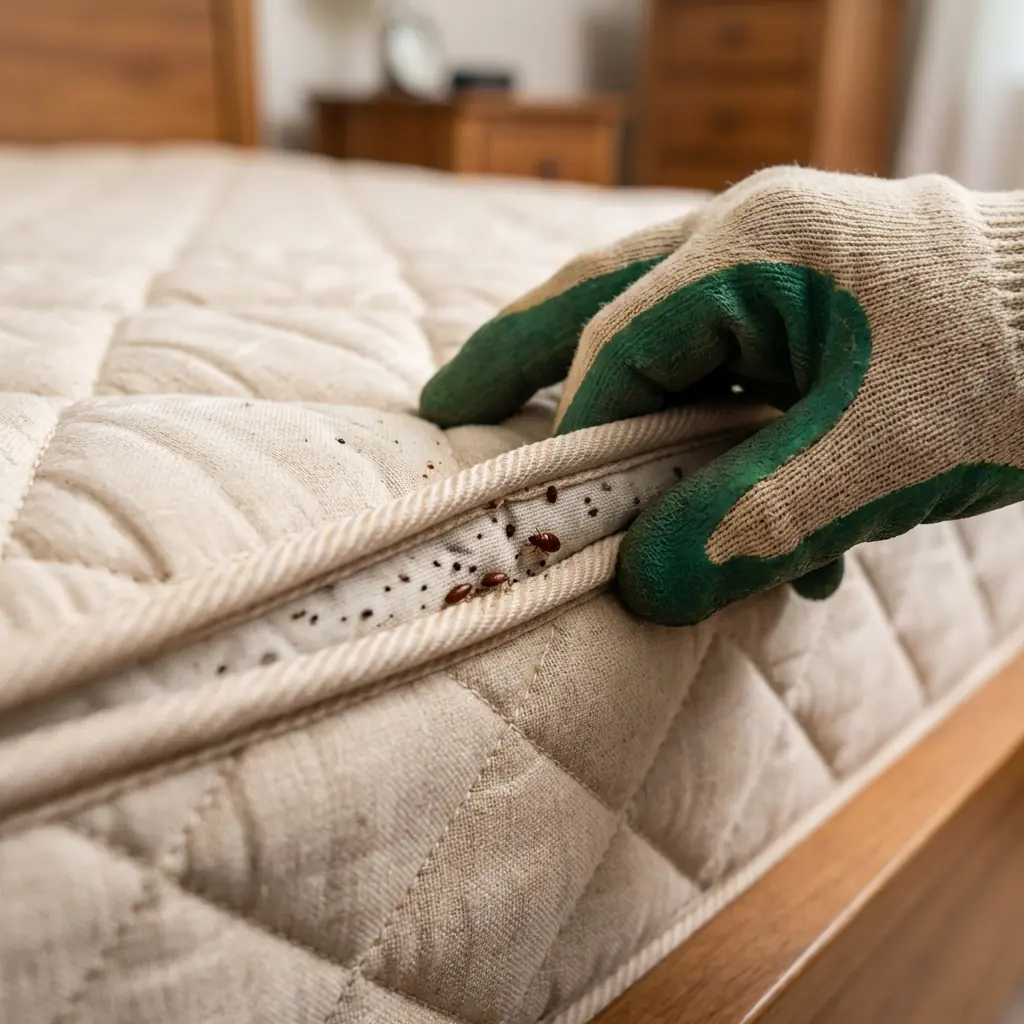
Imagine waking up in the morning, stretching your arms, and noticing several small, raised bumps across your forearm. At first, you assume they are mosquito bites. However, over the next few days, more itchy spots appear, particularly on areas of skin that remain uncovered while you sleep.
The itching becomes difficult to ignore. Sometimes the bumps become swollen, while at other times they appear in small clusters or irregular lines.
One possible explanation is an infestation of bed bugs.
Bed bugs are small, flat, reddish-brown insects that survive by feeding on the blood of humans and animals. They are particularly active at night, when people are resting and less likely to notice their presence.
Despite their name, bed bugs do not live exclusively inside mattresses. They can hide in bed frames, headboards, furniture joints, curtains, carpets, cracks in walls, and other narrow spaces close to sleeping areas.
Their ability to hide makes them particularly difficult to detect during the early stages of an infestation.
Why do bed bugs come out at night?
Bed bugs are attracted to sleeping hosts by several signals, including body heat and carbon dioxide released during breathing.
When someone lies quietly in bed, these signals can help the insects locate an exposed area of skin.
A bed bug uses specialized mouthparts to pierce the skin and obtain a small blood meal. Its saliva contains substances that help it feed.
People generally do not feel the bite while it happens. This means someone may experience several bites during the night without realizing that insects have been feeding nearby.
After feeding, the insects return to their hiding places.
According to the Centers for Disease Control and Prevention, bed bugs are not known to spread diseases to humans. Nevertheless, their bites can cause itching, skin irritation, sleep disruption, and occasionally allergic reactions.
CDC+1
Why do the bites appear in clusters?
One characteristic associated with bed bug bites is their tendency to appear in groups or lines.
Some people describe this pattern as several small bumps arranged close together.
However, not everyone experiences the same reaction.
One person may develop several swollen red welts, while another person sleeping in the same room may show no visible marks whatsoever.
The difference is related to individual sensitivity and immune responses.
Some people react quickly after being bitten. Others may not notice symptoms for several days.
According to the American Academy of Dermatology, reactions can sometimes take up to 14 days to become noticeable, particularly following an initial exposure.
American Academy of Dermatology
This delay can make identifying the original source difficult.
Are bed bugs attracted to dirty beds?
A common misunderstanding is that bed bugs only infest dirty bedrooms.
That is not true.
A clean, carefully maintained bedroom can still become infested.
Bed bugs are excellent at hiding and can enter homes through luggage, secondhand furniture, clothing, and other personal belongings.
They can also be introduced into apartments, hotels, dormitories, and other shared buildings.
The cleanliness of a room does not determine whether bed bugs are present.
CDC+1
This is an important distinction because people sometimes feel embarrassed when they discover an infestation.
There is no reason to assume that someone has poor hygiene simply because bed bugs have entered their home.
What happens if you continue sleeping in an infested room?
If bed bugs remain in the sleeping environment, people may continue experiencing bites.
Repeated exposure can make some individuals increasingly sensitive to the insects' saliva.
The resulting skin reactions may become more noticeable, although reactions vary considerably.
The problem can also extend beyond the physical symptoms.
People may begin worrying about going to bed, checking their sheets repeatedly, or waking up during the night to inspect their surroundings.
Over time, the combination of itching and anxiety can interfere with normal sleep.
The most important response is to identify the insects, confirm whether an infestation exists, and arrange appropriate treatment.
A skin reaction alone cannot establish that bed bugs are responsible.
Other conditions, including mosquito bites, flea bites, eczema, and allergic hives, can look similar.
The best approach is to investigate the sleeping environment rather than immediately assuming that every unexplained bump is caused by bed bugs.
Chapter 2: Five Physical Consequences of Bed Bug Bites You Should Understand
Bed bug bites are often described as a minor nuisance, but their effects can vary significantly from person to person.
For some individuals, the reaction consists of a few small, temporary bumps.
For others, the itching and swelling can become uncomfortable enough to interfere with everyday activities.
Understanding the possible reactions helps people recognize when home care may be sufficient and when medical attention is appropriate.
1. Persistent itching and skin irritation
The most familiar consequence of bed bug bites is itching.
After feeding, the insect's saliva can trigger an inflammatory response in the skin.
The affected area may become red, swollen, and uncomfortable.
Some people experience mild itching that disappears relatively quickly. Others develop larger welts that remain irritating for several days.
Repeated scratching can make the situation worse.
Scratching damages the outer protective layer of the skin, making it easier for bacteria to enter.
For this reason, avoiding excessive scratching is one of the most important recommendations for people experiencing suspected insect bites.
Washing the affected areas gently with soap and water can help maintain skin hygiene.
2. Allergic skin reactions
Not everyone responds to bed bug bites in the same way.
Some individuals develop a relatively small red spot, while others experience larger swollen areas.