A healthy sleep routine may include:
-
Going to bed and waking at reasonably consistent times.
-
Keeping the bedroom comfortable and quiet.
-
Getting natural daylight during the day.
-
Avoiding excessive caffeine late in the afternoon.
-
Limiting long daytime naps if they interfere with nighttime sleep.
-
Seeking medical advice for persistent insomnia or loud snoring with breathing interruptions.
A good sleep routine is not about copying the habits of a famous historical figure.
It is about finding a schedule that allows the individual to feel rested and function well.
Reading and Painting: The Mental Habits Behind Her Long Life
Soong Mei-ling was also known for her interests in reading, writing, painting, and calligraphy.
These activities were not simply decorative hobbies.
They formed part of her personal identity and remained important throughout much of her life.
Historical accounts describe her as a person who maintained an interest in books and artistic pursuits.
She was educated in English literature and developed a strong command of language.
Her ability to write and speak effectively became an important part of her public career.
Painting and calligraphy offered another form of expression.
Both activities require attention, patience, and coordination.
They also provide a structured way to spend time without requiring strenuous physical activity.
For older adults, hobbies can offer benefits beyond entertainment.
Reading can encourage mental engagement.
Painting can involve visual attention and fine motor skills.
Writing can help people organize memories and express emotions.
Learning a new skill can create a sense of purpose.
None of these activities guarantees protection against dementia or other neurological conditions.
However, staying mentally and socially engaged is generally considered a valuable part of healthy aging.
The Importance of Having Something to Look Forward To
Retirement and aging can sometimes bring major changes in daily life.
Professional responsibilities may disappear.
Children may move away.
Friends and relatives may become less available.
Some older adults struggle with the sudden reduction in social interaction.
Having meaningful interests can make daily life feel more structured.
A person might enjoy reading a newspaper every morning, tending a garden, painting, cooking, learning a language, or participating in a local community group.
These activities do not have to be expensive.
The most important element is that they provide interest and personal satisfaction.
Soong Mei-ling's reported dedication to reading and painting illustrates how creative interests can remain part of a person's life even when age and physical limitations change other routines.
Her example is particularly relevant for people who assume that learning and creativity belong only to younger generations.
They do not.
There is no fixed age at which someone must stop exploring new interests.
What Her Marriage and Political Life Reveal About Emotional Resilience
It would be impossible to understand Soong Mei-ling's long life without considering the extraordinary circumstances in which she lived.
Her marriage to Chiang Kai-shek placed her in the middle of major political upheavals.
She experienced war, diplomatic conflict, political exile, and profound changes in the country she had once helped represent.
These events were not ordinary sources of stress.
During the Second Sino-Japanese War, China faced enormous destruction and uncertainty.
Her public appearances in the United States required her to communicate the urgency of China's situation to audiences unfamiliar with many aspects of the conflict.
She was expected to speak with confidence, represent her country, and defend a political cause under intense international scrutiny.
In 1943, her address to the United States Congress became one of the most memorable moments of her public career.
Her education and command of English helped her connect with American lawmakers and citizens.
Following the Communist victory in mainland China in 1949, she and Chiang Kai-shek relocated to Taiwan.
After her husband's death in 1975, she eventually settled in the United States, spending much of her later life in New York.
These experiences demonstrate how much her life changed over the decades.
They also offer a useful perspective on emotional resilience.
Resilience does not mean that a person never experiences fear, sadness, or uncertainty.
It means developing ways to adapt when circumstances become difficult.
For some people, that may involve maintaining relationships.
For others, it may involve religious faith, creative activities, exercise, or a commitment to meaningful work.
In later life, emotional well-being can be especially important.
Loneliness, prolonged stress, and social isolation can affect sleep, appetite, motivation, and overall quality of life.
Maintaining relationships with family, friends, and community members can provide valuable emotional support.
There is no evidence that Soong Mei-ling's political experiences directly explain her longevity.
However, her long involvement in intellectual and social activities provides an interesting example of remaining engaged with life through changing circumstances.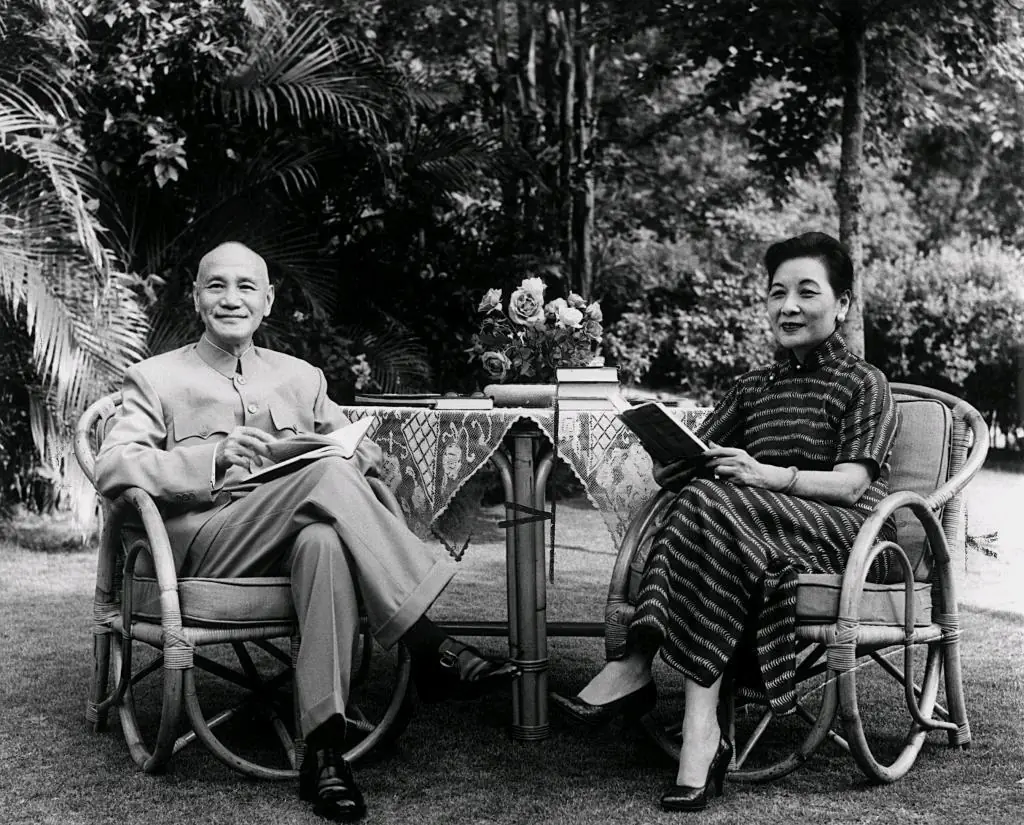
The Role of Medical Care in Her Long Life
When discussing her longevity, it is essential not to overlook medical care.
Historical stories about famous long-lived people sometimes focus almost entirely on their food preferences and personal routines.
Yet access to healthcare can have a major influence on survival.
Soong Mei-ling lived during a period when medical science advanced dramatically.
She experienced the development of modern diagnostic procedures, improved surgical techniques, new medicines, and increasingly sophisticated approaches to treating chronic diseases.
Her wealth and political position also gave her access to medical resources that were unavailable to many ordinary people during the same period.
This is an important consideration.
Two people may have similar dietary habits but experience very different health outcomes because of genetics, medical history, living conditions, and access to treatment.
A healthy lifestyle can support the body, but it cannot eliminate every biological risk.
Cancer Treatment Has Changed Dramatically
During the early decades of the 20th century, cancer diagnosis and treatment were considerably more limited than they are today.
Doctors relied heavily on physical examination, surgery, and the diagnostic tools available at the time.
Over the decades, medical understanding improved.
Imaging technology became more sophisticated.
Pathology developed more precise methods for identifying cancer types.
Radiation treatment advanced.
Chemotherapy introduced additional treatment possibilities.
Today, many patients receive treatment plans combining surgery, radiation, medication, hormone therapy, immunotherapy, or targeted treatments depending on their diagnosis.
The best treatment depends on the specific cancer and the individual patient.
This is why the reported cancer experience of a historical figure cannot be used as a template for modern treatment.
Someone diagnosed with breast cancer today should not attempt to reproduce a historical diet or delay medical treatment because another person reportedly lived for decades after surgery.
Early diagnosis and appropriate treatment remain essential.
Five Everyday Habits That Can Support Healthy Aging Today
Although no one can reproduce another person's lifespan, several principles associated with Soong Mei-ling's reported routine are consistent with modern health recommendations.
The following habits are practical starting points for people who want to maintain their health as they grow older.
1. Eat a Variety of Nutrient-Rich Foods
A balanced diet should include vegetables, fruits, whole grains, legumes, nuts, and appropriate sources of protein.
Different foods provide different nutrients.
Dark leafy vegetables provide folate and vitamin K.
Fruits offer fiber and various vitamins.
Beans provide plant protein and fiber.
Fish, eggs, dairy products, and tofu can contribute valuable protein.
Whole grains provide energy and dietary fiber.
The goal is not to follow an extremely restrictive eating plan.
It is to create meals that provide enough nutrients without excessive added sugar, salt, and highly processed ingredients.
For older adults, protein deserves particular attention because muscle loss can gradually reduce strength and mobility.