"You've only seen the part of her she wanted you to see."
"And you've only seen the part of her that reminds you of the worst moment in your life."
The words escaped before I could stop them.
Daniel turned back toward me.
For a moment, his face was completely still.
Then he spoke in a voice I had never heard from him before.
"Do you think I don't know that?"
I fell silent.
He pressed his hands against the edge of the table.
"Do you think I don't know she cared for the children? Do you think I didn't see how she looked at them? I saw everything."
His voice cracked.
"I saw her waiting outside Ethan's room when he was sick. I saw her making Sophie laugh when she was upset. I saw her save their drawings and keep their photographs."
He swallowed hard.
"And every time I saw those things, I remembered that she had not been there to do any of them for me."
I felt my anger begin to fade, replaced by a sadness I did not know how to express.
Daniel continued.
"When Ethan was little, I sometimes stood outside the kitchen and watched her with him. He would call her name, and she would turn around with that smile."
He paused.
"I wondered what it would have been like if I had been allowed to grow up with that smile."
For the first time, I understood that his hostility was not simply resentment.
It was grief.
He had spent years watching another child receive the tenderness he had once needed from the same woman.
And every act of kindness she offered our children reminded him of everything he believed he had lost.
But understanding his pain did not erase the pain he had caused her.
"You could have told me," I said quietly. "You could have told me the truth without asking me to decide who was right."
Daniel lowered his head.
"I was ashamed."
"Of her?"
"Of myself."
I moved closer.
He looked at me with exhausted eyes.
"I built a life that looked successful from the outside. I have a wife, children, a home, and a career. I told myself I had moved on."
He glanced at the letter.
"But the moment she appeared, I became that little boy again. I didn't know how to speak to her without remembering everything."
His voice grew softer.
"I was afraid that if I listened to her explanation, I might begin to forgive her. And if I forgave her, I didn't know what to do with all the anger I had carried for so long."
I wanted to comfort him.
I also wanted to shake him.
"Daniel, forgiveness doesn't mean what happened was acceptable. It doesn't mean you have to forget. But if you refuse to even hear her, how will you ever know whether there is anything left to repair?"
He said nothing.
Then he picked up the bag of gold.
"I'm returning this."
I watched him walk away.
I knew he was not ready to forgive his mother.
But I also knew that, for the first time, he was beginning to confront the possibility that his anger had become a prison of its own.
The Children Asked a Question We Couldn't Answer
That afternoon, Ethan found me sitting alone in the living room.
"Mom, when is Mrs. Lin coming back?"
I looked up from my phone.
"I don't know, sweetheart."
He sat beside me.
"Did she leave because Dad was angry with her?"
My heart tightened.
Children often understand more than adults realize. They may not know the details, but they recognize tension, silence, and sadness.
"What makes you ask that?"
"Because Dad was always telling her to leave. And she always looked sad afterward."
I struggled to find an answer that would not place the burden of our family problems on his shoulders.
"Sometimes adults have difficult feelings that they don't know how to explain," I said. "Mrs. Lin may have needed some time away."
Ethan looked down.
"I miss her."
"I know."
"Can we call her?"
I wanted to say yes immediately.
Instead, I told him that I would try.
That evening, Sophie came to me with a drawing she had made.
It showed our family standing in front of the house. Daniel and I stood in the middle, Ethan was holding a ball, and Sophie had drawn herself wearing a bright pink dress.
At the edge of the picture stood Mrs. Lin.
She was holding a plate of food.
I looked at the drawing for a long time.
"Why did you draw Mrs. Lin over there?" I asked gently.
Sophie shrugged.
"Because she always stands near the kitchen."
She pointed at the figure.
"But she's part of our family, isn't she?"
I could not answer.
I pulled her into my arms and held her close.
Later that night, I showed the drawing to Daniel.
He stared at it for a long time.
Then he turned it facedown on the table.
"Please don't do this," he said.
"Do what?"
"Make me feel guilty."
I was shocked.
"I'm not trying to make you feel guilty. Sophie drew a picture of someone she loves. She doesn't even know the truth."
Daniel stood up abruptly.
"Exactly. She doesn't know the truth."
"Then perhaps it's time we stopped treating the truth as something too terrible to speak about."
He shook his head.
"I cannot explain this to the children."
"You don't have to tell them everything. But you cannot expect them to forget someone who helped raise them."
"I know that."
"Then let them say goodbye to her, at least."
Daniel walked toward the window.
For a long time, he remained silent.
Finally, he said, "I need time."
I wanted to tell him that his mother had already spent years waiting for him.
I wanted to tell him that time was not an unlimited gift.
But I looked at his shoulders, rigid with the effort of containing his emotions, and I understood that pushing him harder might only make him retreat further.
So I nodded.
"All right," I said. "Take your time. But please don't confuse needing time with having to keep the door closed forever."
He did not respond.
Yet when I returned to the living room the following morning, I noticed that Sophie's drawing had been moved.
It was no longer facedown.
Daniel had placed it on the shelf beside our wedding photograph.
I did not mention it.
Some things are easier to acknowledge when no one is watching.
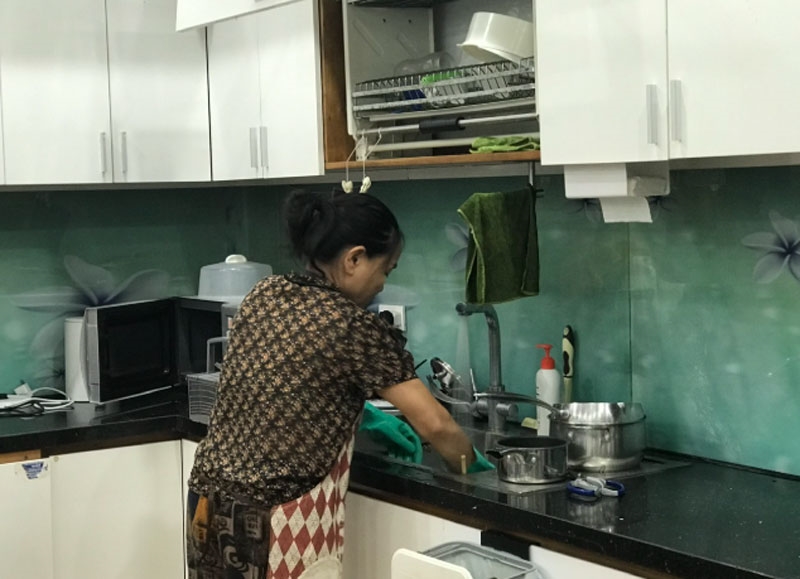
The Thirty Gold Bars He Refused to Keep
Two days later, Daniel arranged to send the gold back to Mrs. Lin.
He contacted the person who had originally recommended her and asked whether they could help locate her.
The response came that evening.
Mrs. Lin had returned to her hometown and was staying in a small house belonging to an acquaintance. She had not taken another job yet.
She had apparently told the acquaintance that she intended to live quietly for a while.
Daniel listened to the information without saying much.
Then he asked for an address.
I thought he was planning to visit her.
Instead, he arranged for the gold to be returned through a trusted intermediary.
When I asked why he would not go himself, he said, "I don't know what I would say to her."
I could not argue with that.