But there is one small detail you might want to consider before turning off every light in the room: the bathroom.
Some experienced travelers prefer to leave the bathroom light on overnight, allowing a small amount of light to spill into the bedroom through the partially open door. At first, this may seem unnecessary. After all, a hotel room is designed to provide everything guests need for a comfortable stay, and most bathrooms have their own switches.
Yet keeping the bathroom light on can offer several practical benefits, particularly when you are sleeping in an unfamiliar place. From finding your way to the bathroom in the middle of the night to avoiding accidental falls, a simple lighting choice can make a hotel room easier to navigate.
However, this habit is not essential for everyone, and leaving the light on is not a universal safety recommendation. The best approach depends on the layout of the room, the brightness of the light, your sleeping preferences, and whether you have access to a night-light or other low-level lighting.
Understanding the reasons behind this small travel habit can help you decide whether it is worth trying on your next hotel stay.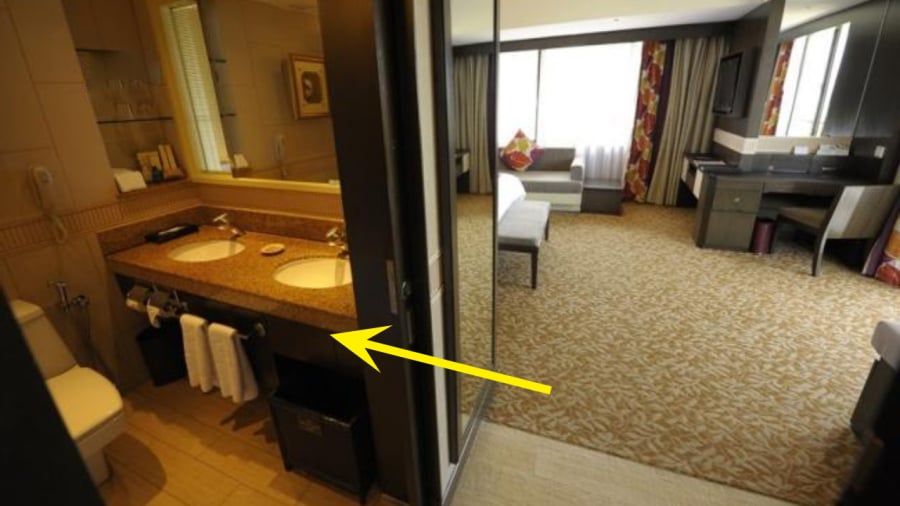
1. The Biggest Reason: You Are Sleeping in an Unfamiliar Environment
One of the most important differences between sleeping at home and sleeping in a hotel is familiarity.
At home, you generally know where everything is. You remember the distance between your bed and the bedroom door. You know where the bathroom begins, where the furniture is positioned, and how to move through the room without looking directly at every object.
Even in complete darkness, your brain can rely on familiar spatial information.
A hotel room is different.
The bed may be positioned on the opposite side of the room from what you expect. The bathroom entrance may be hidden behind a wall. A suitcase may be sitting near the foot of the bed, while a desk, chair, or low table occupies a place you would not normally expect.
You may have walked through the room when you first arrived, but that does not mean you can navigate it confidently while half asleep.
This becomes particularly relevant when you wake up suddenly during the night and need to find the bathroom.
A small amount of light coming from the bathroom can help you recognize the direction of the doorway and distinguish the bedroom from the adjoining space. Instead of relying entirely on memory and touch, you have a visible reference point.
The benefit is not that the light makes an unfamiliar room completely safe. Rather, it can reduce the number of things you need to figure out when you are tired, disoriented, or moving through the room with limited visibility.
For travelers who frequently stay in different hotels, this small convenience may be reason enough to leave a light on.
2. It Can Help You Find the Bathroom Without Turning on Bright Lights
Waking up in the middle of the night is common, particularly when traveling.
You might need to use the bathroom, drink some water, check the time, or adjust the temperature in the room. Sometimes you wake up naturally; other times, unfamiliar sounds or changes in your sleeping environment interrupt your rest.
If the room is completely dark, you may have to reach for a bedside lamp or use your phone's flashlight.
Neither option is always ideal.
A bright bedside lamp can suddenly illuminate the entire room, making it difficult to return to a relaxed state. A phone flashlight can also be uncomfortable to look at directly, especially when your eyes have adjusted to darkness.
A bathroom light can provide an alternative.
If the bathroom door is partly open and the light is not excessively bright, the illumination spilling into the bedroom may be enough to help you locate the doorway and move toward it without switching on the main lights.
You can then use the bathroom without having to search for the switch in complete darkness.
The key is to keep the lighting comfortable. A bright bathroom light shining directly toward the bed may disturb your sleep more than it helps. If possible, choose a dimmer light source or position the door so that the light illuminates the floor rather than your face.
In some rooms, a dedicated night-light can achieve the same result with less disruption.