The BR-251 Tragedy: A Nation Mourns as 9 Lives Are Lost in Devastating Collision
Nine people were expected to reach their destinations that day. Some were returning from work, others were travelling along a familiar highway, and their families had every reason to believe they would soon be home. Instead, a devastating collision on Brazil's BR-251 turned an ordinary journey into a tragedy that left families waiting for news and communities searching for answers.
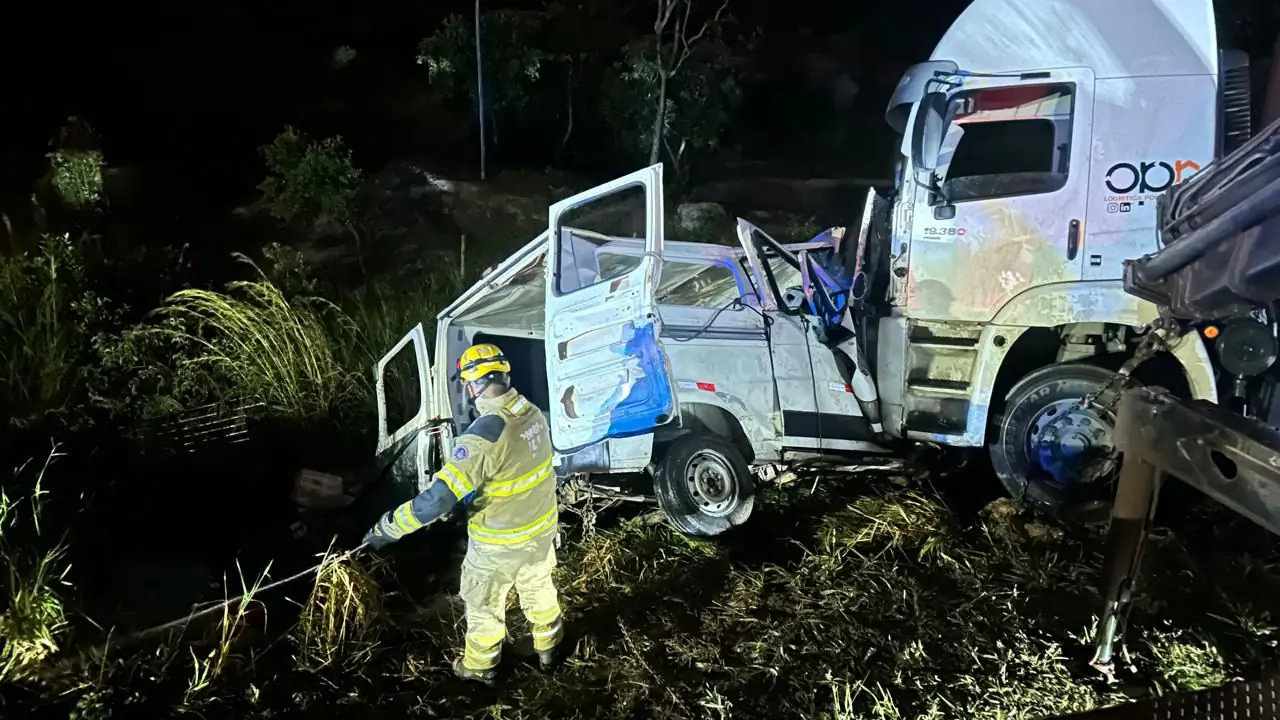
The image accompanying the report shows the aftermath of a serious road collision on a wet, winding stretch of highway. A red pickup has been forced against the roadside barrier, a dark SUV is badly damaged, and emergency responders are working beside a recovery truck. The scene captures the danger of a high-impact crash, but it does not, by itself, establish the full circumstances or confirm the identities of those involved.
The report's headline states that nine people lost their lives. It also describes a collision near Grão Mogol and refers to a van carrying workers, a truck, and a singer among the victims. Those details deserve careful examination: when lives have been lost, accuracy matters as much as emotion. The following article explores the tragedy described in the supplied report, the questions a proper investigation must answer, and the wider road-safety issues that such a devastating event brings into focus.
An important correction before the full story: The screenshot appears to reuse details from a real BR-251 disaster, but the verified collision happened on May 13, 2025, not November 7, 2026. It occurred near Barrocão, in Grão Mogol, Minas Gerais, and involved a passenger van and a tractor-trailer. Authorities reported nine deaths and ten injuries. The nine people who died were travelling in the van; the available reports do not substantiate the screenshot's suggestion that a singer was among them. The red pickup and dark SUV in the supplied photograph also do not match the vehicles described in the contemporaneous reports. I’ll keep the article grounded in the documented event rather than repeat those unsupported details.
The BR-251 Tragedy: A Nation Mourns as 9 Lives Are Lost in Devastating Collision
The real story behind the fatal collision near Grão Mogol, Brazil: nine people died, ten were injured, and investigators faced difficult questions about what happened on the highway that night.
Chapter 1: A Journey That Never Reached Its Destination
There are journeys that begin with ordinary plans: arriving home, visiting relatives, returning to a familiar town, or finally reaching a destination after hours on the road. Passengers settle into their seats, check their phones, talk quietly, or close their eyes for a little rest. Nobody expects an ordinary trip to become the last journey they will ever take.
That was the heartbreaking reality behind the collision on Brazil's BR-251 highway on the night of May 13, 2025. Near the community of Barrocão, in the municipality of Grão Mogol, northern Minas Gerais, a passenger van and a heavy truck collided with devastating consequences. Nine people travelling in the van died, including eight adults and one child. Ten others were injured.
The crash shocked communities far beyond the immediate location. The van had been travelling from the Triângulo Mineiro region toward Ceará, carrying people whose plans and personal stories were connected to places hundreds of kilometres apart. Their families were waiting for them at the other end of the journey. Instead, relatives received news that no family wants to hear.
The collision occurred at approximately 9:30 p.m. near kilometre 446 of the BR-251, close to Barrocão. The vehicles left the roadway after the impact, and the van ended up in a difficult-to-reach area. Some passengers were trapped in the wreckage, making the rescue operation especially challenging.
The scale of the disaster required a coordinated response. Firefighters, emergency medical teams, highway police, and forensic personnel were called to the scene. Rescuers had to work carefully around severely damaged vehicles while identifying survivors and arranging medical assistance.
The nine fatalities were all occupants of the van. Eight other people from that vehicle survived with injuries, while the two occupants of the truck were also hurt. The injured were transported to hospitals in the region, including facilities in Francisco Sá and Montes Claros.
The first hours after a collision of this scale are often filled with confusion. Emergency teams must establish what has happened, determine how many people are involved, locate survivors, and make the scene safe. Families, meanwhile, may know only that a vehicle has been involved in a serious crash. They wait for official information, hoping that the names of their loved ones will not appear among the victims.
For the communities connected to the passengers, the tragedy was not simply a highway incident. It was a sudden interruption of family life, friendships, work, and future plans.
Yet the human loss was only one part of the story. Investigators also faced a difficult question: how did two vehicles travelling in opposite directions end up in such a destructive collision?
That question would lead to a closer examination of the road, the vehicles, the conditions that night, and the evidence left behind.
Chapter 2: What Happened Near Barrocão?
The BR-251 collision took place in northern Minas Gerais, in an area where long-distance road travel is an important part of everyday life.
The van was travelling from the Triângulo Mineiro toward Ceará. The truck was moving in the opposite direction, reportedly travelling from the Northeast toward Rio Grande do Sul. The two vehicles met near Barrocão, in the municipality of Grão Mogol.
Initial reports placed the crash at around 9:30 p.m. on May 13, 2025. The precise kilometre reference varied slightly between early reports, but the fire department and several established news organizations identified the area around kilometre 446.
According to preliminary information released by authorities, the collision was frontal. The impact was severe enough to send the vehicles off the roadway and leave several people trapped.
A frontal collision is particularly dangerous because the forces involved can be extremely high. When two vehicles approach one another from opposite directions, their combined closing speed can produce a violent impact. The outcome depends on many factors, including the speed of each vehicle, the angle of impact, the mass and structure of the vehicles, restraint use, and the surrounding road environment.
A passenger van and a large truck also have very different dimensions and structural characteristics. A heavy vehicle carries much greater mass than a small passenger vehicle. In a direct collision, that difference can create an especially dangerous situation for the occupants of the smaller vehicle.
However, the size difference alone does not establish why a collision occurred. Investigators must determine the movement of both vehicles before impact and examine the physical evidence before reaching conclusions.
The crash scene presented additional difficulties. The van was in an area that was not easily accessible, and victims were trapped in damaged sections of the vehicle. Emergency workers had to reach those people, assess their condition, and remove survivors without creating further danger.
The location also meant that emergency teams needed to manage traffic and maintain access for rescue vehicles. When a major collision occurs on a highway, responders must protect the scene from passing traffic while allowing firefighters, ambulances, police, and forensic personnel to work.