The BR-251 operation involved the Minas Gerais Fire Department, the Mobile Emergency Care Service (SAMU), the Federal Highway Police (PRF), and Civil Police forensic personnel.
Each service had a different responsibility, but their work had to be coordinated.
The firefighters' role
Firefighters are often among the first specialist teams to deal with a major vehicle collision.
Their work may include stabilizing damaged vehicles, checking for fire hazards, reaching people trapped inside, and using hydraulic equipment to remove sections of metal.
In severe collisions, doors and structural components can be distorted so badly that ordinary access is impossible. Specialized tools may be required to cut or spread parts of the vehicle.
The operation must be conducted carefully. A vehicle that appears stationary may still shift if it is not properly stabilized. Rescuers must also be aware of leaking fuel, damaged electrical systems, sharp metal, and other hazards.
The role of emergency medical teams
SAMU personnel provide medical assessment and treatment.
At the scene of a major collision, medical teams must prioritize patients according to the severity of their injuries. This process is often called triage.
People with life-threatening injuries may need immediate intervention and rapid transport. Others may require stabilization before being moved. Patients with less severe injuries still need proper assessment because some injuries may not be immediately obvious.
The injured passengers were transported to hospitals in Francisco Sá and Montes Claros.
The use of several ambulances allowed emergency teams to distribute patients according to their medical needs and the capacity of local facilities.
The importance of highway police
The Federal Highway Police helped control traffic and secure the road.
Closing a highway after a severe collision is disruptive, but it is often necessary. Passing vehicles can create additional danger for rescue workers and may damage evidence.
Police also help manage diversions, maintain access for emergency vehicles, and support the investigation.
Why the road remained closed
The BR-251 was closed while responders worked at the scene and forensic teams collected evidence.
A road cannot always be reopened immediately after injured people have been removed. Damaged vehicles may need to be recovered, debris must be cleared, and the roadway may need inspection before normal traffic can safely resume.
The closure following the May 13 collision lasted several hours. Reports indicated that traffic was released during the early hours of May 14.
For drivers caught in the interruption, the delay may have been frustrating. But keeping the road closed until it was safe was an essential part of the response.
Chapter 6: The Human Cost Behind the Headlines
A headline can communicate the number of people killed in a crash. It cannot fully explain what those deaths mean to the people who knew them.
The nine victims had individual lives, relationships, responsibilities, and plans. Their families were connected to different places, and the news of the collision travelled across those communities.
Some relatives may have been waiting for a phone call. Others may have expected a message saying the journey was nearly over. A family member who had been planning a meal, preparing a room, or arranging to meet a passenger suddenly faced an entirely different reality.
The tragedy also affected people who did not personally know the victims.
Communities often respond to major accidents with public expressions of grief. Local officials, neighbours, religious groups, and residents may offer support to families. People may share messages of condolence or organize practical assistance.
The van's journey toward Ceará meant that the consequences were not confined to Minas Gerais. The passengers had connections to towns and communities along the route and at their intended destination.
Families waiting for confirmation
One of the hardest aspects of a major disaster is the period when information remains incomplete.
Early reports may contain uncertain numbers. Names may not yet be confirmed. Hospitals may be treating multiple patients, and relatives may struggle to find out where their loved ones have been taken.
Authorities must balance the need to inform the public with the responsibility to protect families from receiving incorrect information.
Official identification is essential. It prevents rumours and mistaken reports from adding to the suffering.
The importance of respectful reporting
Fatal accidents attract attention because they involve sudden loss and unanswered questions. But responsible reporting must avoid turning victims into dramatic details.
The identities and personal stories of victims should be shared only when reliable information is available and publication is appropriate.
In the BR-251 case, some reports identified victims from Ceará, including people connected to Barro, Brejo Santo, and Crato. Those reports helped show how the tragedy reached communities far from the crash site.
The available verified reporting does not establish that a singer was among the nine people who died. That detail appears in the supplied screenshot's narrative, but it should not be repeated as fact.
The same caution applies to the photograph. The image supplied with the article shows a red pickup and a dark SUV, while contemporaneous reports describe a passenger van and a tractor-trailer. It should not be presented as an authenticated photograph of the May 2025 collision.
Accuracy is part of respecting the people who lost their lives.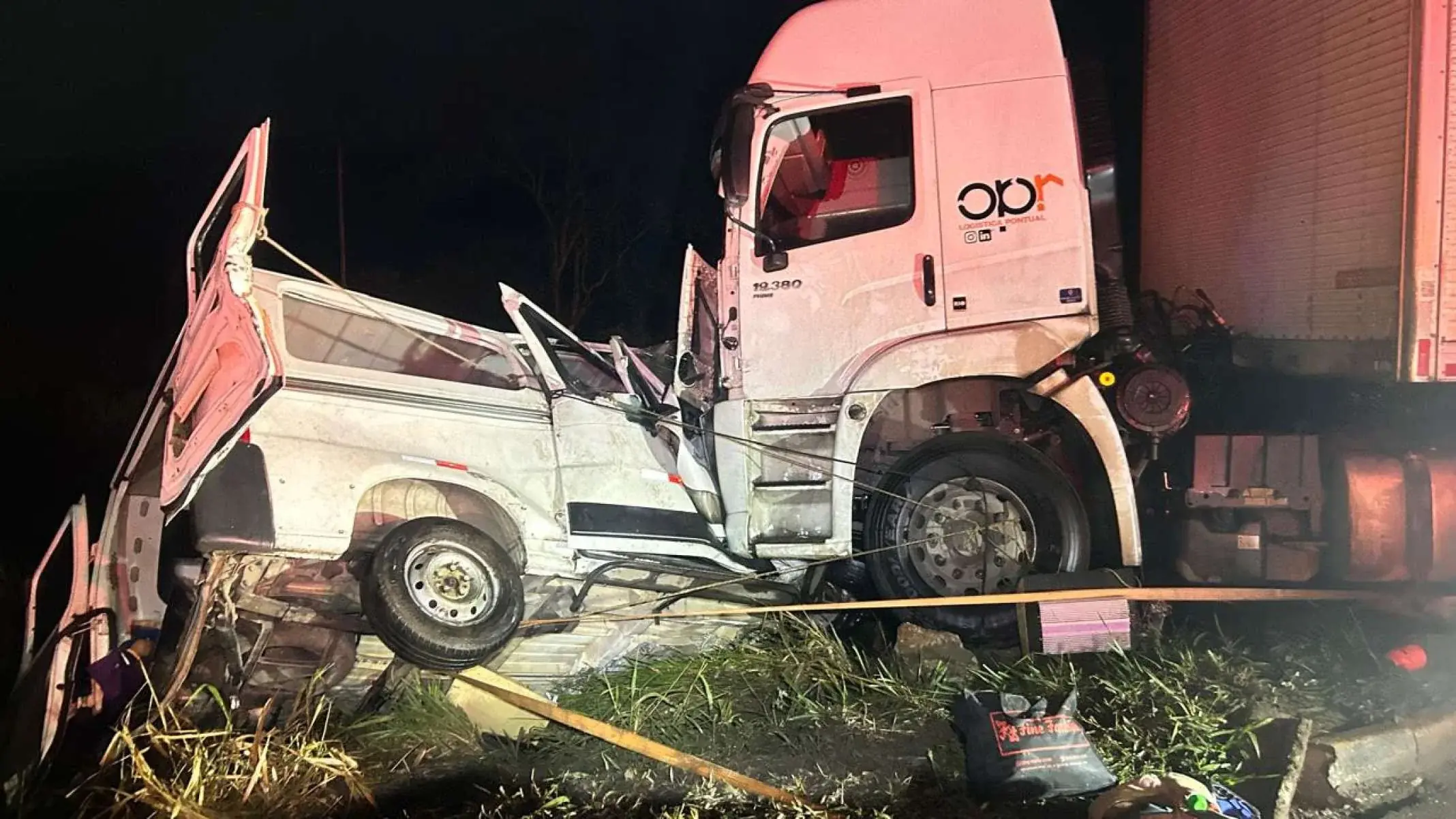
Chapter 7: Why the BR-251 Is an Important Route
The BR-251 is a federal highway in Brazil. It connects regions and supports the movement of passengers, commercial goods, and agricultural products.
For many people, highways are essential infrastructure. They connect towns to hospitals, schools, workplaces, markets, and family networks. Long-distance roads also support the movement of goods across states.
But highways that carry a mixture of passenger vehicles and heavy trucks require careful safety management.
A route may include long stretches between towns, changing road conditions, curves, gradients, and areas where drivers must share limited space with large vehicles.
The risk of a serious collision can increase when several challenging factors occur together.
Heavy traffic and mixed vehicle types
Passenger cars, buses, vans, motorcycles, and trucks all use the same road network.
Each type of vehicle has different braking characteristics, visibility limitations, acceleration, and handling.
A heavy truck requires more distance to stop than many smaller vehicles, particularly when fully loaded. It may also need additional space to negotiate curves and gradients.
A van carrying passengers has less mass and different structural protection. In a collision with a much heavier vehicle, its occupants may face severe forces.
This does not mean that every encounter between a van and a truck is dangerous. It means that drivers must respect the differences between vehicles and maintain appropriate safety margins.
Long-distance journeys and driver fatigue
Fatigue is a major road-safety concern.
Drivers who spend many hours behind the wheel may experience reduced concentration, slower reactions, and difficulty maintaining attention.
Fatigue can develop gradually. A driver may not always recognize how much their performance has deteriorated.
For professional drivers, rest planning and compliance with applicable regulations are important. Employers and transport operators also have responsibilities to organize journeys in ways that do not encourage unsafe schedules.
However, fatigue was not established as the cause of the BR-251 collision in the information available here. It is a general safety issue, not a confirmed explanation for this particular crash.
Road geometry and visibility
Curves, slopes, narrow shoulders, and changes in road alignment can affect how drivers perceive and respond to hazards.