A person with a relatively straightforward fracture may return to normal activity after a period of rehabilitation. Another survivor with multiple injuries may need much longer and may experience permanent limitations.
Psychological effects
A collision can be traumatic even for people who do not sustain severe physical injuries.
Survivors may experience anxiety when travelling, nightmares, difficulty sleeping, or distress when hearing sounds associated with the crash.
Some may avoid roads or vehicles for a period. Others may find that ordinary activities trigger memories of the event.
Professional psychological support can be helpful for people experiencing persistent distress.
Family and financial consequences
Serious injuries can affect a household's income and responsibilities.
A person who cannot work may need financial support. Family members may take time away from employment to provide care or travel to medical appointments.
Some households may face transport costs, rehabilitation expenses, and other unexpected demands.
Support from local communities, public services, and social assistance organizations can make an important difference.
The importance of long-term support
Emergency treatment is essential, but recovery should not end when the immediate crisis passes.
Survivors may need coordinated medical care, mental-health support, and help returning to education or employment.
Families who have lost loved ones may also need bereavement support and assistance with practical arrangements.
The true aftermath of a major road collision is measured not only in the first hours of rescue but also in the months and years that follow.
Chapter 12: What the BR-251 Tragedy Teaches About Road Safety
The nine deaths on the BR-251 are a reminder that road safety depends on many connected factors.
A single collision may involve driver behaviour, vehicle condition, road design, visibility, speed, and the actions of other road users. The precise combination must be established through investigation.
Still, there are important lessons that can be applied more widely.
1. Respect the centre line
Remaining in the correct lane is one of the most basic requirements of safe driving.
Crossing into the opposite lane can create an immediate risk of a head-on collision, particularly on roads carrying heavy vehicles.
Drivers should avoid unsafe overtaking and remain alert when approaching curves, slopes, and narrow sections.
2. Adjust speed to conditions
The posted speed limit is not a guarantee that the same speed is safe in every situation.
Rain, darkness, fog, traffic, and road geometry can all require a lower speed.
Drivers should leave enough time and distance to respond to unexpected hazards.
3. Manage fatigue
A tired driver may have slower reactions and reduced attention.
Long-distance journeys should include appropriate rest. Drivers should not continue simply because they are close to their destination.
Transport operators have a responsibility to create schedules that support safe driving.
4. Maintain vehicles
Tyres, brakes, steering, lights, and other safety systems should be inspected regularly.
A vehicle that is poorly maintained may become difficult to control or stop.
Maintenance should be treated as a core safety requirement, not an optional expense.
5. Use seat belts
Every passenger should use an available seat belt.
Children should be properly restrained in accordance with their age, size, and the applicable laws.
Seat belts cannot prevent every injury, but they significantly improve occupant protection in many types of collision.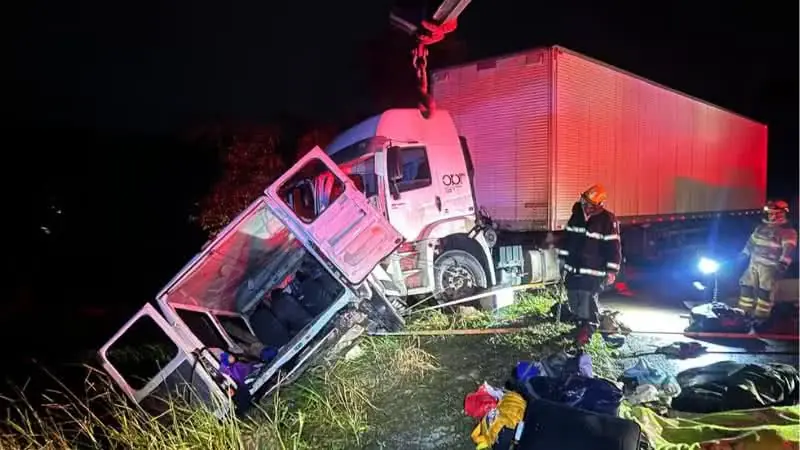
6. Improve highway infrastructure
Road authorities should assess areas with repeated crashes, difficult curves, poor visibility, inadequate shoulders, or insufficient warning signs.
Possible improvements may include better markings, lighting, barriers, drainage, road-surface repairs, and traffic-control measures.
Engineering changes can reduce the likelihood of collisions and help limit their consequences.
7. Strengthen passenger transport oversight
Passenger vehicles should meet the relevant technical and regulatory requirements.
Authorities should monitor compliance, while operators should ensure that their drivers and vehicles are suitable for the journeys they undertake.
8. Improve emergency response
The BR-251 rescue operation showed the importance of coordinated emergency services.
Firefighters, ambulance teams, police, and forensic personnel need training, equipment, communication systems, and access to the scene.
A rapid and organized response can improve the chances of survival for injured people.
Chapter 13: The Road After the Collision
When the BR-251 reopened, traffic gradually returned to the highway.
For drivers passing through the area, the road became part of their normal route again. They may have known little about the people involved or the families affected by the collision.
But for those families, the location would always be connected to a life-changing event.
The aftermath of a fatal collision often includes a period of reflection. People ask whether the tragedy could have been prevented, whether the road is safe, and whether the transport system is doing enough to protect passengers.
These questions are important because public attention can help turn grief into meaningful safety improvements.
However, the process should not rely on rumours or dramatic claims. It should be based on reliable evidence, official findings, and practical recommendations.
The BR-251 tragedy also demonstrates why photographs and online captions should be checked before being used to tell a news story. The supplied screenshot includes an image of two damaged passenger vehicles, while verified reporting about the May 2025 disaster describes a van and a tractor-trailer. It also gives a November 2026 date, even though the documented crash occurred in May 2025.
Those differences matter. A photograph that does not depict the actual incident can mislead readers, and an incorrect date can make an old tragedy appear to be a new event.
Responsible reporting should explain these discrepancies rather than quietly repeat them.
Chapter 14: Remembering the Nine Lives Lost
The most important part of this story is not the dramatic description of twisted metal or the number of emergency vehicles at the scene.
It is the nine people who never reached their destination.
They were passengers on a journey that had been expected to end normally. Their deaths affected families and communities connected to different parts of Brazil. The child among the victims represented a future that ended far too soon.
Ten other people were injured, and their recovery became another part of the tragedy's lasting impact.
The work of firefighters, medical teams, police officers, and forensic investigators was essential in responding to the collision. Their efforts helped rescue survivors, treat the injured, identify the victims, and establish the circumstances that needed further examination.
But emergency response is only one part of road safety. Preventing future disasters requires attention to road conditions, driver behaviour, vehicle maintenance, transport regulation, and enforcement.
A highway should connect people to their destinations—not become the place where families lose the people they love.
The BR-251 collision near Grão Mogol deserves to be remembered accurately. It happened on May 13, 2025, involved a van and a tractor-trailer, and left nine people dead and ten injured. Preliminary police information indicated that the truck entered the opposing lane, while investigators examined the circumstances surrounding the impact.
The available reporting does not support the claim that a singer was among the victims, nor does the supplied photograph appear to document the actual collision.
Those corrections do not diminish the tragedy. They ensure that the people who died are remembered in a story grounded in facts rather than unsupported details.
The road may have reopened, but the loss remained with the families. The strongest tribute to the victims is to remember them with dignity and to take seriously the work of making every journey safer.