Chapter 1: The Vegetable in the Picture — What Is It, and Should You Be Worried?
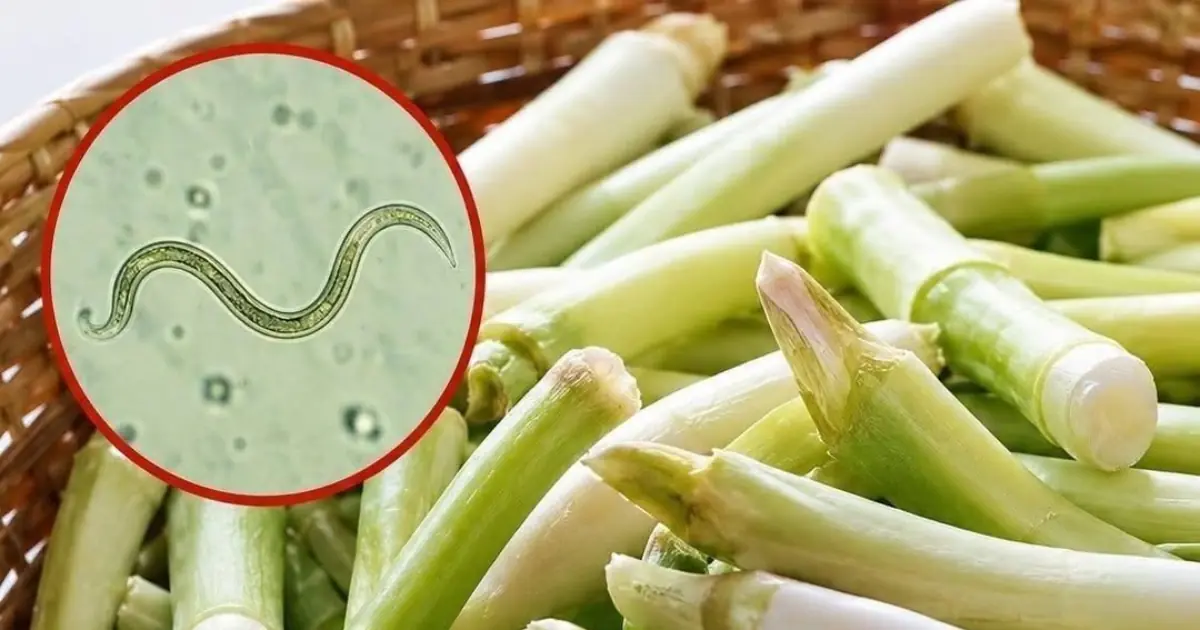
At first glance, the vegetable shown in the viral image looks unusual. It has long, pale stalks with green tips and thick, white bases. The photograph appears to show water bamboo shoots, a popular ingredient in several Asian cuisines.
Water bamboo is appreciated for its crisp texture and mild flavor. It can be sliced into stir-fries, added to soups, cooked with meat, or served as part of a vegetable dish. In many places, it is sold fresh in traditional markets and supermarkets.
But the image makes a frightening claim: that this is one of the dirtiest vegetables and that it is loaded with parasites.
Is that really true?
The answer requires a closer look. Certain parasites can be transmitted through raw aquatic vegetables, but there is no reliable evidence in the picture proving that the specific vegetable shown is contaminated. A magnified worm illustration is not a laboratory test, and it cannot establish that parasites are present in the food.
The important issue is not whether a vegetable grows near water. It is whether the water, soil, harvesting environment, and handling process are safe.
Why aquatic vegetables receive special attention
Some vegetables grow in or near freshwater environments. These include watercress and other aquatic or semi-aquatic plants.
Such environments can sometimes become contaminated by the waste of infected animals. Under suitable conditions, certain parasites can complete part of their life cycle in freshwater ecosystems and attach their infectious stages to aquatic plants.
One example is Fasciola, a parasitic flatworm commonly known as a liver fluke.
According to the Centers for Disease Control and Prevention (), people can become infected with Fasciola by eating raw watercress or other freshwater plants contaminated with parasite larvae. Contaminated drinking water and vegetables washed or irrigated with unsafe water can also be sources of exposure.
+1
This is a genuine food-safety concern, but it should not be exaggerated. It does not mean every aquatic vegetable carries liver flukes, nor does it mean every vegetable sold at a market is dangerous.
The difference between water bamboo and watercress
The distinction matters because the image appears to show water bamboo shoots rather than watercress.
Water bamboo is a different plant from watercress. The specifically names watercress and other freshwater plants in its explanation of Fasciola transmission. That does not establish that every type of water bamboo has the same risk or that the pictured batch is contaminated.
The risk depends on where the plant was grown, whether the water was contaminated, how it was harvested, and how it was prepared.
A vegetable grown in a controlled agricultural environment using safe water is not equivalent to a wild aquatic plant collected from a contaminated waterway.
Why the word “dirtiest” can be misleading
Calling a vegetable one of the dirtiest foods may attract attention, but it does not explain the actual hazard.
A vegetable can have soil on its surface without carrying parasites. Another may look perfectly clean while having been exposed to contaminated irrigation water.
Parasite contamination is not always visible. Consumers cannot reliably determine whether a plant carries infectious larvae simply by looking at its color, smell, or texture.
That is why the source of the food and the way it is prepared are more important than dramatic claims in a social media image.
The World Health Organization explains that foodborne trematode infections are associated with specific foods and environmental conditions. In the case of Fasciola, infection can occur when people consume aquatic vegetables carrying parasite larvae. The risk is influenced by local sanitation, water quality, livestock exposure, and food habits.
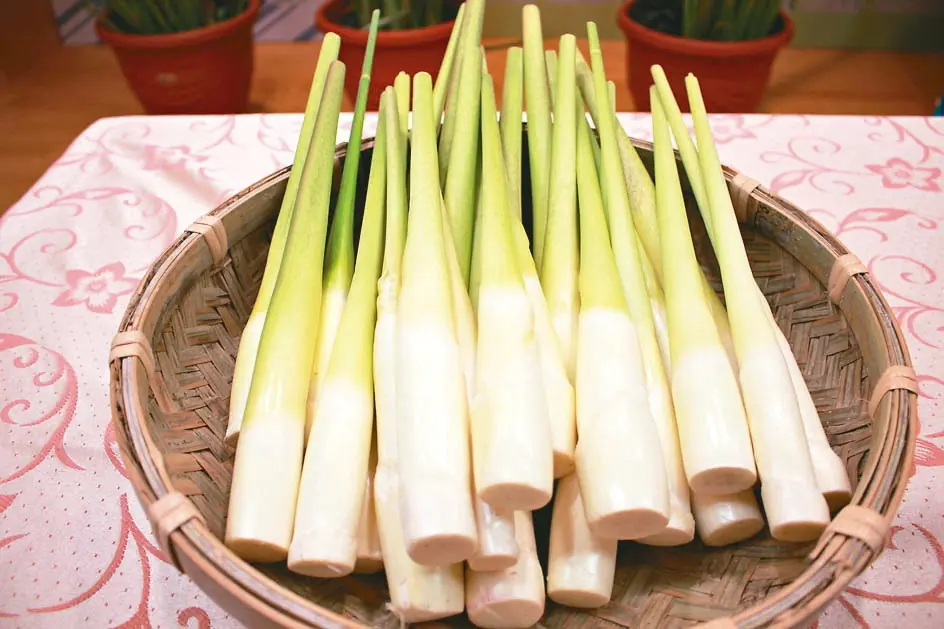
Should you stop eating this vegetable?
There is no reason to panic or automatically remove water bamboo from your diet.
The sensible approach is to buy it from a reliable source, wash it properly, and cook it thoroughly when its growing conditions or safety history are uncertain.
For aquatic plants such as watercress, the advises avoiding raw consumption in areas where fascioliasis occurs. Cooking is a safer choice than assuming that rinsing alone will remove every possible parasite.
+1
The real lesson is simple: the vegetable itself is not automatically dangerous. The conditions in which it grows and the way it reaches your plate determine much of the risk.
Chapter 2: How Parasites Can Reach Aquatic Vegetables
To understand why some aquatic vegetables require extra care, it helps to understand how parasites move through the environment.
The process is more complicated than a worm simply crawling onto a vegetable. Certain parasites have life cycles involving animals, freshwater, microscopic organisms, and aquatic plants.
The life cycle of a liver fluke
Fasciola is a flatworm that can infect the liver and bile ducts of animals such as sheep, cattle, goats, and other plant-eating mammals. Humans can also become infected.
The cycle can begin when an infected animal releases parasite eggs in its feces. If those eggs reach suitable freshwater, they can develop through stages involving freshwater snails.
The parasite eventually produces larvae that leave the snail and attach to nearby aquatic plants. These larvae can form protective structures on the plant surface.
When a person or animal eats contaminated plants without adequate preparation, the parasite may enter the digestive system.
The larvae can then migrate through the body and eventually reach the liver and bile ducts.
The describes raw watercress and other contaminated freshwater plants as important sources of human fascioliasis. The WHO also identifies aquatic vegetables as a route of infection for Fasciola species.