The absence of a precise global number does not mean the risk is imaginary. It means that surveillance and reporting are incomplete, particularly in rural areas where people may have limited access to hospitals, laboratories, and specialist diagnosis. Some illnesses may never be correctly identified as cassava-related, and deaths may be recorded under broader categories without the food exposure being investigated.
Why Do Nearly 500 Million People Still Eat Cassava?
After hearing about cyanide poisoning, it may seem surprising that cassava remains so widely consumed. But the answer becomes clearer when its importance to food security is understood.
1. It Is Affordable and Accessible
In many tropical regions, cassava is one of the most practical crops a household can grow. It can be cultivated by small farmers, harvested for home consumption, and sold in local markets. Its roots can provide a substantial amount of energy, and many communities have developed established ways to turn it into flour, meal, dough, and other everyday foods.
For families living on limited incomes, the price and availability of staple foods matter enormously. Replacing cassava with imported grains, meat, or other more expensive products may not be financially possible. Even when people understand the risks of poor processing, they still need food that is affordable and available.
Cassava also supports more than the people who eat it. Farmers earn income from growing and selling the crop. Traders transport it. Processors turn it into flour and other products. Small businesses sell prepared cassava foods in markets and roadside stalls. A sudden move away from cassava could affect an entire local economy.
2. It Can Grow Where Other Crops Struggle
Cassava is known for its ability to grow in tropical conditions that can be challenging for other staple crops. It can tolerate periods of drought and may perform in relatively poor soils. It is also valued because its roots can remain underground for a period before harvest, offering farmers flexibility when deciding when to collect their crop.
That resilience matters in regions where rainfall is irregular, soil quality is limited, or harvests are vulnerable to climate stress. A crop that can survive difficult conditions gives families another way to protect their food supply.
The FAO describes staple crops as being adapted to the conditions of the areas where they are grown. It notes that drought tolerance and the ability to grow in soils with low nutrient levels can help farmers reduce risk and make agricultural systems more resilient. It also identifies cassava as one of the most important staples for developing countries.
This does not mean cassava is immune to climate change, pests, or disease. Farmers can still experience poor harvests, and changing weather can affect production. But its ability to grow in conditions that may challenge other crops helps explain why it remains so important.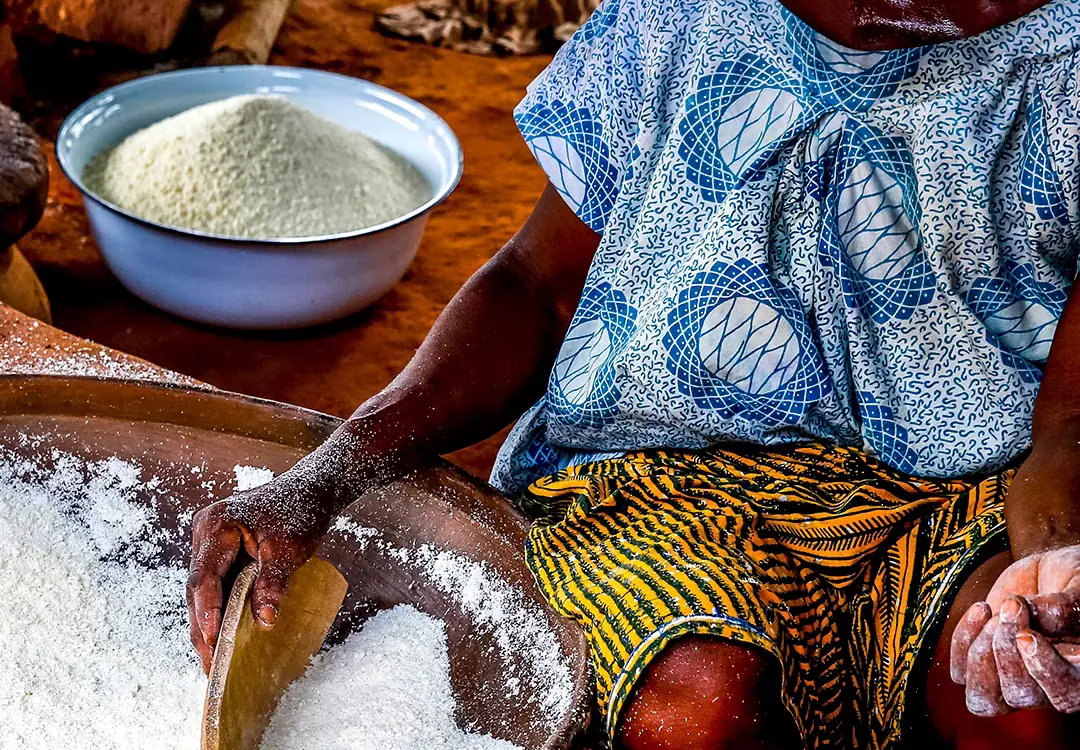
3. It Can Be Stored and Processed in Many Ways
Fresh cassava roots do not remain in good condition indefinitely after harvest. They can deteriorate relatively quickly, which creates pressure to process and use them promptly. However, transforming cassava into flour, dried chips, fermented products, or starch can make it easier to store, transport, and sell.
These processed forms are central to the crop's value. A household may harvest fresh roots and turn them into a product that can be kept for later meals. A processor may buy roots from several farmers, produce flour, and sell it to shops or local markets. In this way, cassava becomes part of a broader food system.
Processing is also where safety becomes especially important. The methods that extend shelf life and create familiar foods must be carried out properly to reduce cyanogenic compounds. The same steps that make cassava convenient can also help make it safer when they are correctly applied.
4. It Is Part of Culture and Everyday Life
Food is more than calories. It is habit, identity, memory, and community. Traditional cassava dishes are connected to family recipes, local celebrations, and the knowledge passed from one generation to another.
A person who grew up eating cassava may associate it with home cooking, family gatherings, or the food prepared by parents and grandparents. In many places, the crop is so familiar that it is woven into daily routines and local economies.
That cultural importance should not be dismissed. The goal of food safety is not to shame people for eating a staple food or to suggest that entire communities should abandon it. The goal is to make sure that people can continue to use an important crop without being exposed to avoidable danger.
The FAO's historical estimate of around 500 million people relying on cassava as a basic food helps put this into perspective. The number is not a precise current headcount, but it demonstrates the scale of the crop's importance.
Staple foods: What do people eat?
How Cassava Is Made Safer Before It Reaches the Table
The most important message about cassava is that it can be eaten safely when suitable varieties are handled and processed correctly. Across cassava-growing regions, communities have developed different methods to reduce the natural toxins in the roots. The exact process depends on the variety, the local food product, and established regional practices.
There is no single preparation shortcut that should be assumed to make every cassava root safe. Simply washing the outside or briefly boiling a piece may not be enough, particularly when the root has a high cyanogenic content.
Peeling and Removing the Outer Layers
The first stage in many traditional preparation methods is to remove the tough outer covering. Cassava roots have a brown, rough exterior and a pale interior. Peeling helps remove the outer layers and prepares the edible portion for further processing.
However, peeling alone does not eliminate the cyanogenic compounds throughout the root. It is an initial preparation step, not a complete detoxification method. Treating a peeled root as automatically safe would be a serious mistake.
Cutting, Crushing, or Grating
Many processing methods break the root into smaller pieces or crush it into a pulp. This is more than a way to change its texture. Damaging the plant tissue allows naturally occurring enzymes to come into contact with cyanogenic glycosides, helping transform them into compounds from which cyanide can be released and subsequently removed during appropriate processing.