Treatment depends on the individual case.
Some require observation, while others may need a procedure to prevent recurrence.
3. Oral fibroma: A firm lump caused by repeated irritation
An oral fibroma is generally a benign growth of fibrous connective tissue.
It can develop when an area inside the mouth experiences repeated irritation.
For example, someone who frequently bites the inside of their cheek may eventually develop a small, firm lump.
Fibromas can occur on the inner cheeks, tongue, gums, or lips.
They are often similar in color to the surrounding tissue and may not cause pain.
However, a persistent lump should still be examined.
A dentist may recommend removing it if it causes discomfort or if its appearance needs further investigation.
4. Dental abscess: When an infection creates swelling
A dental abscess is different from a harmless mucus-filled cyst.
It develops when bacteria cause an infection around a tooth or in the surrounding tissues.
Symptoms may include:
-
Severe or persistent toothache.
-
Swelling near the gums.
-
Pain when chewing.
-
Sensitivity to hot or cold foods.
-
An unpleasant taste in the mouth.
-
Pus or discharge.
-
Fever or facial swelling.
A dental abscess requires prompt treatment.
Antibiotics alone are not always sufficient because the underlying source of infection may need dental treatment, drainage, or another procedure.
If facial swelling spreads or causes difficulty breathing or swallowing, emergency medical care is necessary.
5. Oral cancer: A possibility that should not be overlooked
One of the most important conditions to understand is oral cancer.
Oral cancer can develop in several areas, including:
-
The tongue.
-
The floor of the mouth.
-
The gums.
-
The inner cheeks.
-
The lips.
-
The roof of the mouth.
-
The tissues near the tonsils.
It does not always produce obvious symptoms during its early stages.
Some people initially notice a persistent ulcer, a thickened area, a red or white patch, or an unusual lump.
The National Institute of Dental and Craniofacial Research identifies persistent sores, lumps, thick patches, and red or white areas as possible warning signs that should be evaluated.
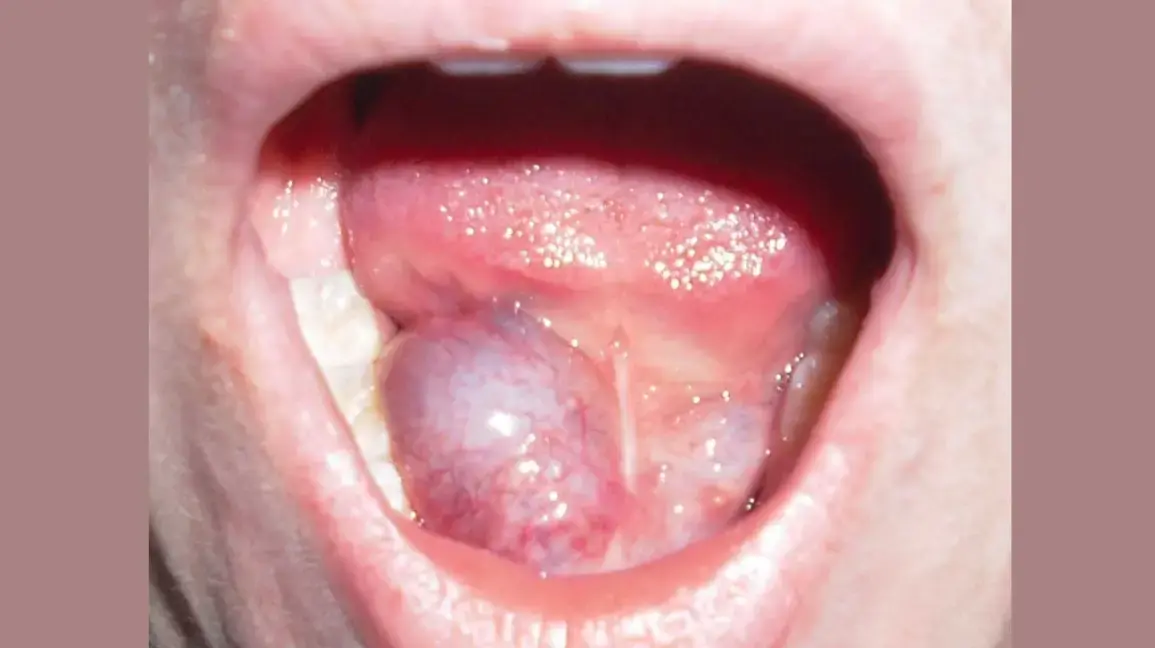
Why early examination matters
The problem with ignoring unusual mouth growths is that people may wait until the area becomes painful.
Unfortunately, some serious oral conditions do not cause significant pain during their early stages.
A painless lump can still deserve examination.
Similarly, a painful ulcer is not automatically cancer.
The appearance, duration, medical history, and examination findings all matter.
If a growth does not disappear, becomes larger, bleeds repeatedly, or changes in appearance, arrange an appointment with a dentist or doctor.
In some situations, a biopsy may be necessary.
A biopsy involves taking a small tissue sample for laboratory examination.
It is one of the methods used to establish whether an unusual growth is benign, precancerous, or cancerous.
Chapter 3: Five Warning Signs You Should Never Ignore
Not every mouth bump is dangerous.
However, certain changes deserve particular attention because they may indicate a condition requiring treatment.
The National Health Service and the National Cancer Institute both emphasize that persistent changes inside the mouth should be assessed rather than ignored.
NHS+2
Here are five warning signs worth remembering.
1. A mouth ulcer that does not heal
Most ordinary mouth ulcers improve within one or two weeks.
They may appear after accidentally biting the cheek, irritation from dental appliances, or minor tissue injury.
However, an ulcer that remains for several weeks deserves professional evaluation.
Pay attention if it:
-
Does not appear to be healing.
-
Becomes larger.
-
Develops an unusual appearance.
-
Bleeds without an obvious reason.
-
Continues to cause discomfort.
The NHS recommends seeing a healthcare professional when a mouth ulcer lasts longer than three weeks.
The National Institute of Dental and Craniofacial Research recommends assessment of suspicious mouth changes that persist for more than two weeks.
NHS+1
These timeframes should not be interpreted as a reason to delay examination if the lesion looks suspicious or is rapidly worsening.
2. Red or white patches inside the mouth
A red or white patch that does not disappear may need investigation.
One possible condition is leukoplakia, which involves white patches that cannot simply be wiped away.
Another is erythroplakia, which produces persistent red patches.
Not all such patches are cancerous.
However, some may contain abnormal or precancerous cells.
A dentist may examine the area and recommend a biopsy when appropriate.
Do not attempt to scrape off a persistent white patch with your fingernail or a toothbrush.
This can irritate the tissue and will not establish the underlying cause.
3. A lump that becomes harder or larger
A small swelling that gradually increases in size should not be ignored.
Pay particular attention if the lump:
-
Feels unusually firm.
-
Has irregular edges.
-
Appears fixed to the surrounding tissue.
-
Continues growing.
-
Develops an ulcerated surface.
-
Causes unexplained bleeding.
Some benign growths can also become larger, so these characteristics do not automatically mean cancer.
Nevertheless, an examination is important to identify the cause.
4. Difficulty swallowing, chewing, or moving the tongue
A persistent mouth growth may interfere with normal movement.
Some people notice that swallowing becomes uncomfortable.
Others feel as though something is stuck in their throat.
Difficulty moving the tongue or jaw can also occur with certain oral and throat conditions.
These symptoms may have causes unrelated to cancer, including inflammation, infection, and neurological problems.
However, if they persist or worsen, they should be assessed promptly.