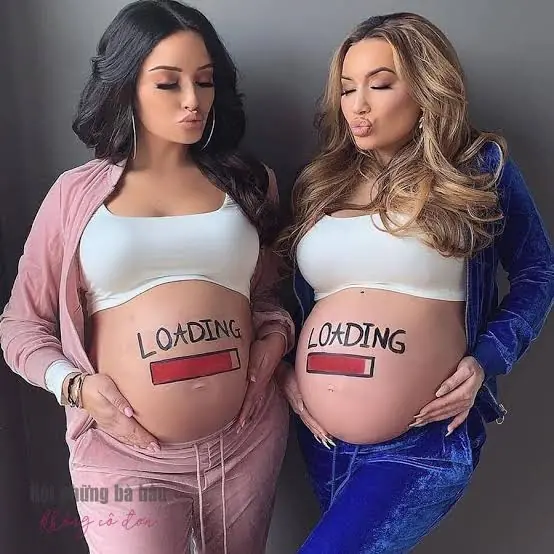
For several minutes, we simply stared at the phone.
Heritage Cryobank had been founded by Dr. Gerald Whitcomb, the same fertility specialist who had treated both our mothers decades earlier.
The discovery raised a frightening possibility.
What if the man who had promised our mothers anonymous donor sperm had actually used his own reproductive material?
And what if the donor we had selected — Daniel — was not an unrelated man at all?
The next six weeks were filled with medical appointments, genetic testing, phone calls, and questions that seemed to multiply faster than we could answer them.
Emily and I completed DNA tests.
Our mothers also agreed to provide additional information.
The results came back on a Thursday in August.
We were sitting at my kitchen table when the notifications appeared.
At the top of my DNA relatives list was Emily Carver.
Predicted relationship: Half-sister.
Shared DNA: 24.8%.
Emily's results showed the same relationship.
I read the number again.
Then I looked at her.
For twenty-five years, we had called each other sisters as a joke.
Now a laboratory report was telling us that the word was biologically accurate.
But there was more.
As we examined the results, we discovered dozens of other people with remarkably similar genetic relationships.
Jennifer Mattox.
Brian Okafor.
Laura Delancey.
Matthew Pruitt.
The list continued.
Forty-three people.
Forty-three half-siblings, born between 1979 and 1997, most of them in Ohio.
The information connected them to the Whitcomb Fertility Clinic.
Then we saw another name.
Daniel Whitcomb.
Predicted relationship: Half-sibling.
Shared DNA: 25.3%.
The donor we had selected for our pregnancies was also our biological half-brother.
His full name was Daniel Whitcomb.
He was a research biochemist working for a pharmaceutical company in Indianapolis.
He was also Dr. Gerald Whitcomb's biological son.
According to the information that later emerged, Daniel had been conceived through a separate arrangement involving his mother, a nurse who had worked at the clinic.
She had been told she was receiving donor sperm.
She believed the biological father was an anonymous man.
Daniel grew up in Dayton with his mother. He had never known his biological father and had been told that his father was a good man who simply couldn't be present.
Years later, while studying at Ohio State, Daniel needed money.
His mother had cancer, and her insurance did not cover all the expenses.
He noticed a flyer in the chemistry building advertising opportunities to become a sperm donor.
The organization was Heritage Cryobank.
He applied.
He did not know that the institution had been founded by his biological father.
He did not know that Dr. Whitcomb still had a role in reviewing donor profiles.
And he did not know that he already had dozens of biological siblings.
When the DNA results became known, Daniel contacted us through the testing website.
His message was short.
"Sarah and Emily, I just found out I have forty-three half-siblings. And that two of them used my donated sperm to conceive. I don't know what to say. I'm so sorry. I didn't know. I'd like to meet you, if you're willing."
We agreed.
We met him at a coffee shop in Columbus on a rainy Saturday afternoon.
Emily and I were seven months pregnant.
Daniel stood when we entered.
He was tall, with brown hair, hazel eyes, and wire-rimmed glasses.
For a moment, I couldn't speak.
He had the same nose.
The same stubborn chin.
Emily gripped my arm.
"Oh my God," she whispered.
Daniel was already crying.
"I'm so sorry," he said.
"It's not your fault," Emily answered.
He explained what he had learned from an investigative reporter who had been looking into Dr. Whitcomb's history after another half-sibling filed a lawsuit.
The investigation alleged that Dr. Whitcomb had used his own sperm in fertility procedures without the patients' knowledge or consent over many years.
The number of affected families was still being investigated.
Daniel looked down at our pregnant bellies.
"He knew this could happen," he said quietly. "He knew people could end up related without ever knowing it."
The room fell silent.
For the first time, I understood that the story was much bigger than our two families.
It involved dozens of people who had been denied the truth about their biological origins.
And we were only beginning to discover how far the consequences could reach.