Chapter 1: The Strange Creature Hidden Inside a Fish's Mouth
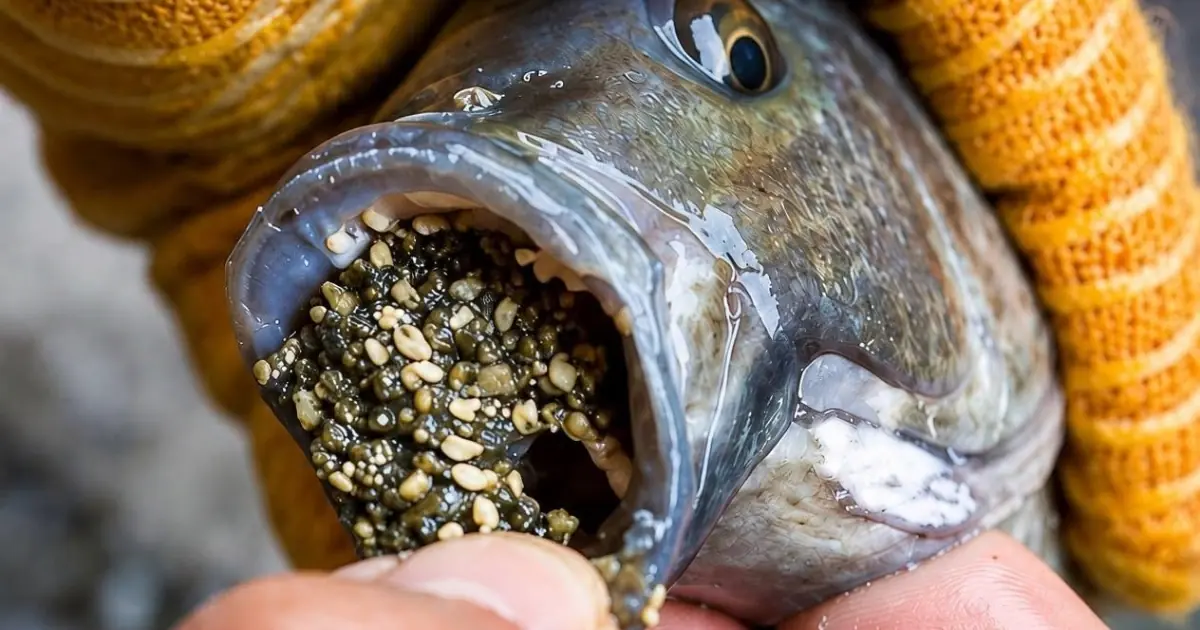
A fish can look perfectly ordinary from the outside and still carry an unexpected passenger. In some aquatic environments, parasites live on or inside fish, using their hosts as a place to survive, grow, and reproduce. Although the sight of one inside a fish's mouth can be disturbing, it does not automatically mean that the fish is poisonous or dangerous to humans.
The photograph accompanying this story shows a fish with its mouth open and unusual material visible inside. One possible explanation for similar images is a tongue-eating isopod, a small marine crustacean known for its extraordinary relationship with certain fish. However, the exact species and organism in this photograph cannot be confirmed from appearance alone.
Tongue-eating isopods are among the most unusual parasites found in the ocean. Some enter a fish through its gills, attach themselves near the tongue, and eventually replace the tongue with their own body. The fish may continue living and feeding, even though its anatomy has changed in a remarkable way.
This phenomenon is fascinating to scientists because it demonstrates how closely some parasites depend on their hosts. The parasite does not simply consume the fish and disappear. Instead, it establishes a long-term relationship in which it remains attached and benefits from the fish's environment.
Despite its frightening appearance, this particular type of isopod is not generally considered a human foodborne parasite. Its presence in a fish's mouth is not the same as finding a disease-causing worm in fish flesh. The risk depends on the organism involved, the fish species, and how the seafood is handled and prepared.
That distinction is important because alarming photographs often encourage people to assume that every parasite found in a fish can infect humans. In reality, parasites are diverse. Some are adapted to fish and cannot survive in people, while others can cause illness if infected seafood is eaten raw or insufficiently cooked.
The image therefore raises a useful question: what should consumers actually look for when buying or preparing fish?
The answer is not to fear every fish with an unusual appearance. Instead, people should understand the difference between a visible marine parasite, a foodborne parasite, and other signs that seafood may have been spoiled or mishandled.
A strange creature inside a fish may be a remarkable example of nature rather than a direct threat to the person who catches it. But when seafood is intended for human consumption, proper identification, inspection, storage, and cooking remain essential.
Chapter 2: How Parasites Can Enter the Human Body
Some parasites found in fish can cause illness when people consume raw or undercooked seafood. One well-known example is anisakiasis, an infection caused by certain roundworm larvae.
These larvae can occur in marine fish and squid. When a person eats seafood containing viable larvae, the organisms may attach to the lining of the digestive tract and cause inflammation. The illness is associated particularly with raw or inadequately cooked seafood.
According to the Centers for Disease Control and Prevention, symptoms may include abdominal pain, nausea, vomiting, abdominal swelling, diarrhea, and sometimes blood or mucus in the stool. Symptoms can develop relatively quickly after eating infected seafood, although the timing and severity vary.
The digestive system is not designed to host these larvae. When they attach to the stomach or intestinal wall, the body may respond with irritation and inflammation. In some cases, the symptoms can resemble other abdominal conditions, making medical evaluation important.
Anisakiasis is not transmitted directly from one person to another. The infection occurs through eating seafood that contains the relevant parasite. This means that food preparation is one of the most important ways to prevent it.
It is also important to understand that not every parasite in fish causes anisakiasis. Different parasites have different life cycles and affect different hosts. Some are associated with freshwater fish, while others are found in marine species. Certain parasites may also be associated with particular regions or food traditions.
The danger cannot be judged simply by the size of a fish or the appearance of its mouth. A fish that looks healthy may still contain microscopic or hidden parasites in its tissues. Conversely, a fish carrying a conspicuous parasite that is adapted only to fish may not pose the same risk to humans.