Chapter 1: The Allergy Test That Reveals What the Body May Be Reacting To
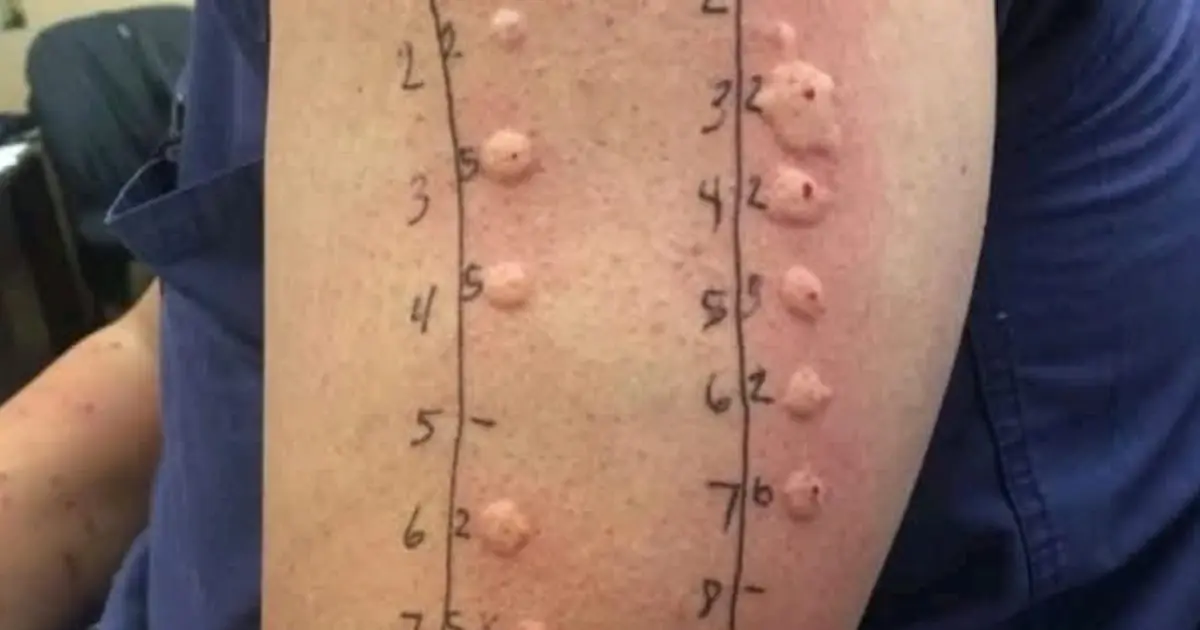
A small raised bump on the skin may seem insignificant, but during an allergy examination, it can provide important information about how the immune system responds to certain substances.
The photograph accompanying this article shows an arm marked with numbered lines and several small raised areas. This appearance is consistent with a skin prick allergy test, a procedure commonly used by allergy specialists to investigate suspected allergic reactions.
The test is designed to help identify whether a person has become sensitized to particular allergens. These may include substances associated with cats, dogs, dust mites, pollen, or other environmental triggers.
The numbered marks help medical professionals identify the substances being tested. A small amount of each allergen is placed on the skin, usually on the forearm or back. The skin is then gently pricked so that the allergen can come into contact with the immune system.
If a person is sensitized to a particular substance, a small raised bump, often accompanied by redness or itching, may develop at that test site.
However, the appearance of a bump does not automatically mean that the person will experience serious symptoms in everyday life. A positive skin test must be interpreted alongside the person's medical history and symptoms.
The American Academy of Allergy, Asthma & Immunology explains that allergy testing performed by a qualified specialist is an important part of identifying the substances responsible for suspected pet allergies.
Why sleeping with a pet may matter
Many people enjoy allowing their cats or dogs to sleep beside them. For some, the presence of a pet provides comfort, companionship, and a sense of security.
There is nothing inherently dangerous about sharing a bedroom with a healthy pet for someone who does not have relevant allergies or other concerns.
The situation can be different for people who are sensitive to animal allergens.
During the night, a person may spend several hours in close contact with bedding, pillows, and surfaces that have collected allergens. If a pet regularly sleeps on the bed, these substances may accumulate in the sleeping environment.
The concern is not simply the animal's fur.
Pet allergens are proteins found in substances such as skin flakes, saliva, and other animal secretions. These proteins can attach to fur, clothing, bedding, carpets, and furniture.
They may also become airborne and remain suspended in the air for a period of time.
As a result, even people who do not directly touch an animal may sometimes encounter its allergens.
The National Institute of Environmental Health Sciences notes that pet allergens can spread through the home and remain on furniture and carpets for extended periods.
What the skin test can and cannot tell you
A skin prick test can help identify possible allergic sensitization, but it cannot determine every aspect of a person's health.
It does not prove that sleeping with a pet has caused a particular illness.
It also cannot establish that a person will develop asthma, a severe allergic reaction, or another serious condition simply because a small bump appears during testing.
A medical professional must consider the complete picture, including symptoms, exposure history, and other test results.
For example, a person may test positive for cat allergens but experience few symptoms in daily life. Another person may have significant sneezing, nasal congestion, or asthma symptoms after spending time in a home with cats.
The difference may depend on several factors, including the person's sensitivity, the amount of allergen exposure, and whether other environmental triggers are present.
The most useful message from the photograph is therefore not that a particular sleeping habit is automatically harmful.
Instead, it highlights the importance of understanding the body's response to environmental substances and seeking appropriate testing when symptoms repeatedly occur.
A person who regularly wakes up with an itchy nose, watery eyes, coughing, or congestion may benefit from discussing possible allergies with a healthcare professional.
Recognizing the cause of these symptoms can help people make informed decisions about their sleeping environment without relying on frightening headlines or unsupported claims.
Chapter 2: The Symptoms That May Appear After a Night of Allergen Exposure
For someone with a pet allergy, symptoms may become more noticeable after spending a long period in an environment containing animal allergens.
The bedroom can be particularly relevant because people usually spend several consecutive hours there while sleeping.
Some individuals may notice symptoms shortly after going to bed. Others may wake up feeling uncomfortable and assume that the problem is caused by dry air, poor sleep, or a common cold.
Although these explanations may sometimes be correct, repeated symptoms that occur around animals deserve attention.
1. Sneezing shortly after waking
Repeated sneezing is one of the most common symptoms associated with allergic rhinitis.
A person may wake up and immediately begin sneezing several times. The nose may feel irritated, and the symptoms may continue while the person remains in the bedroom.
Pet allergens can settle on pillows, blankets, and mattresses. When bedding is moved, small particles may become airborne again.
This can expose the nose and respiratory tract to allergens even when the pet is no longer physically on the bed.
However, morning sneezing can also be caused by dust mites, pollen, temperature changes, or other environmental factors.
The pattern of symptoms and the person's exposure history can help a doctor determine whether an allergy is likely.
2. A runny or blocked nose
A pet allergy may cause the nose to produce excess mucus.
Some people experience a clear, watery discharge, while others feel that their nose is blocked or congested.
The inflammation associated with allergic rhinitis can make breathing through the nose uncomfortable.
A person may repeatedly reach for tissues, wake up with a dry mouth, or feel that the nose remains blocked for much of the morning.
These symptoms can interfere with sleep quality, especially if they occur frequently.
3. Itchy or watery eyes
The eyes may become red, watery, or itchy when they come into contact with allergens.
Some people experience irritation around the eyelids, while others feel a persistent sensation of itching that makes them want to rub their eyes.
Rubbing can make irritation worse and may cause additional discomfort.
If eye symptoms repeatedly occur after contact with a pet or after sleeping in a pet's bedding, an allergy evaluation may be useful.
4. Coughing during the night
Coughing can sometimes occur when allergens irritate the respiratory tract.
For people with asthma, exposure to pet allergens may contribute to coughing, wheezing, chest tightness, or shortness of breath.
These symptoms should not be ignored.
The National Institute of Environmental Health Sciences warns that pet allergies can make asthma more difficult to control.