A man stands under a tall clock stuck at 12:30. It’s out of reach, and he has no tools or way to call for help. The only item he has is a mirror in his pocket. He manages to fix the problem without climbing or touching the clock, and within minutes, it’s showing the correct time again. The trick is in reflection. The man uses the mirror to reflect the face of the clock and reads the time in reverse from below. Mentally flipping the numbers tells him how far off it is. He then waits until the real time aligns with what the broken clock shows and announces that it’s fixed. It’s a great example of working smarter, not harder.
Truth or Lie at the Crossroads
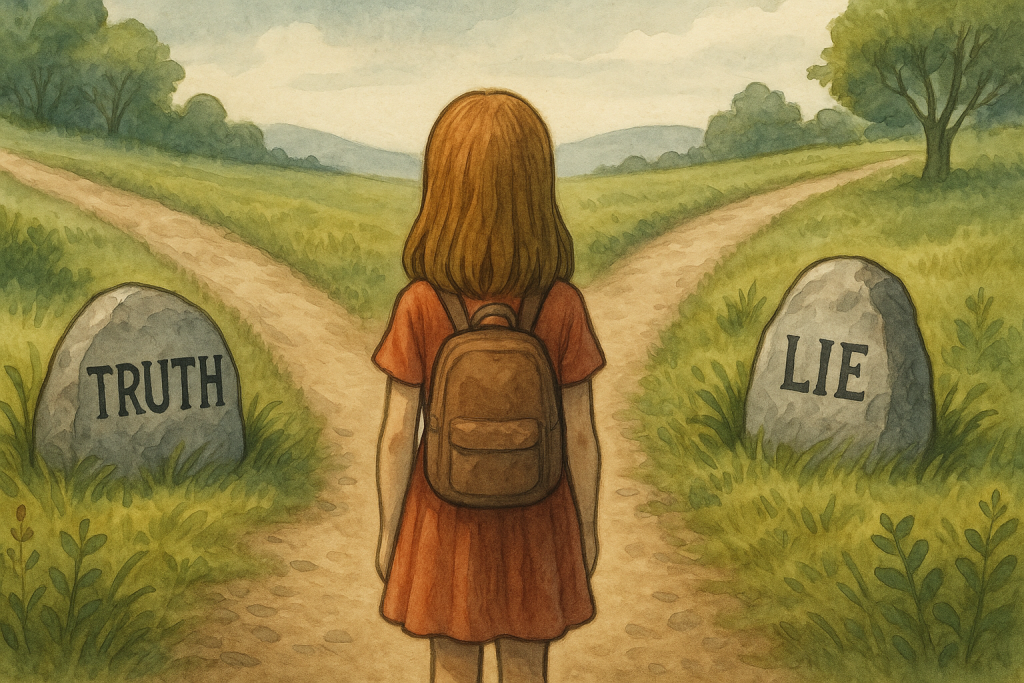
A girl arrives at a fork in the road. One path leads to safety, the other to danger. There are stones at each path – one marked “Truth” and the other “Lie.” She’s told that only one of the stones tells the truth, but not which one. She can’t ask questions and must choose a path without turning back. This riddle sets up a logical paradox. If the stone labeled “Lie” is truthful, then it’s lying. If “Truth” is lying, then it can’t be true. Realizing this, the girl ignores the stones entirely. She looks for signs of travel instead and chooses the more worn path. Sometimes, logic must step aside in favor of simple observation.
The Case of the Missing Umbrella