The story from the Golan Heights remains a mystery. While skeptics may view it as a series of strange coincidences, others see it as compelling evidence of reincarnation. Regardless of one’s beliefs, the case raises fascinating questions about memory, consciousness, and the possibility of life after death.
Other Remarkable Cases of Reincarnation
The Golan Heights case is not unique. Throughout history, similar accounts of children recalling past lives with stunning accuracy have emerged. These cases often include specific details that could not have been learned through ordinary means.
The Case of James Leininger

James Leininger, an American boy, exhibited a deep fascination with World War II aircraft at a very young age. He experienced vivid nightmares of crashing in a burning plane and shared detailed knowledge about planes, including the name of his squadron and an aircraft carrier. Historical records later confirmed his claims, aligning with the life of a fighter pilot named James Huston. Initially skeptical, his parents eventually believed he was recounting memories from a past life.
The Shanti Devi Story
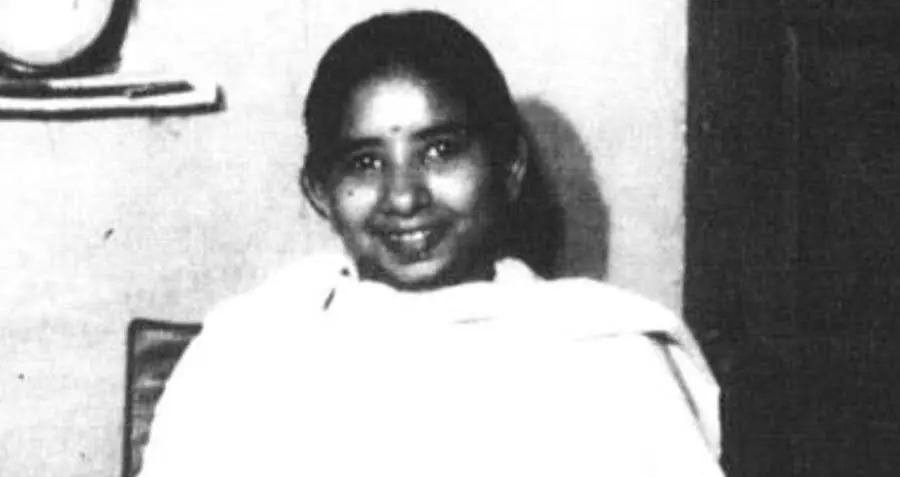

In 1930s India, four-year-old Shanti Devi began speaking about her previous life in a distant city. She accurately named her former husband, described her home, and detailed her death. When investigators visited the city, they confirmed her accounts were true. Even Mahatma Gandhi showed interest and launched an inquiry, further validating her story.
Birthmarks and Past-Life Memories

Birthmarks often play a significant role in reincarnation cases. Dr. Ian Stevenson, a psychiatrist, conducted extensive research on children who claimed to remember past lives. He found compelling evidence linking birthmarks and deformities to fatal injuries described in their recollections.
A Thai Boy’s Recollections
A Thai boy with two head birthmarks claimed he had been a teacher shot in the head in a previous life. His memories were corroborated by historical records of a teacher killed in the manner he described.
The Burmese Soldier

In another case, a Burmese child remembered being a soldier killed by a bullet to the chest. The boy was born with a distinctive birthmark in the exact spot of the fatal wound, lending credibility to his claims.
Scientific Investigations into Reincarnation
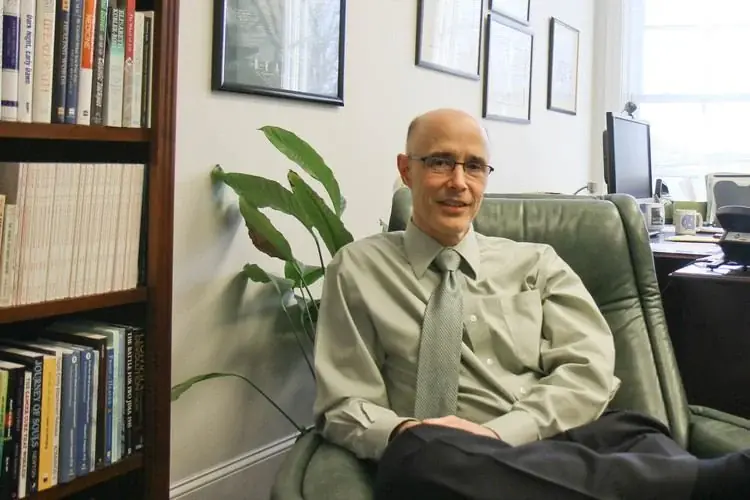
While reincarnation is largely a spiritual belief, some researchers have sought scientific explanations. Dr. Ian Stevenson and Dr. Jim Tucker from the University of Virginia have studied thousands of cases worldwide. Their work focuses on children who recall past lives, often between the ages of two and five. Many of these memories fade as the children grow older.
Dr. Tucker’s research suggests that past-life memories may hint at a broader understanding of consciousness. He explores the possibility that consciousness could exist independently of the brain, a concept gaining traction in fields like quantum mechanics and near-death studies.
Reincarnation Across Cultures

Reincarnation beliefs are deeply embedded in many cultures. Hinduism and Buddhism teach that souls undergo multiple lifetimes to achieve spiritual growth. Similarly, Native American and African traditions hold reincarnation as a core belief, often linking it to family lineage and spiritual continuity.
The Unanswered Mystery
Stories like that of the boy from the Golan Heights challenge our understanding of life and death. They provoke questions about whether consciousness survives beyond the physical body and what these phenomena mean for our understanding of memory.
As science advances, researchers may uncover new insights into reincarnation and consciousness. For now, these accounts remain a fascinating topic that intrigues both believers and skeptics alike. Whether they are coincidences or evidence of something more profound, they continue to captivate the imagination and challenge our understanding of existence.
Children Who Remember Past Lives: Extraordinary Stories, Birthmarks, and the Unanswered Questions About Reincarnation
Stories of children who appear to remember previous lives have fascinated people for generations. Some describe unfamiliar homes, name people they supposedly knew before birth, or recount events that seem impossible for them to have witnessed. Others speak about their alleged deaths with striking emotional detail.
Among the most intriguing accounts are stories involving children who identify locations, recognize strangers, describe historical events, or have birthmarks that their families associate with injuries from another lifetime.
One such story comes from the Druze community in the Golan Heights. A young boy reportedly described being murdered in a previous life, identified the location where his body had been buried, and pointed to the place where the murder weapon was supposedly hidden. The story became widely circulated because of the unusual details attributed to the child.
But what should we make of accounts like this? Are they evidence that consciousness can survive death, or can they be explained through memory, cultural expectations, coincidence, and the way stories are reconstructed over time?
To understand the mystery, it helps to examine the stories, the people who investigated them, and what scientific research can—and cannot—tell us.
1. The Golan Heights Boy: A Story That Captured Attention
The Golan Heights is a region with a complex history and a diverse population. Among its communities are the Druze, whose religious and cultural traditions include a belief in reincarnation.
In one widely circulated account, a three-year-old Druze boy reportedly began describing a previous life in which he had been murdered.
According to the story, the child claimed that he had been killed with an axe. He allegedly described the location where his body had been buried and directed villagers to the place where the weapon could be found.
The account says that people who followed his directions discovered human remains and an axe.
The story also describes the child identifying a man whom he believed had killed him. It further claims that the man eventually confessed privately after being confronted with the alleged discoveries.
These details make the story especially dramatic. It appears to contain several elements that are often discussed in reports of past-life memories:
-
A child speaking about a life before birth.
-
A detailed description of an alleged violent death.
-
Identification of a burial location.
-
Discovery of physical objects.
-
Recognition or identification of a supposed former acquaintance.
-
A birthmark interpreted as corresponding to a previous injury.
However, it is important to distinguish between what a story reports and what has been independently established. The widely repeated version does not, by itself, provide the archaeological documentation, forensic reports, police records, or independently verified testimony needed to establish that a murder and confession occurred exactly as described.
That distinction does not make the story uninteresting. It simply helps us approach it responsibly.
2. Why the Druze Belief in Reincarnation Matters
The Druze are a religious community with roots in the Middle East. Their faith includes a distinctive understanding of reincarnation, often described as the continuation of the soul through successive human lives.
Within this worldview, death is not necessarily viewed as the absolute end of personal existence.