A clogged sink is more than just a small inconvenience. It can disrupt everyday routines, especially in apartments or shared living spaces
where plumbing systems are interconnected. Simple tasks such as washing hands, doing dishes, or taking a shower suddenly become
frustrating when water refuses to drain properly.
Even worse, standing water caused by a blockage can overflow, release unpleasant odors, and create an ideal environment for bacteria to
grow. Over time, this may negatively affect indoor air quality and even your health.
The good news is that most sink clogs can be resolved without dismantling pipes or calling a plumber and without using boiling
water, which can actually make things worse.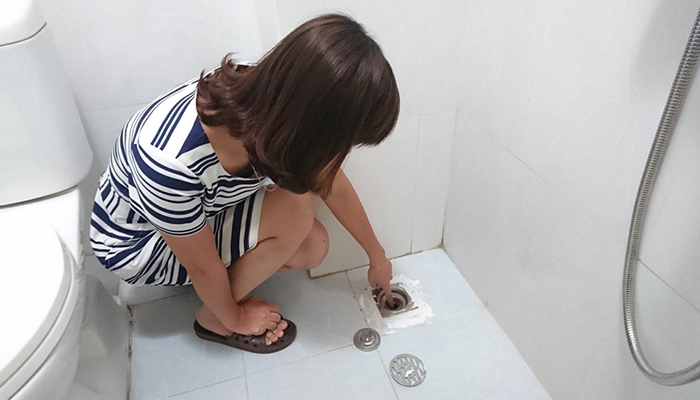
Common Causes of Sink Blockages
Understanding what causes clogs helps prevent them in the future. The most common culprits include:
-
Food scraps and vegetable peels
-
Grease and cooking oil
-
Hair and soap residue
-
Dust and small debris
These materials gradually build up inside the drain, restricting water flow until a blockage forms.
1. Use a Simple Tool to Remove the Blockage
If the clog is caused by a solid object or tangled debris near the surface, a drain-clearing tool can be very effective. These tools are designed
to reach into narrow pipes and pull out hair, grease buildup, and trapped food particles.
If you don’t have a specialized tool, a DIY option works just as well:
-
Bend a metal wire into a small hook
-
Or use a sturdy plastic straw with angled cuts
Make sure the tool is secure and smooth, as loose parts can get stuck and worsen the blockage.
2. Apply Pressure With a Plunger
A plunger is one of the simplest and most effective tools for clearing clogs caused by solid debris. By creating pressure, it helps dislodge
materials stuck inside the pipe.
To use it properly:
-
Cover the drain opening completely
-
Add a small amount of water to improve suction
-
Pump steadily, then release
This method works best for blockages caused by objects or thick residue, though it may be less effective against heavy grease buildup.
3. Baking Soda and Vinegar (or Citric Acid)
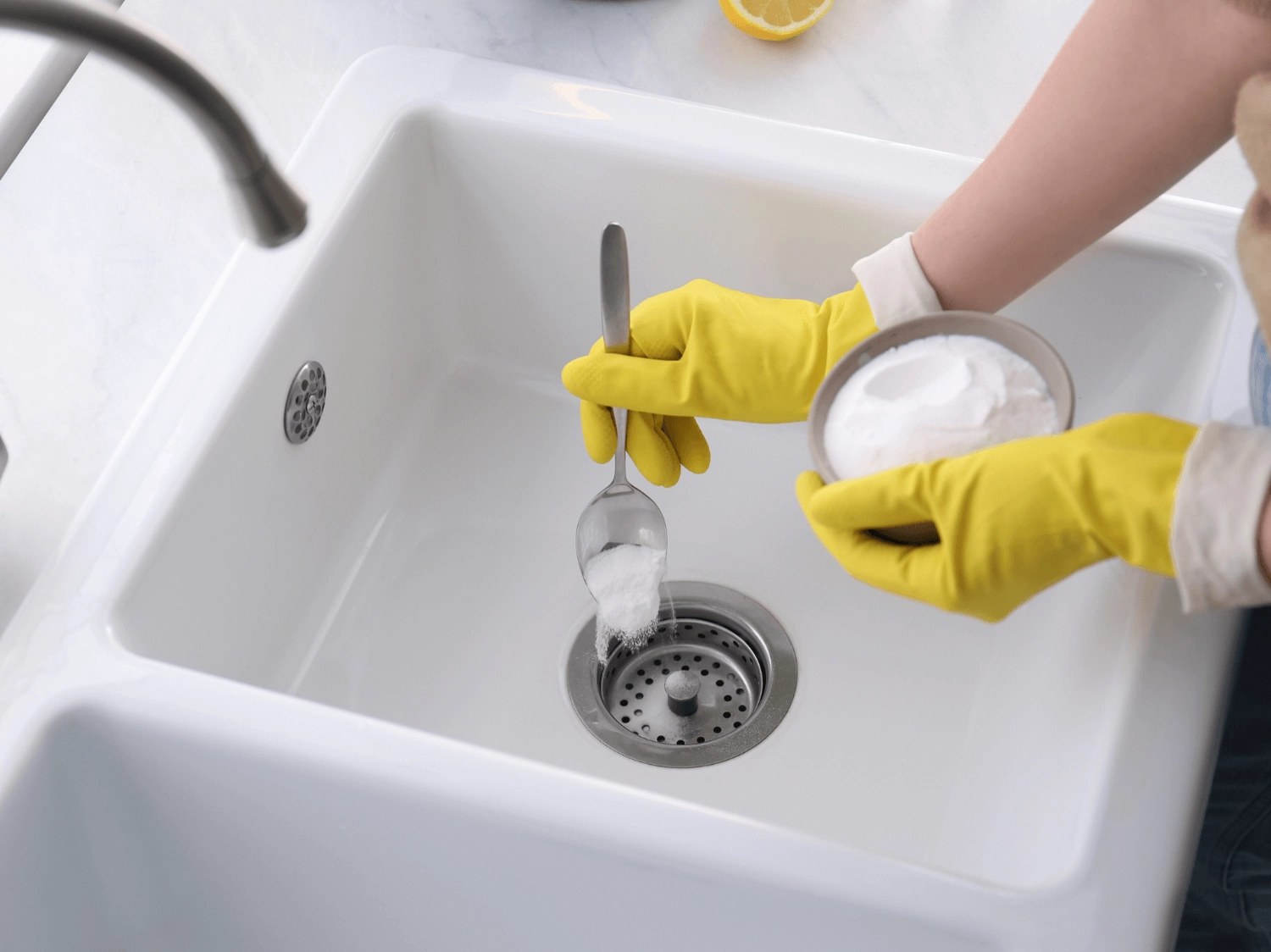
When mechanical methods aren’t enough, a natural chemical reaction can help break down clogs and eliminate odors at the same time.
How to use:
-
Pour baking soda directly into the drain
-
Add white vinegar or citric acid
-
Follow with warm (not boiling) water
The reaction releases carbon dioxide gas, creating pressure that helps loosen debris inside the pipe. Let the mixture sit for about 30 minutes,
then rinse with warm water.
This method is especially useful for mild to moderate clogs and is safe, affordable, and odor-free.
4. Detergent and Warm Water for Grease Buildup
Grease is one of the most stubborn causes of sink blockages. Dish detergent is designed to break down oils, making it surprisingly effective
for this problem.
How to use:
-
Mix one part liquid detergent with three parts hot water
-
Stir until fully dissolved
-
Slowly pour the mixture along both sides of the drain
The alkaline components in detergent help dissolve grease and prevent it from sticking to the pipe walls.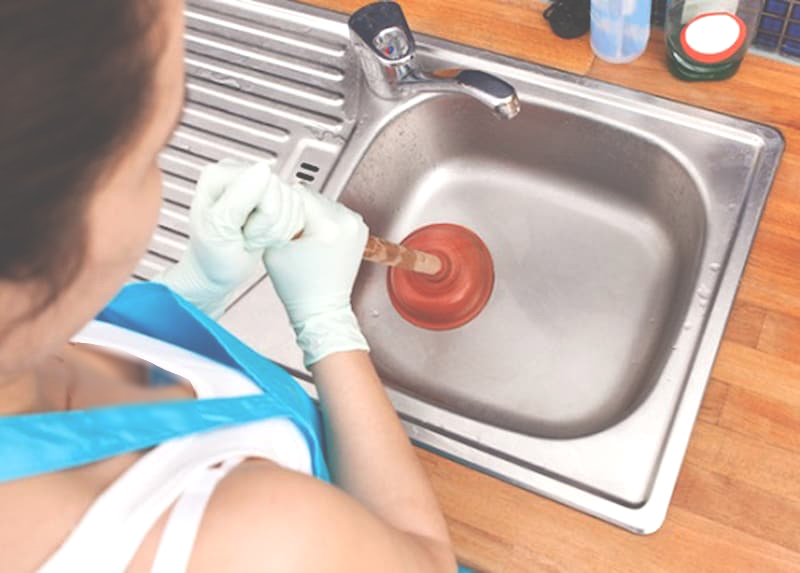
5. Use Commercial Drain Cleaners (With Caution)
Commercial drain-cleaning powders or liquids are formulated to dissolve stubborn blockages quickly. While effective, they contain strong
chemicals and should be used carefully.
Safety tips:
-
Wear gloves and a mask
-
Avoid mixing with other cleaning products
-
Follow instructions exactly
These products should be a last resort rather than a regular solution.
Why You Should Avoid Pouring Boiling Water
Many people instinctively pour boiling water down the drain, believing it will dissolve grease. In reality, boiling water can damage pipes,
especially plastic or older plumbing. High temperatures may warp or crack pipes, leading to leaks and more serious repairs later.
Warm or hot water is sufficient - boiling water is not necessary and can cause long-term damage.
How to Prevent Future Sink Clogs
Prevention is always easier than repair. Simple habits can make a big difference:
-
Install a drain strainer to catch food scraps and debris
-
Avoid pouring oil or grease directly into the sink
-
Flush the drain with warm water after washing dishes
-
Clean strainers regularly
Final Thoughts
A clogged sink doesn’t have to turn into a major problem. With the right methods and by avoiding boiling water most blockages can be
cleared quickly, safely, and without unpleasant odors.
By combining simple tools, natural cleaning reactions, and good daily habits, you can keep your sink flowing smoothly and maintain a cleaner,
healthier home environment.