You turn off the lights when you leave a room.
You unplug a charger when your phone is full.
You may even remember to switch off the television before going to bed.
And yet, your electricity bill can still seem surprisingly high.
So where is all that power going?
For many households, the answer is not the small electronics people spend so much time worrying about. It is often one of the largest systems in the house: heating and cooling equipment, especially air conditioning and electric heating.
These appliances are easy to overlook because they do not always feel like “appliances” in the same way a microwave, television, or coffee maker does.
But an air conditioner can run for hours.
A heater can operate repeatedly throughout the day.
And when temperatures become extremely hot or cold, these systems may work even harder to maintain the indoor temperature you expect.
That combination of high power demand + long operating time can make heating and cooling one of the biggest contributors to household electricity use.
The exact biggest electricity user varies from home to home. Climate, insulation, home size, appliance efficiency, thermostat settings, and whether heating or cooling is electric all matter.
Still, there is one important lesson:
The appliances that use the most electricity are not always the ones that consume the most power in a single moment. They are often the ones that operate for many hours.
And once you understand that, your electricity bill starts making a lot more sense.
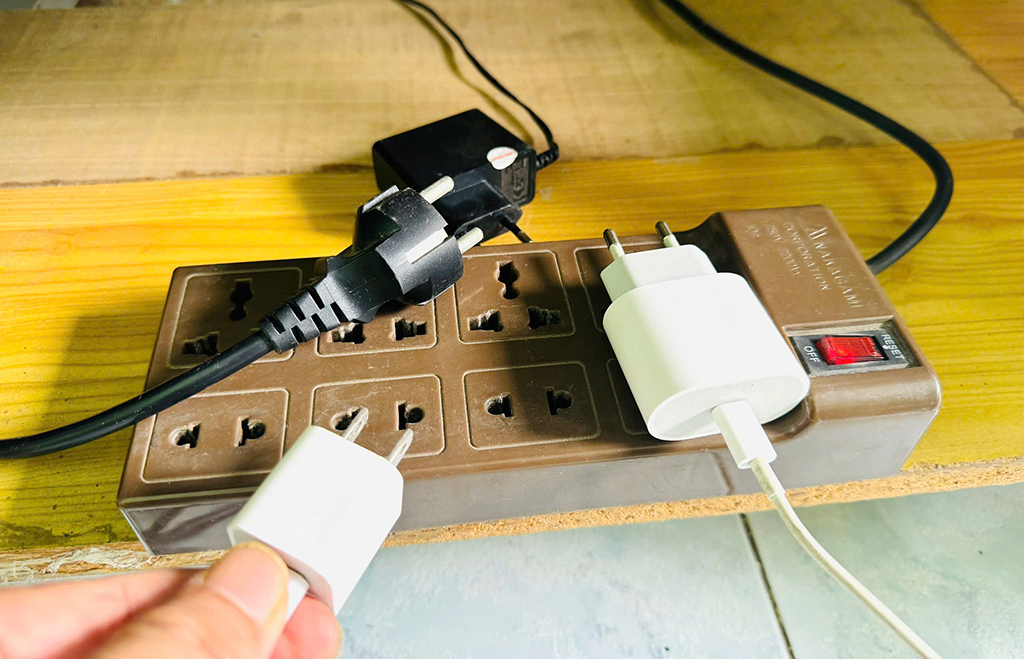
Why Heating and Cooling Can Consume So Much Electricity
Consider how often you use an air conditioner.
You may turn it on in the morning.
Leave it running while you're at home.
Keep it on throughout the afternoon.
Turn it down at night.
Perhaps you also use another unit in the bedroom.
Even if the system cycles on and off rather than running continuously, those hours add up quickly.
Now compare that with a microwave.
A microwave may draw a relatively large amount of power while operating, but you may only use it for five or ten minutes at a time.
The refrigerator is different.
It runs around the clock, but modern refrigerators are generally designed to operate efficiently and cycle their compressors rather than drawing their maximum power constantly.
Heating and cooling systems occupy an especially important middle ground:
They can require substantial electrical power and operate for long periods.
That combination can have a major impact on total consumption.
Power and Energy Are Not the Same Thing
This is one of the most useful concepts to understand when looking at an electricity bill.
An appliance's power is measured in watts.
Its energy consumption over time is commonly expressed in kilowatt-hours, or kWh.
Imagine one appliance uses a lot of power but operates for only a few minutes.
Another uses less power but runs for eight hours.
The second appliance can easily consume more electricity over the course of a day.
A simple way to think about it is:
Electricity use = power × time
That is why a device that runs continuously or for many hours can become a major contributor even if it doesn't look particularly impressive on a wattage label.
This is one of the reasons heating and cooling are so important.
They don't just consume electricity.
They consume it repeatedly.
Air Conditioning Can Be a Major Electricity User
In hot climates, air conditioning can become one of the largest sources of household electricity consumption.
The harder the system has to work, the more important that becomes.
Several factors influence how much electricity an air conditioner uses:
- Outdoor temperature
- Indoor temperature setting
- Home insulation
- Window quality
- Air leakage
- Humidity
- Unit efficiency
- Room size
- How many rooms are being cooled
- How long the system operates
- Whether doors and windows remain closed
The bigger the difference between outdoor and indoor temperatures, the more energy may be required to maintain the desired indoor environment.
That is why an extremely hot day can have a very different effect on your electricity usage from a mild one.
Why the Thermostat Setting Matters
Many people assume that lowering the thermostat dramatically will cool the house faster.
Usually, that's not how air conditioning works.
Setting the temperature far lower does not necessarily make the system cool the room faster. It can simply cause the air conditioner to run longer in an attempt to reach that lower target.
For example, someone who normally keeps the house around 25°C may decide to set the thermostat to 18°C during a heat wave.
The room doesn't instantly become colder.
The system simply has a much larger temperature gap to overcome.
That can mean longer operating times and greater energy use.
A moderate temperature setting can therefore be an important part of controlling electricity costs.
The Same Principle Applies to Electric Heating
In colder climates, heating can become a major electricity expense.
Electric resistance heaters, heat pumps, baseboard heaters, portable heaters, and electric furnaces can all contribute substantially to electricity consumption depending on the system and how much they are used.
Winter creates the same basic equation as summer:
Extreme outdoor conditions + long operating hours = higher energy use.
If your home is poorly insulated or has significant air leaks, the heating system may need to work harder to maintain the desired indoor temperature.
That makes the building itself part of the electricity story.
Your House Can Waste Electricity Without You Realizing It
Imagine pouring water into a bucket with a small hole.
No matter how much water you add, some of it keeps escaping.
A poorly insulated home can behave in a similar way.
You heat the house.
Warm air escapes through gaps.
You cool the house.
Heat comes back in through poorly insulated walls, ceilings, windows, or doors.
The system works harder.
You pay for the extra energy.
This is why improving insulation and sealing air leaks can sometimes be more effective than obsessing over tiny electronic devices.
Why Windows Can Matter More Than You Think
Windows are one of the weak points in many homes.
Single-pane or poorly insulated windows can allow heat to move through relatively easily.
In summer, heat from outside can enter the home.