Chapter 1: Two Everyday Habits That Deserve More Attention
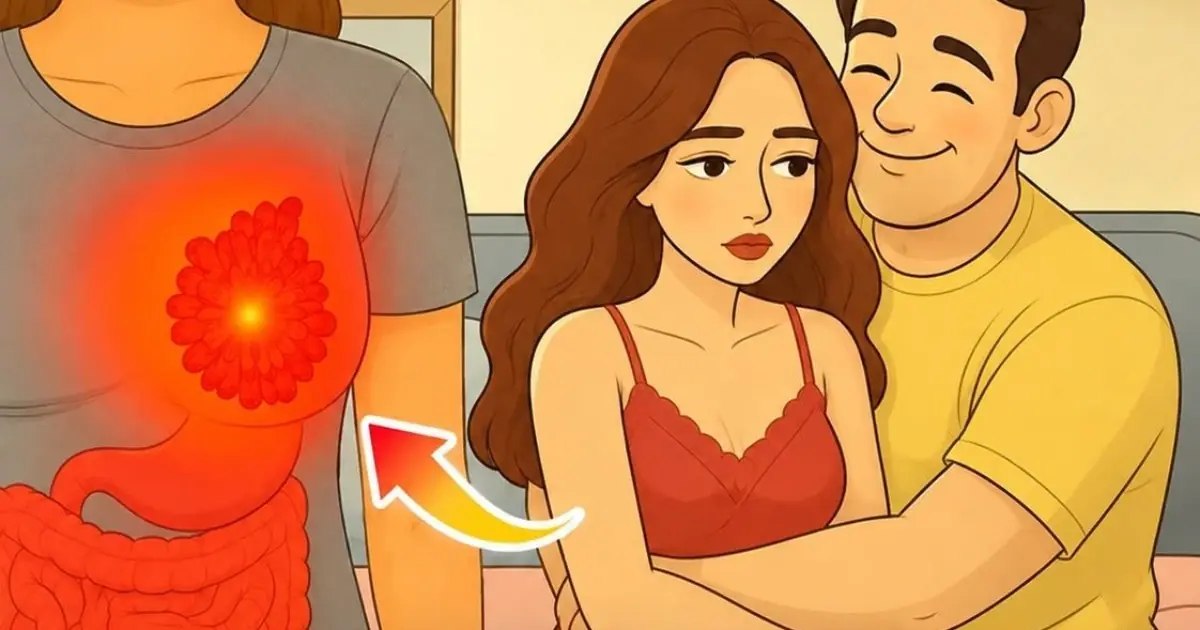
The health of a married couple is closely connected to the habits they share. From eating meals together to spending evenings relaxing at home, everyday routines can influence long-term well-being.
Some habits may appear harmless because they are repeated so frequently that people stop thinking about their possible consequences.
Smoking after dinner, drinking alcohol during social gatherings, and spending time in environments filled with cigarette smoke are examples of behaviors that deserve attention.
The illustration accompanying this article highlights a serious concern: whether certain habits practiced by husbands could affect their wives' breast health.
Although the headline may sound alarming, the subject deserves a closer and more balanced examination.
Medical research has identified several factors associated with breast cancer, including age, family history, inherited genetic changes, reproductive history, alcohol consumption, and physical activity.
Some factors cannot be changed, while others may be influenced by everyday decisions.
Two habits worth discussing are smoking around family members and regular alcohol consumption.
1. Smoking inside the home
Cigarette smoking is one of the most recognizable preventable health risks.
When someone smokes, they inhale a mixture of chemicals produced by burning tobacco. However, the smoke does not remain inside the smoker's body.
It spreads into the surrounding environment, exposing other people nearby.
This is known as secondhand smoke.
For couples who share a home, repeated exposure can become a significant household health concern.
A husband who smokes indoors may unintentionally expose his wife, children, and other family members to harmful chemicals.
Secondhand smoke contains numerous toxic substances, including chemicals known to cause cancer.
The National Cancer Institute explains that exposure can occur in homes, workplaces, vehicles, and public places where smoking is permitted.
NCI
This is particularly concerning in enclosed environments where smoke can accumulate.
Opening a window may reduce some smoke, but it does not eliminate exposure.
2. Does secondhand smoke directly cause breast cancer?
This is where the subject requires careful explanation.
Some studies have investigated whether women who regularly breathe secondhand smoke have a higher risk of developing breast cancer.
However, the findings have not been consistent.
Cancer Australia states that there is currently no conclusive evidence establishing a relationship between passive smoking and increased breast cancer risk.
Some studies have reported an association, but stronger prospective studies have generally not supported a clear relationship.
Cancer Australia+1
Therefore, it would be misleading to claim that a husband who smokes automatically puts his wife at a higher risk of breast cancer.
Nevertheless, secondhand smoke is harmful.
Its established health consequences include increased risks of lung cancer and cardiovascular disease in nonsmokers.
Protecting family members from cigarette smoke remains an important health priority, regardless of the uncertainty surrounding breast cancer specifically.
3. Why a smoke-free home matters
A home should be a place where family members can relax without unnecessary exposure to harmful substances.
Creating a smoke-free environment is one of the simplest ways to protect nonsmokers.
Couples can begin by agreeing that cigarettes should never be smoked inside the house or inside the family car.
If someone is trying to quit, support from a partner can make the process easier.
Nicotine dependence can be difficult to overcome, and repeated unsuccessful attempts do not mean someone cannot eventually stop.
Healthcare professionals can recommend counseling, nicotine replacement products, and other evidence-based treatments.
The important thing is to approach the problem as a shared health goal rather than a reason for blame.
Illustrative photograph: Smoking around a partner can expose nonsmokers to secondhand smoke.
4. The importance of recognizing harmful routines early
Many health risks develop gradually.
A person may smoke for years without experiencing obvious symptoms.
Similarly, someone who regularly drinks alcohol may not immediately recognize the potential long-term consequences.
This is why prevention should begin before health problems appear.
Couples who discuss their habits openly may find it easier to make healthier decisions together.
Small changes, such as avoiding indoor smoking, reducing alcohol consumption, and becoming more physically active, can contribute to better overall health.
The objective is not to create fear.
It is to understand that daily choices matter and that protecting one another begins with practical actions at home.
Chapter 2: Alcohol Consumption and Its Connection to Breast Cancer
The second important habit to examine is alcohol consumption.
Unlike the uncertain relationship between secondhand smoke and breast cancer, the association between a woman's own alcohol consumption and breast cancer risk is well established.
Research has consistently found that women who drink alcohol have a higher risk than women who do not, and the risk generally increases as alcohol consumption increases.
This makes alcohol an important topic for couples who want to understand how lifestyle choices may affect long-term health.
1. Why alcohol deserves attention
Alcohol is often part of social occasions, celebrations, and family gatherings.
Some people drink wine with dinner, while others prefer beer, cocktails, or spirits during weekends.
Because alcohol is socially accepted in many environments, people may underestimate its potential health effects.
However, alcohol is classified as a carcinogenic substance.
When the body processes alcohol, it produces acetaldehyde, a substance that can damage DNA.
Alcohol may also influence hormone levels and other biological processes involved in cancer development.
For breast cancer in particular, researchers have identified several possible mechanisms through which alcohol may increase risk.
2. The relationship between alcohol and estrogen
One important area of research involves estrogen.
Estrogen is a hormone that plays an essential role in female reproductive health.
However, prolonged exposure to certain hormonal influences can affect breast cancer risk.
Alcohol consumption can influence hormone levels, including estrogen.
Higher estrogen exposure may contribute to the development of some hormone-sensitive breast cancers.
This does not mean that every woman who drinks alcohol will develop breast cancer.
It means that alcohol is one modifiable factor that can influence an individual's overall risk.
The National Cancer Institute identifies alcohol consumption as an established breast cancer risk factor. Its evidence review also describes a dose-dependent relationship between alcohol intake and risk.
Breast Cancer - NCI+1
3. Does a husband's drinking increase his wife's breast cancer risk?
This distinction is especially important when interpreting the image's headline.
A husband drinking alcohol does not automatically increase his wife's breast cancer risk.
The established association concerns the alcohol consumed by the woman herself.
However, a partner's drinking habits may indirectly influence household behavior.