Chapter 1: Why Does a Bruise Suddenly Appear on Your Body?
You are getting dressed, taking a shower, or simply looking at your arm when you notice a dark purple mark beneath your skin. You do not remember falling, hitting a table, or injuring yourself. At first, it may seem like a small mystery. Perhaps you bumped into something without noticing. Perhaps the mark will disappear in a few days.
In many cases, that is exactly what happens. Bruises are extremely common, and most are not dangerous. However, when unexplained marks appear repeatedly, become unusually large, or occur alongside other symptoms, they deserve more attention.
A bruise, medically known as an ecchymosis, forms when tiny blood vessels beneath the skin break and allow blood to leak into surrounding tissue. The skin remains closed, so the blood does not flow outside the body. Instead, it collects beneath the surface, creating the familiar red, purple, blue, or dark appearance.
The color often changes as the body gradually breaks down and reabsorbs the trapped blood. A fresh bruise may look reddish or purple. Later, it can become blue, green, yellow, or brown before fading away. The exact timing varies depending on the size of the injury, its location, and the person's general health.
The photograph accompanying this article shows a purple mark on an arm. Its appearance alone cannot reveal why it developed. A bruise caused by an unnoticed bump can look similar to one associated with a medical condition. Even a trained doctor cannot reliably identify every underlying cause from a photograph alone.
One reason bruises become more common with age is that the skin gradually becomes thinner and the protective layer of tissue beneath it may decrease. Small blood vessels can become more vulnerable to minor impacts. Someone may develop a noticeable mark after an everyday movement that would not have caused a bruise years earlier.
Medication is another important factor. Blood-thinning medicines, including anticoagulants and antiplatelet drugs, can make bleeding beneath the skin more likely. Some pain relievers and steroid medications may also contribute to easier bruising. This does not mean that a person should stop taking prescribed medicine when a bruise appears. Stopping treatment without medical advice can create serious risks, especially for people who take medication to prevent dangerous blood clots.
Other possible explanations include nutritional deficiencies, liver disease, inherited bleeding disorders, low platelet counts, and certain infections. Sometimes, a person simply does not remember a minor injury. The arms and legs are particularly exposed to everyday bumps, and small impacts can happen without attracting attention.
The important distinction is between an occasional bruise and a changing pattern. One small mark after a busy day is usually less concerning than several large bruises appearing repeatedly without an explanation.
It is also important not to assume that every unexplained bruise indicates cancer. Some blood cancers, including leukemia, can affect the body's ability to produce healthy blood cells and platelets. This may increase the likelihood of bruising or bleeding. Nevertheless, many non-cancerous conditions can produce similar symptoms, and most individual bruises do not mean someone has cancer.
A useful first step is to observe the pattern. Where do the bruises appear? How often do they develop? Are they becoming larger? Do they fade normally? Are there other symptoms, such as unusual tiredness, fever, nosebleeds, or bleeding gums?
These details may help a healthcare professional understand what is happening. Rather than immediately fearing the worst, pay attention to changes and seek an assessment when the pattern is unusual.
The body often gives clues through changes that seem small at first. A single bruise may be ordinary. Repeated unexplained bruising, however, should not automatically be dismissed as a normal part of everyday life.
Chapter 2: When Bruising May Be Connected to a Blood Problem
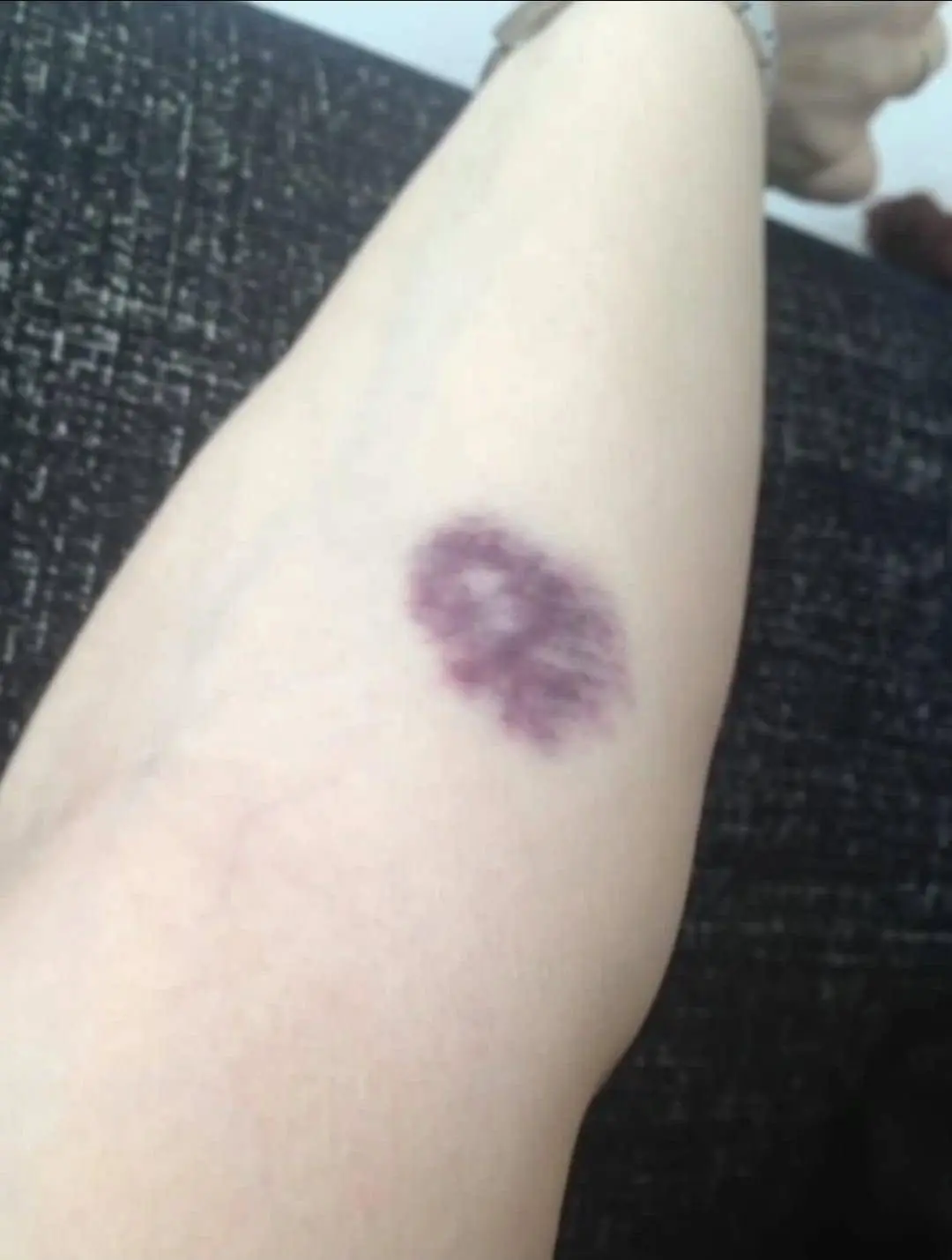
The word "cancer" often appears in online headlines about unexplained bruises. Such headlines can be frightening, especially when they suggest that a particular shape or color on the skin is a direct warning of a serious disease.
The medical reality is more complicated. Bruising can sometimes be associated with blood cancers, but there is no single bruise pattern that can confirm a cancer diagnosis.
To understand why, it helps to know how the body normally prevents bleeding.
When a small blood vessel is damaged, the body activates a process called blood clotting. Platelets, which are tiny fragments circulating in the blood, gather around the injured area. They help form an initial plug, while clotting proteins strengthen the developing clot. This process limits blood loss and allows the damaged vessel to repair itself.
If the body has too few platelets, or if those platelets do not work properly, bleeding may happen more easily. A person may notice frequent bruises, tiny red or purple spots beneath the skin, nosebleeds, or bleeding gums.
Platelets are produced in the bone marrow, the soft tissue inside certain bones. Some blood disorders affect the marrow and interfere with the production of healthy blood cells. Leukemia is one example. Depending on the type and stage of the disease, abnormal cells can interfere with normal blood-cell production, potentially resulting in low platelet counts.