General Understanding of Wrist Ganglion Cysts
A wrist ganglion cyst, also known as a wrist synovial hernia, is a synovial sac tumor that forms from the tendon sheath or joint capsule in the wrist or hand. The tendon sheath and joint capsule are structures that cover tendons and joints, helping them move smoothly and flexibly. They contain a sticky fluid called synovial fluid, which lubricates and nourishes the surrounding tissues.
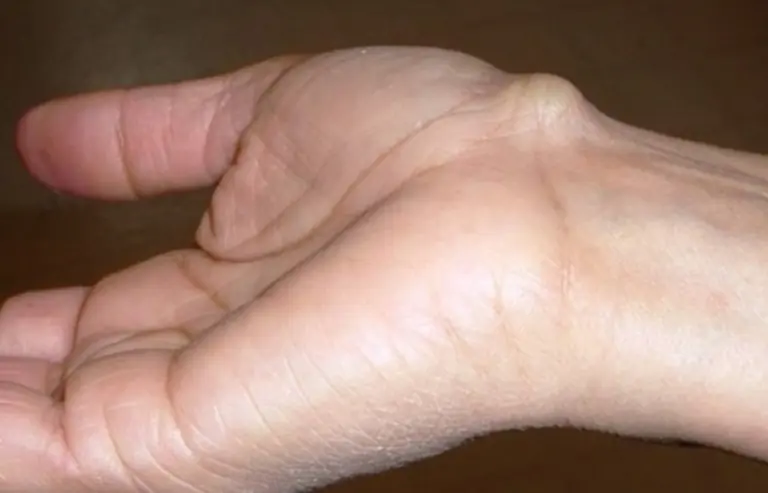
Sometimes, due to injury, inflammation, or increased pressure inside the joint capsule, synovial fluid can leak out and form a fluid-filled sac—this is what is known as a wrist ganglion cyst. These cysts are usually round or oval, soft, and may move when touched. Their size can range from a few millimeters to several centimeters. In some cases, they may disappear on their own or recur after a period of time.
Symptoms of Wrist Ganglion Cysts
Wrist ganglion cysts often do not cause obvious symptoms unless they grow too large or press on nearby nerves. Common symptoms include:
-
A visible lump on the wrist or hand, usually on the back but sometimes on the palm, ulnar, or radial side.
-
The lump may feel soft or firm, movable or fixed, and may change in size depending on wrist or hand position.
-
Generally painless, but pain may occur if injured, inflamed, infected, or if it compresses nerves.
-
Pain, tingling, numbness, or reduced sensation in the wrist or hand, especially in the thumb, index finger, or middle finger.
-
Difficulty moving the wrist or hand, which may affect daily activities and work.
Health Impact
Though wrist ganglion cysts are benign (non-cancerous) and do not spread to other parts of the body, they can still cause discomfort:
-
Pain and discomfort during wrist or hand movements.
-
Nerve compression, leading to numbness, tingling, or loss of sensation.
-
Cosmetic concerns, as they may alter the appearance of the wrist or hand.
-
Difficulty performing daily activities such as writing, gripping, twisting, pulling, or carrying.
Possible Complications
Most wrist ganglion cysts do not cause serious complications if treated promptly and properly. However, if left untreated, potential complications include:
-
Infection: Trauma, puncture, or injection may cause infection, leading to swelling, redness, fever, pain, and pus. Infection may spread to nearby tissues, causing arthritis, tendonitis, or even meningitis.
-
Nerve compression: The cyst can press on nerves, especially the median nerve, causing numbness, tingling, muscle weakness, reduced mobility, or skin color changes. Severe cases may result in paralysis or permanent nerve damage.
-
Wrist/hand dysfunction: Persistent pain and stiffness may reduce flexibility, affecting work, sports, and artistic activities.
When to See a Doctor
You should seek medical attention if:
-
You develop a lump on your wrist or hand of unknown cause.
-
You experience pain, tingling, numbness, weakness, reduced mobility, or skin color changes.
-
The cyst grows rapidly or becomes severely painful.
-
The cyst is red, hot, swollen, tender (possible infection), or unusually firm, immobile, and irregular (possible malignancy).
-
The cyst interferes with hand function or causes cosmetic concerns.
Causes of Wrist Ganglion Cysts
The exact cause remains unclear, but contributing factors may include:
-
Injury: Trauma to the wrist/hand may tear the tendon sheath or joint capsule, allowing fluid to escape.
-
Inflammation: Joint or tendon sheath inflammation (due to infection, autoimmune disease, or arthritis) can trigger cyst formation.
-
Increased pressure: Repeated stress on the wrist joint may force fluid out, forming a cyst.
Risk Factors
Ganglion cysts can affect anyone, but higher risk groups include:
-
People who perform repetitive hand/wrist activities (typing, sewing, drawing, playing instruments, sports, or manual labor).
-
Those with prior wrist/hand injuries (fractures, sprains, cuts, punctures, or surgery).
-
People with joint/tendon inflammation (rheumatoid arthritis, gout, psoriatic arthritis).
-
Individuals with a family history of ganglion cysts.
Additional risk factors:
-
Gender: More common in women.
-
Age: Most frequent between ages 20–40.
-
Health conditions: Weakened immunity, diabetes, cardiovascular or liver disease, poor nutrition, or hormonal imbalance.
-
Lifestyle: Smoking, alcohol use, poor diet, stress, or lack of sleep increase risk.
Diagnosis & Treatment
Diagnosis may include:
-
Physical examination (checking lump size, texture, mobility, tenderness, or inflammation).
-
Special tests: Finkelstein, Phalen, or Tinel tests to detect nerve involvement.
-
Imaging: Ultrasound, X-ray, CT, or MRI to determine cyst characteristics and rule out other conditions.
-
Aspiration: Extracting cyst fluid for laboratory analysis.
Treatment methods:
-
Non-invasive: Rest, pain relievers, anti-inflammatories, cold compress, splints/braces, massage, or physical therapy.
-
Invasive:
-
Aspiration (draining fluid, sometimes combined with corticosteroid injection).
-
Surgery (open or arthroscopic removal of the cyst and its sac to prevent recurrence).
-
Lifestyle & Prevention
Healthy habits to manage or prevent cysts:
-
Get sufficient rest and sleep.
-
Exercise regularly to improve circulation and joint flexibility.
-
Avoid overuse or repetitive wrist strain.
-
Maintain a balanced diet rich in vitamins, minerals, and protein while limiting sugar, alcohol, and processed foods.
-
Stay hydrated (at least 2 liters of water daily).
-
Use protective gear (gloves, braces, or splints) when engaging in activities that may strain or injure the wrist.
Regular medical checkups and early treatment can prevent complications and preserve wrist function.