Eggshells are one of those kitchen leftovers that most people throw away without a second thought.
You crack an egg, use the contents, and the shell goes straight into the trash.
But before you toss your next batch of eggshells, you might want to take a second look.
Eggshells are primarily made of calcium carbonate, along with small amounts of other minerals and organic components. That composition gives them several practical uses around the home and garden.
Of course, not every viral eggshell "hack" is scientifically proven, and eggshells aren't a magical health supplement. But when cleaned and handled properly, they can sometimes be reused instead of immediately becoming waste.
Here are some of the most interesting ways you can put eggshells to work.
1. Add Them to Your Compost
One of the simplest ways to reuse eggshells is to add them to a compost pile.
Because eggshells contain calcium carbonate, they can contribute minerals to compost as they gradually break down.
However, don't expect them to disappear overnight.
Eggshells are relatively hard and may take considerable time to decompose, especially if they are left in large pieces.
Want them to break down faster?
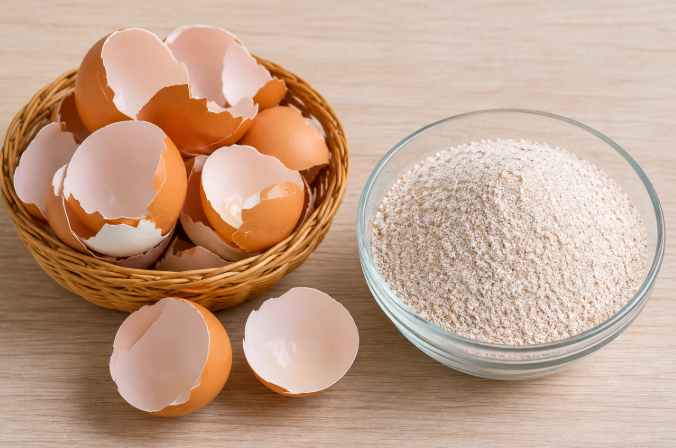
Rinse the shells, allow them to dry completely, and crush them into small pieces before adding them to your compost.
Grinding them into a coarse powder can make them even easier to incorporate.
This is a simple way to turn a kitchen leftover into something useful for your garden.
2. Use Crushed Eggshells Around Garden Plants
Eggshells are often used in home gardening because of their calcium content.
Crushed shells can be mixed into garden soil, where they gradually break down.
Calcium is an essential plant nutrient and plays an important role in plant structure and growth.
However, there's an important caveat:
Eggshells aren't a quick fertilizer.
Their calcium isn't immediately available to plants because the shells break down slowly.
If your soil genuinely has a calcium deficiency, a soil test and an appropriate soil amendment are usually much more reliable than simply throwing eggshells around your plants.
Still, crushed eggshells can be a useful addition to a broader composting and gardening routine.
3. Start Seeds in Eggshells
Here's a fun idea for gardeners.
Instead of throwing away the bottom half of an eggshell, you can use it as a tiny seed-starting container.
Carefully rinse the shell and make a small drainage hole in the bottom.
Fill it with a little potting mix and place a seed inside.
The shell is biodegradable, so when the seedling is ready to be transplanted, you can place the shell and seedling into the soil.
It's particularly useful for small seedlings and makes an inexpensive little container for starting plants.
Just remember that eggshells are small.
As the plant grows, it will eventually need more space.
4. Add Them to Your Garden Compost
If you don't maintain a traditional compost pile, eggshells can still be incorporated into other composting systems.
Whether you're using a backyard compost bin or another suitable composting method, clean crushed eggshells can contribute mineral material.
The key is preparation.
Avoid adding shells covered in large amounts of egg residue, especially if you're concerned about odors or attracting unwanted pests.
A quick rinse followed by thorough drying can make the process much cleaner.
5. Use Eggshells as a Household Abrasive
Finely crushed eggshells can have a mild abrasive texture.
That makes them useful for certain cleaning applications when combined with another cleaning ingredient.
For example, finely crushed shells can sometimes help loosen residue from narrow containers when mixed with water and a small amount of dish soap.
The abrasive particles can help scrub surfaces that are difficult to reach.
However, be careful.
Don't use eggshell abrasives on delicate, polished, or easily scratched surfaces.
Avoid using them on materials such as:
-
Nonstick cookware
-
Delicate glass
-
Polished surfaces
-
Soft plastics
-
Surfaces where scratching would be a concern
When in doubt, test a small hidden area first.
6. Clean Hard-to-Reach Bottles
Ever tried cleaning a narrow bottle and discovered that your sponge simply won't fit inside?
Crushed eggshells may offer a simple solution.
Place a small amount of crushed, thoroughly cleaned eggshell into the bottle.
Add some warm water and a little dish soap.
Then gently swirl or shake the container.
The small particles can move around inside the bottle and help loosen residue.
This works best for sturdy containers.
Again, avoid using the technique on anything that could easily scratch.
7. Give Your Compost a Mineral Boost
Eggshells are especially interesting in compost because they provide calcium while contributing very little organic matter.
They're therefore best thought of as a mineral-rich compost addition, rather than a major source of organic material.
If you're already composting fruit and vegetable scraps, leaves, coffee grounds, and other appropriate materials, crushed eggshells can complement the mixture.
The overall compost still needs a balanced combination of materials.
Eggshells alone won't create good compost.
8. Use Them as a Garden Experiment
If you're curious about gardening, eggshells can make a fun experiment.
Choose two similar plants.
Add finely crushed eggshells to the soil around one while leaving the other unchanged.
Observe the plants over time.
This won't prove whether eggshells are universally beneficial, because plant growth depends on countless variables.
But it can help you understand an important gardening lesson:
Plants respond to their entire soil environment—not just one ingredient.
If you want meaningful results, test your soil rather than relying entirely on internet gardening hacks.
9. Reduce Kitchen Waste
Sometimes the best use of eggshells is simply preventing them from becoming unnecessary trash.
Think about how many eggs a household uses in a year.
If you cook eggs regularly, the shells can add up quickly.
Instead of throwing every shell into the garbage, you can:
-
Compost them
-
Use them in seed-starting
-
Add them to garden soil
-
Reuse them for small household experiments
None of these uses will revolutionize your life.
But reducing waste through small habits can add up over time.
10. Use Eggshells for Crafts
Eggshells can also be used for creative projects.
Clean, dried shells can be broken into tiny pieces and used for textured artwork.
Children can use them for supervised craft activities.
Crushed shells can be arranged into patterns, mosaics, or decorative designs.
You can even dye pieces of eggshell to create colorful craft materials.
The possibilities are surprisingly broad.
The important thing is to make sure the shells are thoroughly cleaned and dried before using them in crafts.
11. Create a Natural Textured Material
Because eggshells are hard and brittle, finely crushed pieces can create interesting textures in handmade projects.
They can be incorporated into:
-
Collages
-
Decorative frames
-
Art projects
-
Mosaic-style designs
-
Educational projects
Their irregular shapes can give handmade artwork a unique appearance.
This is particularly appealing if you're interested in low-cost crafts using materials you already have at home.
12. Use Them to Teach Kids About Recycling
Eggshells can be an excellent teaching tool.
Instead of immediately throwing them away, parents can show children how kitchen waste can have another purpose.
For example:
Egg → eggshell → compost → garden → vegetables
This simple cycle helps children understand concepts such as:
-
Recycling
-
Composting
-
Food waste
-
Soil health
-
Sustainability
It's a small lesson, but it can help build environmentally conscious habits.
13. Add Them to a Worm-Composting System Carefully
People who practice vermicomposting sometimes use finely crushed eggshells as a source of calcium and grit.
Worms don't "eat" eggshells in the same way they consume food scraps.
Instead, finely ground mineral material can become part of the composting environment.
If you're using a worm bin, the shells should be:
Clean, dry, and finely crushed.
Avoid adding large quantities.
And remember that worms need an appropriate mixture of organic materials, moisture, airflow, and bedding to thrive.
Eggshells are only a small component of the system.
14. Eggshells Can Provide Calcium—but Be Careful About Eating Them
This is where eggshell discussions become much more complicated.
Because eggshells contain a large amount of calcium carbonate, some people grind them into powder and consume them as a calcium supplement.
Technically, eggshell powder can contain a significant amount of calcium.
But that doesn't mean you should simply collect shells from your kitchen, grind them, and start eating them.
Raw eggshells can potentially carry Salmonella and other microorganisms.
Improper preparation can therefore create a food-safety risk.
If someone is considering eggshell-derived calcium, it is much safer to discuss the idea with a healthcare professional and use a properly manufactured, tested product rather than relying on homemade preparations.
15. Don't Assume Eggshell Powder Will Strengthen Your Bones
You've probably seen claims that eating powdered eggshells can dramatically improve bone health.
The reality is more complicated.
Calcium is important for maintaining normal bones, but bone health depends on many factors, including:
-
Calcium intake
-
Vitamin D
-
Protein
-
Physical activity
-
Hormonal health
-
Age
-
Genetics
-
Overall nutrition
Simply consuming more calcium isn't necessarily better.
Too much calcium can also create problems in some people.
If you're concerned about osteoporosis or calcium deficiency, the right approach is to discuss your nutritional needs with a healthcare professional rather than experimenting with homemade eggshell powder.
16. Eggshells Aren't a Miracle Pest Control
Another popular gardening claim is that eggshells can automatically keep every slug and snail away from your plants.
The evidence for this simple hack is not particularly convincing.
Sharp eggshell fragments are sometimes claimed to create an uncomfortable barrier for soft-bodied pests.
In practice, the effectiveness can vary considerably.
If your garden has a serious pest problem, relying entirely on eggshells isn't a dependable strategy.
They can still be used as part of your gardening routine, but don't expect them to function as a guaranteed natural pesticide.
17. Don't Put Eggshells Down the Garbage Disposal
This is an important household warning.
You may hear that eggshells can sharpen garbage-disposal blades.
That's not a good reason to put them down the disposal.
Small fragments can potentially accumulate and contribute to plumbing or disposal problems rather than magically sharpening the blades.
A better option is:
Compost them or throw them away properly.
Your plumbing will thank you.
18. Don't Use Eggshells to Scrub Everything
Eggshells are abrasive.
That can be useful in certain situations.
But abrasiveness can also cause damage.
Avoid experimenting with eggshell scrubbing on:
-
Nonstick pans
-
Fine glassware
-
Stainless surfaces that scratch easily
-
Polished stone
-
Delicate ceramics
-
Electronics
Natural doesn't automatically mean gentle.
Always consider the surface before using any abrasive material.
How to Prepare Eggshells for Reuse
If you're planning to reuse eggshells for gardening, crafts, or composting, preparation is simple.
Step 1: Rinse Them
Remove remaining egg material.
Step 2: Dry Them Thoroughly
Allow the shells to dry completely.
You can air-dry them or use gentle heat if appropriate.
Step 3: Crush Them
Break them into smaller pieces.
For composting and gardening, smaller particles generally break down more readily.
Step 4: Store Them Properly
Keep dried shells in a clean, dry container until you're ready to use them.
If you're preparing shells for any potential food use, don't rely on casual kitchen cleaning. Food-safety requirements are much stricter.
What About the Thin Membrane Inside the Shell?
If you've ever cracked an egg carefully, you've probably noticed the thin membrane attached to the inside.
This membrane contains proteins and other compounds, which has led to interest in potential nutritional and supplement applications.
However, that doesn't mean eating raw eggshell membranes from kitchen waste is a proven treatment for joint problems or other conditions.
Commercial eggshell-membrane supplements are processed and standardized differently from homemade eggshells.
So it's important not to assume the two are equivalent.
Are Eggshells Safe for Plants?
Generally, clean crushed eggshells can be incorporated into garden soil or compost.
But their effect depends heavily on the existing soil.
If your soil already contains sufficient calcium, adding more may not provide any meaningful benefit.
And because eggshell calcium dissolves slowly, it isn't a quick fix for a nutrient deficiency.
For serious plant problems, a soil test is much more informative.
Think of eggshells as a supplementary gardening material, not a guaranteed cure for poor soil.
The Difference Between Eggshells and Commercial Garden Products
Commercial fertilizers and soil amendments are formulated to provide nutrients in predictable concentrations.
Eggshells are much less predictable.
Their mineral content can vary, and their breakdown is slow.
That's why professional growers don't generally rely on eggshells alone to manage soil nutrients.
For casual home gardening, however, reusing eggshells can still be worthwhile as part of a broader composting strategy.
Eggshells Can Be Useful—But Don't Believe Every Viral Hack
The internet is full of claims about eggshells.
Some are reasonable.
Some are exaggerated.
And others are simply unsupported.
You may see claims that eggshells can:
-
Cure nutrient deficiencies
-
Remove toxins
-
Eliminate pests
-
Strengthen bones instantly
-
Clean every household surface
-
Prevent disease
These claims should be approached cautiously.
A useful rule is:
If a kitchen leftover is being presented as a cure-all, skepticism is healthy.
Eggshells have legitimate practical uses.
They don't need exaggerated claims to be useful.
A Simple Eggshell Recycling Routine
If your household uses a lot of eggs, you can create a simple system.
Keep a small container near your kitchen waste area.
After cooking:
-
Rinse the shells.
-
Let them dry.
-
Crush them.
-
Add them to compost or use them in the garden.
-
Keep a small portion for crafts if desired.
Over time, this turns an everyday kitchen leftover into something useful.
It's easy, inexpensive, and reduces waste.
What You Shouldn't Do With Eggshells
Before you start experimenting, remember these important precautions.
Don't Eat Raw Eggshells
They may carry harmful bacteria.
Don't Assume Homemade Eggshell Powder Is a Safe Supplement
Food safety and dosage can be complicated.
Don't Use Them on Delicate Surfaces
The abrasive texture can cause scratches.
Don't Put Large Amounts Down the Garbage Disposal
They can contribute to plumbing or disposal problems.
Don't Depend on Them to Fix Soil Problems
Test your soil when nutrient deficiencies are suspected.
Don't Treat Them as a Miracle Pest Repellent
Their effectiveness against pests is inconsistent.
The Environmental Benefit of Reusing Eggshells
Food waste is a significant issue worldwide.
While eggshells represent only a small fraction of household waste, reusing them is a practical example of a broader principle:
Not everything that looks like trash has to become trash.
Composting eggshells returns mineral material to the soil.
Using them for crafts extends their usefulness.
Starting seedlings in eggshells gives them a second purpose.
None of these actions will solve the world's waste problem by themselves.
But sustainable living is often built from small habits repeated consistently.
Final Thoughts
Eggshells may look like nothing more than kitchen waste, but they have several surprisingly practical uses.
They can be composted, crushed for garden use, used as seed-starting containers, incorporated into crafts, and carefully used for certain household cleaning tasks.
Their high calcium carbonate content is what makes them particularly interesting.
However, not every eggshell claim you see online should be trusted.
Eggshells aren't a miracle fertilizer, guaranteed pest repellent, or instant health supplement. And if you're considering consuming eggshell powder, food safety and appropriate calcium intake are serious considerations.
The safest and simplest uses are generally composting, gardening, crafts, and selected household applications where scratching isn't a concern.
So the next time you crack an egg, don't automatically think of the shell as useless.
Before it reaches the trash can, ask yourself whether it could have a second life.
Sometimes the smallest kitchen leftovers can become surprisingly useful with a little cleaning, creativity, and common sense.