A little salt around the entrance of a home may sound like an old-fashioned household trick, but the practice has surprisingly many stories attached to it.
Some people sprinkle salt near doorways to keep insects away. Others believe it can absorb moisture, reduce unpleasant odors, or create a simple barrier around areas where tiny pests might enter. And in many cultures, salt has also been associated with cleanliness, protection, and good luck for centuries.
But what actually happens when you sprinkle salt around the cracks near your door?
The answer is more practical than mysterious.
Salt can be useful in certain household situations, but it is not a guaranteed pest repellent or magical barrier. Its effectiveness depends heavily on what problem you're trying to solve.
Let's take a closer look at what this simple household ingredient can—and cannot—do.
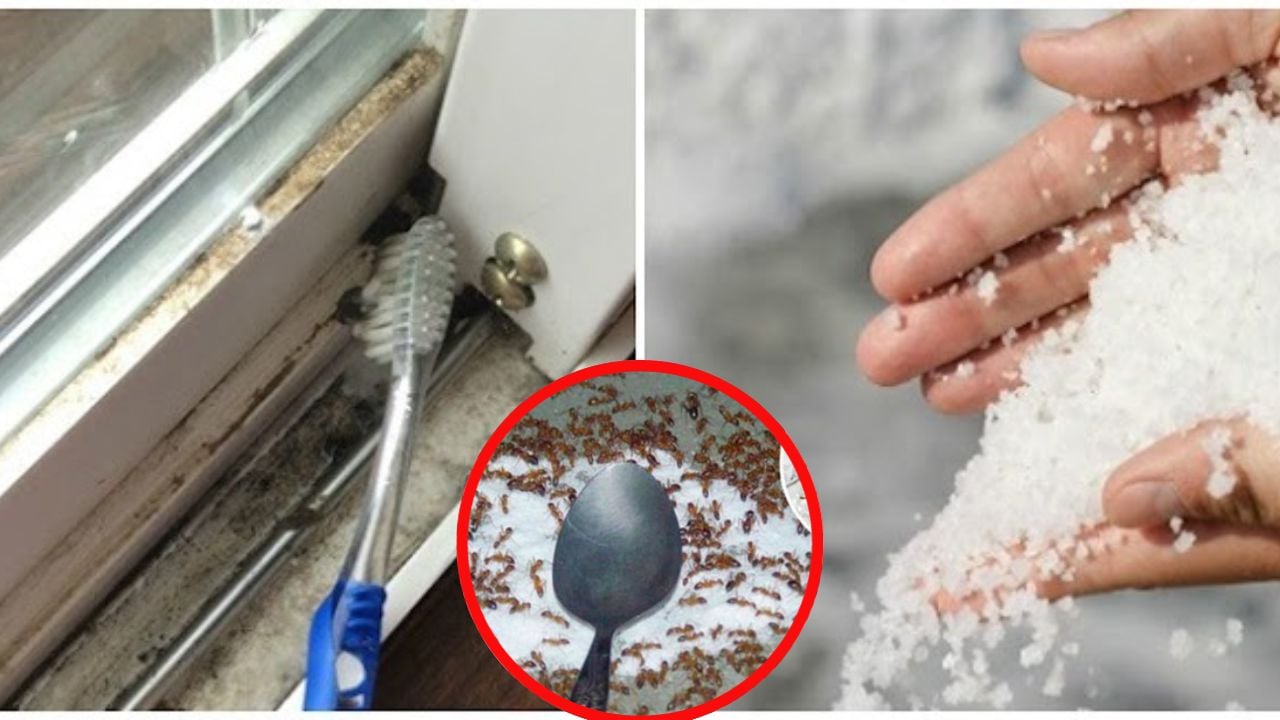
Why Do People Put Salt Near Doorways?
Doors are one of the most common entry points between the inside and outside of a home.
Even when a door appears completely closed, tiny gaps can remain around:
-
The bottom of the door
-
Door frames
-
Corners
-
Thresholds
-
Cracks in surrounding walls
-
Areas where pipes or cables enter the building
These openings can allow small insects to enter.
Ants, cockroaches, spiders, and other small creatures may use tiny gaps while searching for food, water, shelter, or suitable temperatures.
That's why people sometimes experiment with household substances such as salt.
The idea is simple:
If a substance is placed around the entry point, perhaps it will discourage pests from crossing it.
But there is an important difference between a traditional household trick and a scientifically established pest-control method.
What Does Salt Actually Do?
Salt is chemically known as sodium chloride.
One of its important properties is that it can interact with water.
In sufficiently concentrated conditions, salt can draw water out of some biological systems through osmosis.
This is one reason salt has historically been used for food preservation.
However, that doesn't mean a thin line of ordinary table salt placed near a door will automatically eliminate insects.
The environment matters.
Humidity matters.
The type of pest matters.
And the amount of salt matters.
So while salt has real chemical properties, online claims sometimes exaggerate what those properties can accomplish around the home.
Could Salt Help With Moisture?
This is one area where the idea has some logic behind it.
Salt can absorb some moisture from its surroundings, particularly under certain conditions.
If a small amount is placed in a damp area, it may become wet or clump together.
However, ordinary table salt is not an especially powerful household dehumidifier.
If you're dealing with persistent moisture around a doorway, the more important question is why the moisture is there in the first place.
Possible causes include:
-
Rain entering beneath the door
-
Poor drainage
-
Condensation
-
Leaking pipes
-
Poor ventilation
-
Water collecting near the foundation
-
Damaged weather stripping
Addressing the source is much more effective than repeatedly sprinkling salt.
What About Ants?
Ants are one of the main reasons people search for homemade pest-control solutions.
A trail of ants near a door can be frustrating.
You may notice them entering through a tiny crack, moving along the wall, and disappearing beneath cabinets or toward a food source.
Some household sources claim that salt creates a barrier ants will not cross.
However, you shouldn't assume that a line of salt will reliably stop an established ant infestation.
Ant behavior varies by species and environment.
If ants continue entering your home, a more effective approach is to identify where they are coming from and remove the conditions attracting them.
The Real Reason Pests Enter Your Home
If you repeatedly see insects near your door, the most useful question isn't:
“What can I sprinkle here?”
It's:
“Why are they coming here?”
Pests often enter homes because they find something useful.
That could be:
Food
Crumbs, pet food, garbage, sugary substances, and improperly stored food can attract insects.
Water
Leaking faucets, condensation, damp floors, and standing water can provide an attractive source of moisture.
Shelter
During extreme heat, cold, rain, or drought, insects may seek protected spaces indoors.
Small openings
A surprisingly small gap can provide an entry point.
Understanding the cause is often much more effective than trying random substances.
A Door Crack May Be More Important Than the Salt
If you can see daylight beneath a closed exterior door, that's a clue.
A large gap can allow insects, drafts, dust, and moisture to enter.
In this situation, the best solution may be a door sweep or weather stripping.
These inexpensive materials can close gaps around the door and provide a physical barrier.
Unlike a homemade powder barrier, a properly installed door seal doesn't depend on whether an insect decides to cross it.
It simply reduces the opening.
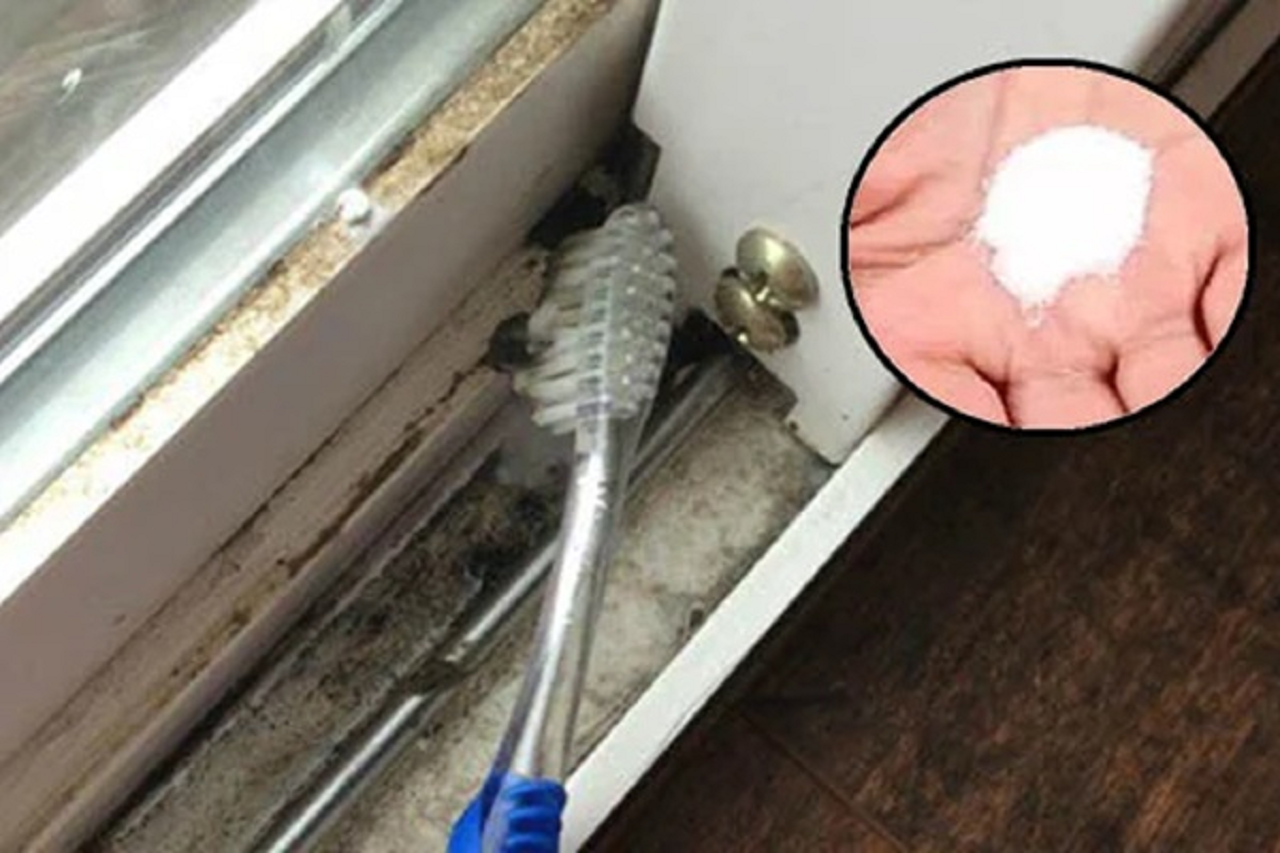
Try the Simple Paper Test
There's an easy way to check whether your door seal is working properly.
Close the door on a piece of paper.
Then try pulling the paper out.
If the paper slides out extremely easily at several points around the door, the seal may not be making sufficient contact.
This isn't a formal building inspection, but it can give you a quick indication that the weather stripping needs attention.
Check the:
-
Top edge
-
Bottom edge
-
Hinge side
-
Lock side
-
Corners
If there are visible gaps, replacing damaged weather stripping may be more useful than applying salt.
What If You Want to Try Salt Anyway?
If you're simply curious about the household trick, a small amount of ordinary salt placed in a dry, non-sensitive area is generally straightforward.
But don't treat it as a guaranteed pest-control method.
And avoid putting large amounts of salt around plants, soil, or areas where pets can consume it.
Salt can damage vegetation and excessive salt exposure can be harmful to animals.
If children or pets have access to the area, it's better to avoid leaving loose substances where they can be touched or swallowed.
Salt Isn't a Substitute for Pest Control
This is particularly important when dealing with a serious infestation.
If you have:
-
Large numbers of cockroaches
-
Repeated termite activity
-
A growing ant infestation
-
Bed bugs
-
Rodents
-
Stinging insects
-
Evidence of pests inside walls
sprinkling salt around a door is unlikely to solve the underlying problem.
Professional pest-control methods may be necessary depending on the species and severity of the infestation.
The correct treatment varies considerably between pests.
What works for ants may not work for cockroaches.
What works for cockroaches certainly won't solve a termite problem.