If pests are repeatedly appearing around a doorway, moisture deserves attention.
Inspect the area after rain.
Does water collect near the threshold?
Is the floor damp?
Does the door frame show discoloration?
Is there condensation?
Is water entering from outside?
Moist environments can attract a variety of insects and can also contribute to mold and deterioration of building materials.
Improving drainage and ventilation can therefore be much more valuable than relying on household powders.
Keep Food Away From Entry Points
Another simple step is to eliminate potential food sources.
Don't leave pet food near exterior doors overnight.
Clean crumbs from floors.
Keep garbage containers sealed.
Store dry food in appropriate containers.
Wipe up sugary spills promptly.
Even tiny amounts of food can attract insects.
If pests have nothing to eat, the area becomes less attractive.
Seal Cracks Around the Door Frame
If you discover a visible crack around the frame, sealing it can be an effective preventive measure.
Depending on the location and size of the gap, homeowners may use appropriate caulk, sealant, or other building materials.
The goal is simple:
Remove the entry point rather than repeatedly treating the entry point.
This is a general principle of integrated pest management.
Preventing access is often better than constantly trying to eliminate pests after they have entered.
What About the Traditional Belief That Salt Protects a Home?
Salt has a long cultural history.
Across different societies, it has been associated with purification, protection, hospitality, preservation, and good fortune.
Because of those traditions, some people place salt near doors or windows as a symbolic protective practice.
There's nothing wrong with maintaining a cultural tradition if it has personal meaning.
But symbolic protection and scientifically demonstrated pest control are two different things.
Salt may have cultural significance without being a proven barrier against every household pest.
Why “Five Minutes” Is Misleading
You may see online claims promising that something dramatic will happen exactly five minutes after sprinkling salt around a door.
Those claims should be treated cautiously.
There is no universal five-minute reaction that occurs when salt is placed near a doorway.
If insects happen to move away, several explanations may exist.
They may have simply changed direction.
They may have been disturbed.
The food source may have disappeared.
The environment may have changed.
Or the salt may have played little or no role at all.
Anecdotal timing doesn't establish cause and effect.
A Better Way to Think About Household Tricks
Homemade solutions can sometimes be useful.
But before trying one, ask three questions:
1. Is the claim plausible?
Does the substance actually have a property that could affect the problem?
2. Is it safe?
Could it harm children, pets, plants, flooring, or other materials?
3. Does it address the cause?
Will it solve the underlying problem, or merely change what happens temporarily?
This approach helps separate genuinely useful household practices from viral internet hacks.
What You Can Do Instead
If your goal is to prevent insects from entering through a doorway, consider a combination of practical steps:
Seal gaps.
Replace damaged weather stripping and door sweeps.
Keep the area dry.
Fix leaks and improve drainage.
Remove food sources.
Clean crumbs and store food securely.
Reduce clutter.
Insects often find hiding places in undisturbed areas.
Inspect the exterior.
Trim vegetation touching the building and check for cracks.
Use appropriate pest control.
If an infestation persists, identify the pest before choosing a treatment.
These measures are generally more dependable than relying on a line of salt.
The Simple Salt Trick Isn't Really About Magic
There's something appealing about household tricks because they are inexpensive and easy.
You don't need specialized equipment.
You don't need complicated instructions.
You simply take something already sitting in your kitchen and try it.
But the most useful lesson isn't that salt has a mysterious power.
It's that small details around your home can sometimes reveal larger problems.
A line of ants may indicate an entry point.
Dampness near a doorway may indicate a drainage problem.
A persistent draft may indicate damaged weather stripping.
Repeated insect activity may indicate a nearby food or water source.
The visible problem is often only the symptom.
When to Take the Problem More Seriously
If you repeatedly discover insects despite cleaning and sealing obvious entry points, investigate further.
Look for nests, cracks, moisture, damaged structures, or food sources.
If you suspect termites or structural pests, don't rely on homemade remedies.
If you see venomous spiders, stinging insects, or unfamiliar wildlife inside your home, keep your distance and use appropriate professional or local pest/wildlife services when necessary.
And if you're dealing with a significant infestation, professional identification can save time and prevent the use of ineffective or potentially harmful treatments.
So, What Really Happens When You Sprinkle Salt Around Your Door?
The answer is much less dramatic than many viral posts suggest.
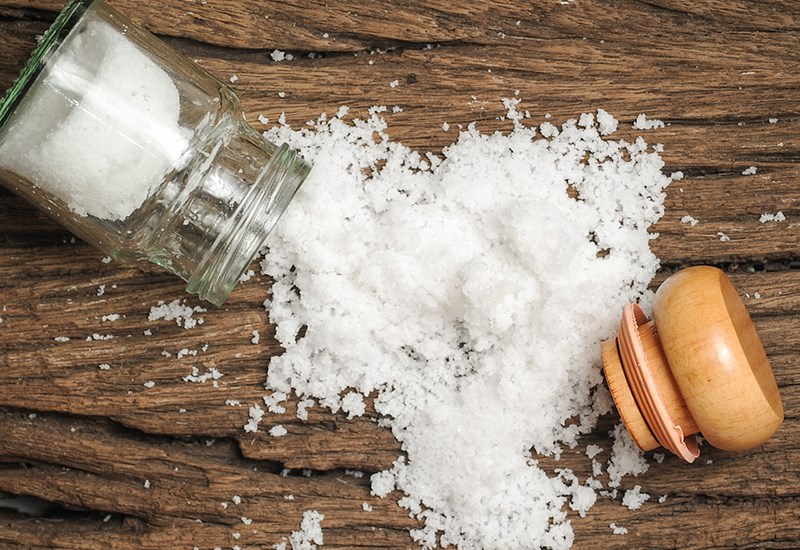
The salt may become damp or clump in humid conditions.
It may have limited effects on certain organisms under particular circumstances.
It may also serve as a traditional or symbolic household practice.
But there is no universal rule that sprinkling salt around door cracks will make pests disappear within five minutes.
If your real goal is to keep insects out, focus on the fundamentals:
Seal the gaps.
Remove food sources.
Control moisture.
Keep the area clean.
Identify the pest.
Use an appropriate treatment when necessary.
Those steps address the problem at its source.
And if you still want to try the salt trick, think of it as a simple household experiment not a guaranteed solution.
Sometimes the most effective “home remedy” isn't something you sprinkle on the floor. It's finding the tiny opening, fixing the moisture problem, and making your home less attractive to unwanted visitors in the first place.