And the shed was not a safe place for a baby.
Investigators also found evidence that the couple had been experiencing serious financial difficulties. They had fallen behind on rent and had received notices from creditors. Their relationship had become increasingly unstable.
Those problems were real, but they did not explain why two small children had been left without adequate care.
The investigation then uncovered a more disturbing detail.
The parents had discussed leaving the children with someone else for a short period, but they had never secured a safe arrangement. According to the information being examined, they had argued about who would take responsibility for the children and where they could go.
The decision to leave them at the shed had apparently been made after that disagreement.
Daniel claimed that Rachel had suggested the location because she believed I would eventually discover the children.
Rachel gave a different account.
She said Daniel had insisted that the children be left there and had promised that someone would return before they were in danger.
Both accounts were still being investigated.
But one fact was already clear: the children had not been given the care they needed, and the adults responsible for them had failed to make even the most basic arrangements for their safety.
The sheriff's office began working with child protection authorities to determine the next steps.
I learned that the parents could face serious legal consequences depending on the evidence and the applicable law.
I also learned that the children's immediate future would not be decided by either parent's promises.
It would be determined by their safety.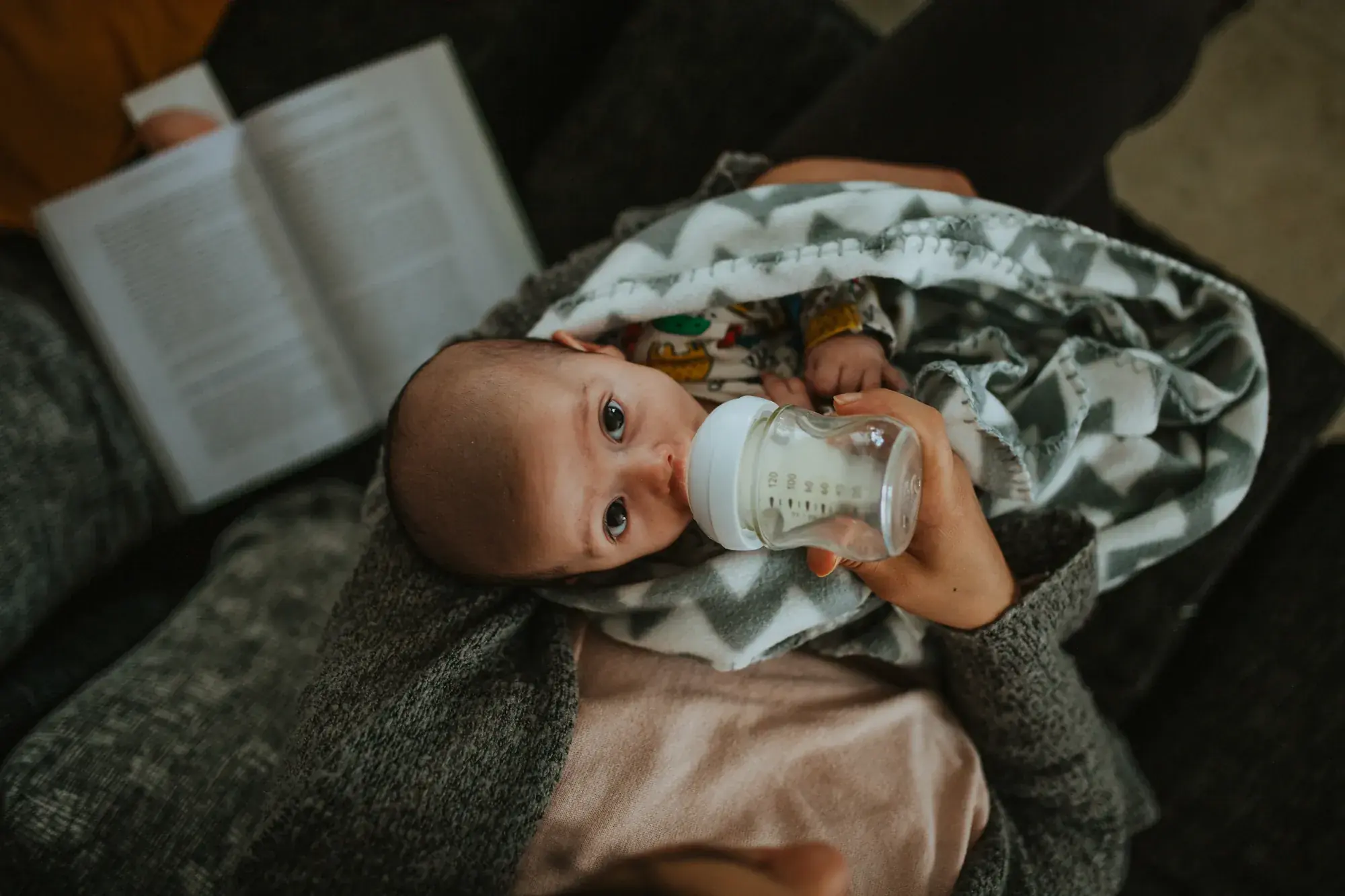
A Rancher's Offer
A few days later, the child welfare worker called me.
She explained that Lily had been asking about the ranch.
She remembered the barn, the cattle, and the warm kitchen where I had prepared the bottle.
She also remembered that I had promised to walk with her.
The worker asked whether I would be willing to participate in a supervised visit once the children were medically cleared.
I said yes immediately.
Then she asked something more serious.
“Would you consider becoming a temporary placement option if the authorities determine that it is appropriate?”
I looked around my quiet kitchen.
I had lived alone for years. My wife, Margaret, had passed away several winters earlier, and the house had become a place where everything stayed exactly where I left it.
There were two empty bedrooms upstairs.
I had never imagined filling them with children.
But I also knew that caring for an infant and a seven-year-old was not as simple as opening a spare room.
There would be background checks, home inspections, training, medical arrangements, and legal requirements. The authorities would need to determine whether I could provide safe care.
I told the worker I was willing to be assessed.
“I don't want to make promises I can't keep,” I said. “But if there's a safe way I can help, I'll do it.”
She thanked me.
Over the next several days, a social worker visited the ranch. She inspected the house, checked the bedrooms, asked about my health, and discussed the responsibilities involved in caring for two young children.
She explained that temporary placement was not adoption. It would be a carefully supervised arrangement while the authorities investigated the family situation and considered the children's long-term needs.
I understood.
I did not need to become their father. I needed to be an adult who could provide safety while the people responsible for their case made the right decisions.
The worker also explained that Lily and Ben might need support from doctors, counselors, and specialists.
I agreed to follow whatever plan was required.
When she left, I walked upstairs and opened the two empty bedrooms.
One had belonged to Margaret's sewing room.
The other had been a guest room.
For the first time in years, I began imagining those rooms being used again.
The Day Lily Returned to the Ranch
The first supervised visit took place the following week.
A social worker brought Lily to the ranch in the afternoon. Ben was still receiving follow-up care, so the visit was arranged around his medical needs.
Lily stepped out of the vehicle holding the stuffed horse I had given her.
She looked toward the barn.
“Is that where you keep the cows?”
“Most of them,” I said.
She nodded.
Then she looked at the house.
“Can I see the kitchen?”
“Of course.”
I showed her the kitchen, the living room, and the small room where I kept old photographs of Margaret and me.
She stopped in front of one picture.
It showed Margaret standing beside a calf, laughing as the animal tried to eat the flowers in her hand.
“Who is that?”
“My wife.”
“Where is she?”
I took a breath.
“She died a few years ago.”
Lily looked at the picture again.
“Did she like animals?”
“She loved them.”
The girl smiled faintly.
“I think she would like Ben.”
I felt something move in my chest.
“Yes,” I said. “I think she would.”
The social worker gave us time to talk, but she stayed nearby.
Lily asked whether she could visit the barn. I took her outside and showed her the feed room, the water troughs, and the horses.
She was especially interested in a small chestnut mare named Daisy.
Daisy had a calm nature and often approached the fence when someone came near.
Lily stood quietly beside her.
“Does she bite?”
“Not if you treat her gently.”
Lily reached out slowly and touched the mare's neck.
For the first time since I had met her, she looked like a child who was allowed to be curious.
Then she turned toward me.
“Will Ben come here too?”
I looked at the social worker.
She explained that any future placement would depend on medical clearance, safety assessments, and the decisions of the child welfare authorities.
Lily listened.
She did not ask again.
But before leaving, she placed the stuffed horse on the kitchen table and said, “I want to keep it here until I come back.”
I promised to take care of it.
When the vehicle disappeared down the driveway, I stood by the gate for a long time.
The ranch had been quiet for years.
Now I found myself hoping to hear a child's footsteps again.
The Truth About the Parents
The investigation continued for several weeks.
As more information emerged, it became clear that the family's difficulties had been building for some time. Daniel and Rachel had been struggling financially, their relationship had deteriorated, and they had been arguing about how to care for the children.
But financial hardship alone did not explain the decision to leave a baby and a seven-year-old in an abandoned shed.
Investigators examined messages, phone records, the vehicle footage, and statements from people who knew the family. They were trying to establish exactly who had arranged the trip to the ranch, what each parent had intended, and whether either had made any genuine attempt to return for the children.
The most painful part of the story was what Lily had been told.