Chapter 1: Why Sleeping on Your Left Side May Be Better for Your Stomach
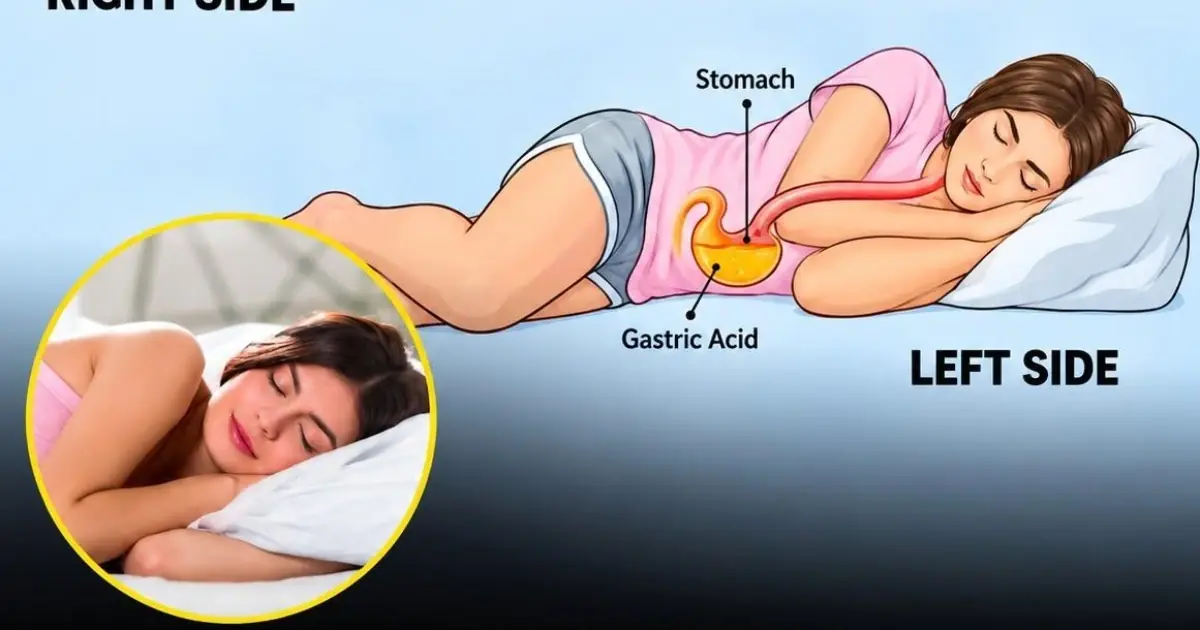
Sleep is one of the most important processes in the human body. During the night, the body repairs tissues, regulates hormones, supports immune function, and allows the brain to process information gathered throughout the day.
However, the quality of sleep is not determined by duration alone. Sleeping position can also influence comfort and certain physical processes, particularly digestion and nighttime acid reflux.
Among the different sleeping positions, lying on the left side has attracted considerable interest from researchers and healthcare professionals.
The reason is closely connected to the position of the stomach and the way gravity affects stomach contents.
1. Understanding the stomach's natural position
The stomach is located in the upper abdomen, slightly toward the left side of the body.
It receives food through the esophagus, stores it temporarily, and mixes it with gastric acid and digestive enzymes.
After food has been broken down, the stomach gradually releases its contents into the small intestine.
Because of its curved shape and anatomical position, lying on the left side can influence how stomach contents settle.
When someone lies on the right side, the relationship between the stomach and the junction connecting it to the esophagus may make it easier for stomach contents to move upward.
On the left side, the stomach's position can help keep its contents below the esophageal opening.
This is one reason researchers have investigated left-side sleeping as a potential way to reduce nighttime reflux.
2. What happens when stomach acid moves upward?
Stomach acid is necessary for digestion.
It helps break down food and creates an environment that supports the activity of digestive enzymes.
However, the esophagus is not designed to withstand repeated exposure to stomach acid.
A muscular structure called the lower esophageal sphincter helps prevent stomach contents from moving backward.
When this barrier does not function properly, acid can travel upward into the esophagus.
This condition is known as gastroesophageal reflux.
Common symptoms include:
-
Burning sensations in the chest.
-
Sour or bitter taste in the mouth.
-
Burping after meals.
-
Discomfort in the upper abdomen.
-
Coughing or throat irritation during the night.
-
Difficulty sleeping because of reflux symptoms.
Some people experience these symptoms occasionally, while others develop persistent gastroesophageal reflux disease, commonly called GERD.
Nighttime reflux can be particularly uncomfortable because lying down removes some of the assistance normally provided by gravity.
3. Why the left side may reduce nighttime acid reflux
Research has found that sleeping on the left side is associated with less nighttime exposure of the esophagus to stomach acid.
A study published in the American Journal of Gastroenterology in 2022 examined 57 patients with reflux symptoms while measuring their sleeping positions and esophageal acid exposure.
Researchers found that acid exposure was shorter when participants slept on their left sides compared with their right sides or backs.
The time needed for the esophagus to clear acid was also shorter in the left-side position.
A separate randomized controlled trial involving 100 people with nighttime reflux symptoms examined a device designed to encourage left-side sleeping.
The results showed that participants receiving positional therapy experienced better nighttime reflux outcomes than those in the comparison group.
These findings suggest that changing sleeping position may be a useful additional strategy for people who regularly experience nighttime heartburn.
4. Does everyone need to sleep on the left side?
No.
The left-side position is not a universal requirement.
People who sleep comfortably on their backs or right sides and do not experience reflux do not necessarily need to change their habits.
Sleep quality, breathing comfort, spinal alignment, and existing medical conditions are also important.
For someone who regularly wakes up with heartburn, however, trying the left-side position may be worthwhile.
It is a relatively simple adjustment that does not require special equipment.
5. Why sleeping immediately after eating can make things worse
Another important factor is the time between the evening meal and bedtime.
After eating, the stomach needs time to process food.
Lying down immediately after a large meal can increase the likelihood of uncomfortable reflux in susceptible individuals.
A practical approach is to finish dinner at least two to three hours before going to bed.
People who experience frequent symptoms may also benefit from smaller evening meals.
Very fatty meals, spicy foods, chocolate, coffee, and alcohol can trigger reflux in some individuals, although triggers vary.
The NHS also recommends avoiding food shortly before bedtime and considering left-side sleeping to help manage heartburn during pregnancy.
6. A simple change that may improve nighttime comfort
For people who experience nighttime reflux, small adjustments can sometimes make a noticeable difference.
Try lying on the left side, keeping the upper body slightly elevated if recommended, and avoiding heavy meals immediately before bedtime.
However, people with persistent heartburn should not rely on sleeping position alone.
Frequent reflux can require medical assessment and appropriate treatment.
The main lesson is that sleeping position can influence digestion, but it should be considered one part of a broader approach to digestive health.
Chapter 2: What Left-Side Sleeping May Mean for Brain Health
The brain is one of the most complex organs in the human body.
It remains active during sleep, even when a person is completely unaware of the processes taking place.
During the night, the brain cycles through different sleep stages that contribute to memory, emotional regulation, learning, and physical recovery.
Scientists have also investigated how the brain manages metabolic waste products while a person sleeps.
This research has attracted considerable attention because of the potential relationship between sleep, brain aging, and neurological health.
1. Understanding the glymphatic system
One important concept in sleep research is the glymphatic system.
The glymphatic system is a proposed waste-clearance pathway involving cerebrospinal fluid and fluid surrounding brain cells.
It is believed to help move certain metabolic waste products through the brain.
The system has attracted interest because researchers are investigating how sleep influences the movement of fluids and the removal of substances associated with brain activity.
These substances include proteins such as amyloid-beta and tau, which are also studied in connection with neurological conditions.
However, it is important to distinguish between biological mechanisms observed in experiments and proven clinical benefits in humans.
2. Why researchers became interested in sleeping position
An influential animal study published in 2015 investigated how body position affected glymphatic transport.
Researchers examined different positions, including lateral, supine, and prone positioning, in laboratory animals.
The findings suggested that body posture could influence the movement of fluid through the brain.
This research generated interest in whether sleeping on one side might support brain waste clearance.
However, the study involved animals under experimental conditions.