Chapter 1: Why Your Sleeping Position May Matter More Than You Think
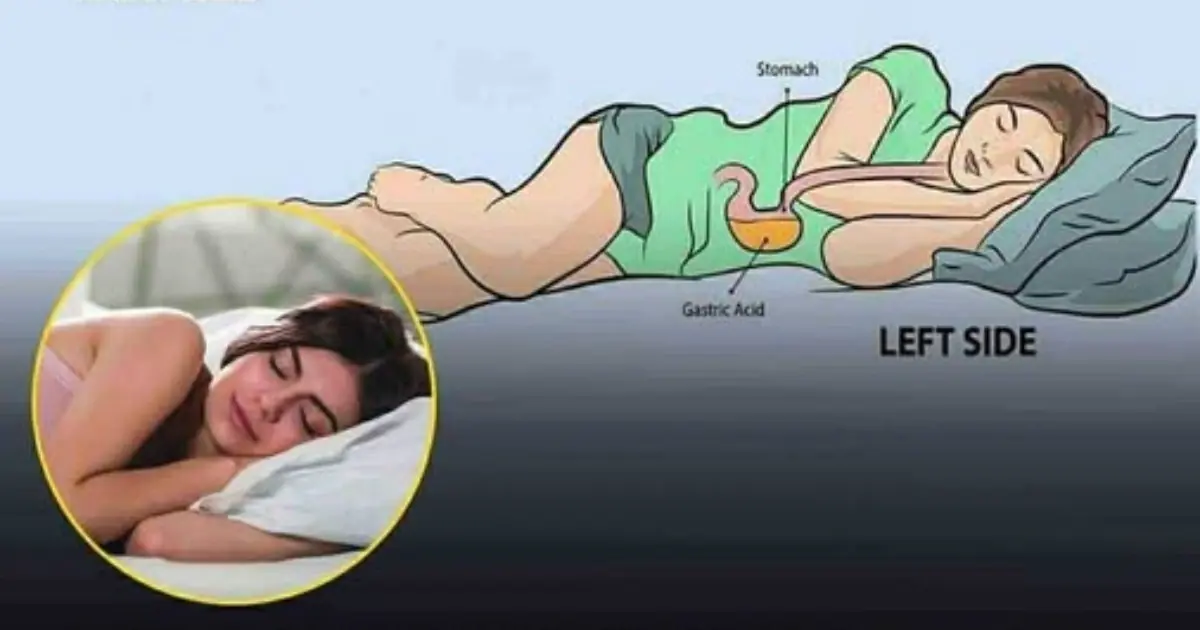
Sleep is one of the most important processes for maintaining the body's daily balance. During the night, the body rests, repairs tissues, regulates hormones, and supports the normal functioning of the brain and other organs.
Yet many people pay little attention to the position in which they sleep.
Some prefer sleeping on their backs, others on their stomachs, and many naturally turn to one side. Although there is no single sleeping position that is perfect for everyone, the position of the body can influence certain health conditions, particularly digestive discomfort.
Sleeping on the left side has attracted considerable attention because of its possible effects on the stomach, brain, and lymphatic system.
However, it is important to understand that these three areas do not have the same level of scientific evidence.
The relationship between left-side sleeping and acid reflux is supported by clinical research. The possible relationship between side sleeping and brain waste clearance has mainly been studied in animals. Claims that sleeping specifically on the left side improves the entire body's lymphatic drainage remain insufficiently established.
Understanding these differences can help readers make practical decisions without believing exaggerated health claims.
The body continues working during sleep
Sleep is not simply a period when the body switches off.
The brain remains active through several sleep stages, including light sleep, deep sleep, and rapid eye movement sleep.
During these stages, the body regulates memory, emotional processing, immune activity, and many other functions.
The digestive system also continues working. Food consumed earlier in the day moves through the stomach and intestines, while the body manages digestive secretions.
The cardiovascular system continues circulating blood, and the lymphatic system helps return fluid from tissues to the bloodstream.
Because these processes continue during sleep, body position may influence some aspects of how they operate.
For example, gravity can affect the movement of stomach contents. The position of the head and body may also influence breathing, circulation, and the movement of fluids.
Why the left side is different
The stomach is not positioned symmetrically in the body.
It lies mainly in the upper-left portion of the abdomen, although its exact shape and position vary from person to person.
The connection between the esophagus and stomach is also important.
The lower esophageal sphincter is a muscular valve that helps prevent stomach contents from flowing backward into the esophagus.
When this valve relaxes inappropriately or does not close effectively, stomach acid and other contents may move upward.
This is known as gastroesophageal reflux.
The condition can cause heartburn, a sour taste in the mouth, throat irritation, coughing, and discomfort after lying down.
For people who experience reflux during the night, changing sleeping position may be a useful part of symptom management.
A simple change, but not a universal treatment
Sleeping on the left side does not cure every digestive problem.
It does not eliminate stomach acid, repair a damaged esophagus, or replace medical treatment for gastroesophageal reflux disease.
Instead, it may reduce the likelihood that stomach contents will move toward the esophagus while a person is lying down.
That distinction is important.
A sleeping position can support comfort and symptom control without being a cure for the underlying condition.
The same principle applies to the brain and lymphatic system. A position that is comfortable and allows uninterrupted sleep may support general health, but it should not be described as a guaranteed method of removing toxins or preventing disease.
The most useful approach is to understand what left-side sleeping may realistically do, how to try it safely, and when symptoms require medical attention.
Chapter 2: What Sleeping on the Left Side May Do for Your Stomach
One of the best-supported reasons to consider sleeping on the left side is its potential effect on nighttime acid reflux.
People who experience heartburn after going to bed may notice that certain positions make their symptoms worse.
This is not necessarily a coincidence.
The relationship between body position and reflux has been investigated in clinical studies involving people with gastroesophageal reflux disease.
How acid reflux happens
The stomach produces acid to help digest food.
Under normal circumstances, the lower esophageal sphincter acts as a barrier between the stomach and the esophagus.
When this barrier does not function properly, stomach contents may flow backward.
Unlike the stomach, the esophagus does not have the same protective lining against acid.
Repeated exposure can cause irritation and inflammation.
Symptoms may become more noticeable at night because lying down removes some of the assistance provided by gravity.
When a person is upright, gravity helps keep stomach contents in the lower part of the digestive tract.
When the person lies down, that advantage is reduced.
Why the left side may help
The stomach's shape and the location of its connection to the esophagus make body position important.
When a person lies on the left side, the stomach generally sits below the esophagus in a way that may make it more difficult for acid to flow upward.
When lying on the right side, the anatomical relationship can make reflux more likely in some people.
This does not mean that acid can never reach the esophagus while sleeping on the left side.
Rather, the position may reduce acid exposure and help the esophagus clear refluxed material more quickly.
A systematic review published in 2023 examined studies comparing left-side sleeping with right-side and back sleeping in people with reflux.
The review found evidence that left-side sleeping was associated with reduced nighttime acid exposure and faster acid clearance.
What clinical research has observed
Researchers have used esophageal pH monitoring and other techniques to measure how much acid reaches the esophagus during sleep.
In one study involving patients with nighttime reflux, acid exposure was shorter when participants slept on their left side than when they slept on their right side or back.
Other research has found that avoiding the right-side position may reduce nighttime reflux symptoms.
These findings suggest that sleep position can be a useful lifestyle measure for people who regularly experience heartburn after lying down.
However, the results should not be interpreted as proof that every person will experience the same improvement.
Some people may have reflux caused by factors that are not strongly influenced by position.
Who may benefit most?
Left-side sleeping may be particularly useful for people who experience:
-
Heartburn after going to bed.
-
A sour or bitter taste during the night.
-
Reflux symptoms after a late meal.
-
Discomfort that becomes worse when lying on the right side.
-
Repeated waking because of digestive discomfort.