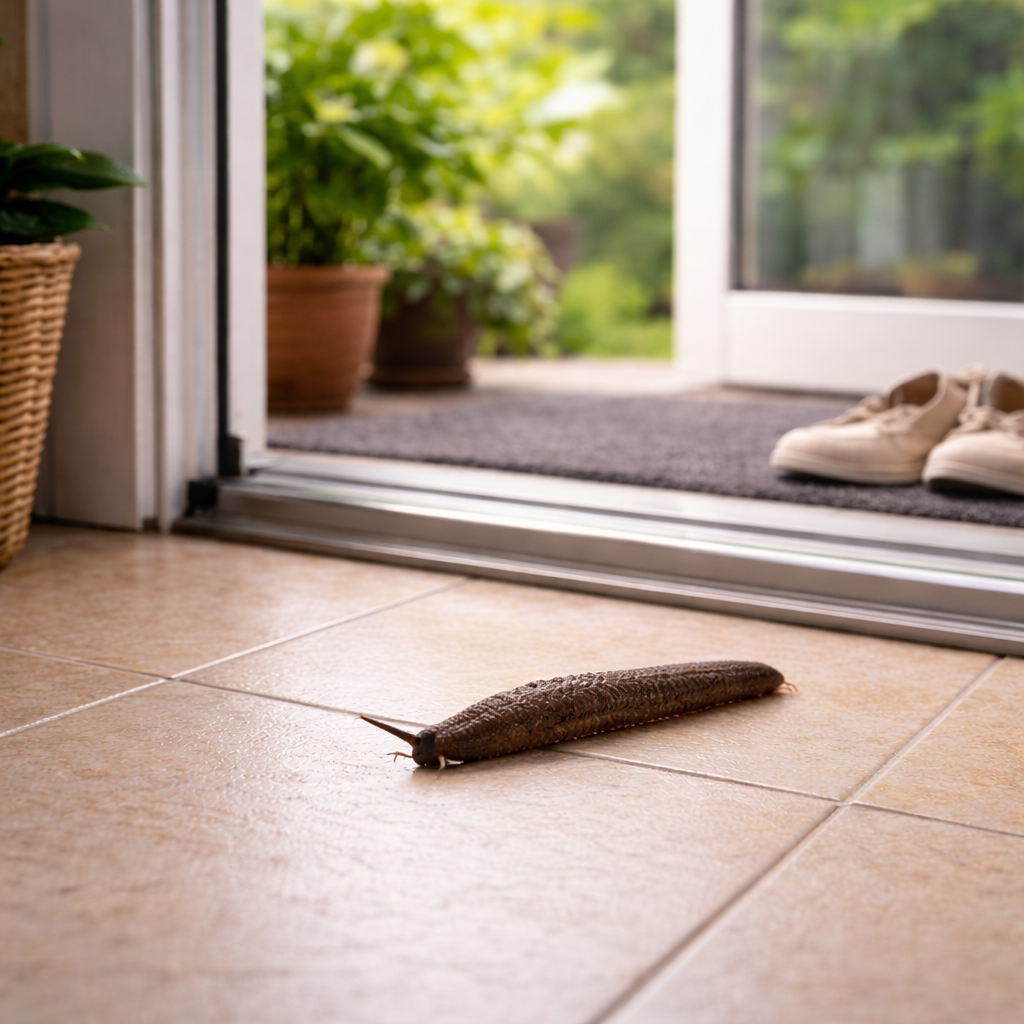
Finding a slug slowly moving across your kitchen floor, bathroom, hallway, or even bedroom can be surprisingly unsettling. Unlike ants, flies, or spiders, slugs are creatures most people expect to encounter outdoors, especially in gardens, flower beds, and damp areas.
So when one suddenly appears inside your home, it is natural to wonder: Why did it come in? Does it mean there is a bigger problem? And should you be worried?
The good news is that a slug inside your house usually does not mean anything mysterious or dangerous. In most cases, it is simply looking for the same things it needs outdoors: moisture, food, shelter, and a suitable environment.
However, finding a slug indoors can sometimes provide a useful clue about conditions around your home.
Why Would a Slug Enter a House?
Slugs are soft-bodied animals that lose moisture easily. They are especially active in cool, humid, and damp conditions, often coming out at night or after rainfall.
A house can accidentally provide some of the same conditions they find attractive outdoors.
There may be small gaps beneath doors, cracks around windows, openings around pipes, spaces near foundations, or other routes that allow a slug to enter.
Once inside, the slug may continue moving in search of food or moisture.
It does not necessarily mean that your house is dirty.
Instead, it may indicate that environmental conditions around the building are favorable for slugs.
1. Moisture May Be Attracting Them
One of the biggest reasons slugs are found near homes is moisture.
Slugs depend heavily on moisture because their bodies can dry out relatively quickly. This is why they are commonly seen after rain, in damp gardens, beneath leaves, around compost, and in shaded areas.
If a slug enters your house, check for areas where moisture may be accumulating.
These can include:
-
Bathrooms
-
Laundry rooms
-
Kitchens
-
Basements
-
Areas beneath sinks
-
Spaces near washing machines
-
Damp storage areas
-
Leaking pipes
-
Areas around exterior doors
A single slug does not automatically mean you have a leak. But if you repeatedly find slugs indoors, moisture deserves closer attention.
A small plumbing leak, condensation problem, poor drainage, or consistently damp area could be creating a more attractive environment.
2. Your Garden Could Be Providing a Path Inside
Sometimes the explanation is surprisingly simple.
If your home has plants, grass, mulch, compost, or dense vegetation close to the walls, slugs may already be living nearby.
They can move along damp surfaces and eventually encounter an opening into the house.
Outdoor areas that can support slugs include:
-
Dense ground cover
-
Wet mulch
-
Leaf litter
-
Compost piles
-
Vegetable gardens
-
Flower beds
-
Areas beneath stones or boards
-
Overgrown vegetation
If vegetation touches the exterior walls, it can create a sheltered pathway between the garden and the building.
Keeping plants and organic debris slightly away from exterior walls can reduce hiding places and make the immediate area less attractive.
3. Small Gaps Can Be Enough
Slugs do not need a large doorway to enter a building.
Their soft bodies allow them to squeeze through surprisingly small spaces.
Possible entry points include gaps beneath doors, cracks around windows, openings around pipes, and damaged weather stripping.
This is especially important if you live in a house where the foundation, doors, or exterior walls have developed small gaps over time.
If you repeatedly find slugs in the same room, try to determine where they may be coming from.
You might even notice a shiny, silvery trail leading from one area toward another.
That trail can provide a valuable clue about the slug's route.
4. Food May Be Nearby
Slugs are generally herbivorous or omnivorous depending on species, and many feed on plant material, fungi, algae, decaying organic matter, and other available material.
Inside a house, they may encounter food sources that were never intended for them.
For example, a slug might be attracted to:
-
Houseplants
-
Fallen plant material
-
Food residues
-
Organic debris
-
Damp cardboard
-
Certain fungi or mold-associated organic material
However, simply finding one slug near your kitchen does not mean that your kitchen is infested or unsanitary.
It may have entered accidentally and then continued wandering.
5. Cool, Dark Places Can Feel Safer
Slugs generally avoid direct sunlight and conditions that cause them to dry out.
Inside a house, dark and undisturbed spaces may provide temporary shelter.
This could include areas beneath furniture, behind appliances, inside garages, under boxes, or near damp corners.
That is one reason you may discover a slug unexpectedly in the morning.
The animal may have entered during the night when temperatures were cooler and humidity was higher.
Does Finding a Slug Mean You Have an Infestation?
Not necessarily.
Seeing one slug indoors does not automatically mean that dozens more are hiding somewhere.