The storm showed that community solidarity is not a replacement for professional emergency services. It is a powerful complement to them.
Emergency teams can bring equipment, training, and technical expertise. Neighbors can often identify who lives nearby, who may need extra assistance, and which households have been isolated.
When those efforts work together, recovery becomes more organized and more humane.
What the Storm Revealed About Preparedness
As residents began rebuilding their routines, many started asking what could have been done differently.
Could warnings have reached people sooner? Were emergency supplies sufficient? Did families know where to shelter? Were evacuation routes clear? Could vulnerable residents be identified more effectively before conditions deteriorated?
These questions matter because preparedness is not simply about owning a flashlight or keeping bottled water in a cupboard.
It involves understanding local hazards, knowing where reliable information comes from, and making decisions before an emergency becomes overwhelming.
A household emergency plan should identify a safe place to shelter, establish how family members will communicate if mobile networks fail, and include arrangements for children, older adults, people with disabilities, and pets.
Essential supplies should be easy to access. These may include drinking water, non-perishable food, necessary medication, a first-aid kit, flashlights, batteries, a portable phone charger, and copies of important documents stored in a protected place.
Residents should also understand the difference between sheltering and evacuation.
When officials advise people to remain indoors, going outside to watch the storm can create unnecessary danger. When authorities issue an evacuation instruction, waiting until roads are already flooded or blocked can make leaving much more difficult.
Preparedness also requires attention to the home itself.
Loose outdoor furniture, unsecured objects, damaged roof materials, and poorly maintained trees can become hazards in strong winds. Gutters and drainage systems should be maintained, and residents should understand how to shut off utilities when instructed and when it is safe to do so.
At the community level, preparedness involves maintaining drainage infrastructure, protecting critical facilities, planning for power interruptions, and ensuring emergency shelters can accommodate people with different needs.
No plan can eliminate every danger.
But good preparation can reduce confusion, prevent avoidable injuries, and help emergency services focus on people facing the most serious threats.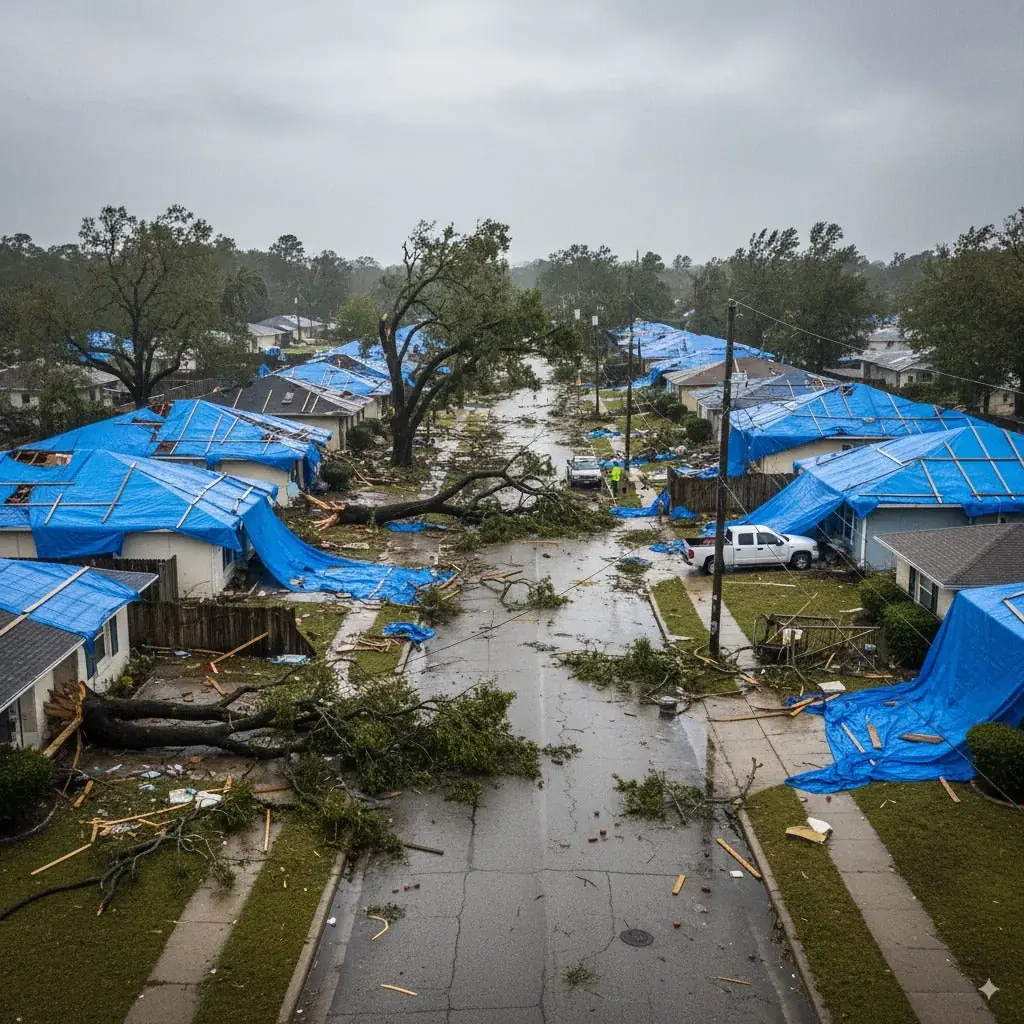
A Different Kind of Warning
The sirens eventually stopped.
The clouds moved away, the rain weakened, and people began returning to familiar routines. Buses resumed service, businesses reopened where possible, and repair crews continued working across damaged neighborhoods.
Yet the sound of the warning remained in people's memories.
For some, it would become a reminder of how quickly ordinary life can change. For others, it would be associated with a night of uncertainty, a difficult evacuation, or the moment they realized their home had been damaged.
But the storm also left a different kind of memory.
People remembered the neighbor who checked on them. The emergency worker who arrived despite difficult conditions. The volunteer who helped clear a path. The family that shared food when electricity was unavailable.
They remembered how quickly strangers became part of the same effort.
A storm can expose weaknesses in buildings, roads, drainage systems, and emergency planning. It can also reveal strengths that are less visible during ordinary days: cooperation, patience, courage, and the willingness to help someone who is facing a problem alone.
The most important lesson was not that every resident should live in fear of the next warning.
It was that warnings should be taken seriously, preparation should begin before danger arrives, and communities should understand that safety is a shared responsibility.
When the sirens sounded, chaos engulfed the region. But chaos did not have the final word.
People adapted. Emergency teams responded. Neighbors helped one another. Slowly, streets were cleared, services were restored, and families began putting their lives back together.
The storm changed the region because it disrupted more than the weather. It interrupted routines, tested relationships, and forced people to reconsider what they depended on.
And when the clouds finally cleared, one truth remained: the strength of a community is measured not only by how it prepares for a storm, but also by how it cares for people after the storm has passed.
The Long Road Back to Normal
In the days that followed, the region's recovery moved at different speeds.
Some streets were cleared quickly, allowing residents to return to work and shops to reopen. Other neighborhoods remained affected by damaged roads, unstable trees, flooded properties, and power interruptions. A household whose roof had lost several sections could not simply return to normal because the rain had stopped. Repairs had to be arranged, materials had to be found, and workers had to assess whether the structure was safe.
For families who had been temporarily displaced, the first challenge was finding a place where they could stay while their homes were repaired. Some moved in with relatives. Others depended on temporary accommodation or assistance from local organizations. Parents had to think about children's schooling, transportation, and the practical demands of everyday life while dealing with damaged property.
Older residents sometimes faced an especially difficult recovery. A person who depended on regular medication or medical appointments could be affected by disrupted transport and communication. Someone living alone might struggle to move damaged belongings or arrange repairs. Checking on these residents was therefore just as important after the storm as it had been during the emergency.
Businesses also needed time to recover. Even after electricity returned, equipment might need inspection before it could safely be used. Food that had been stored without refrigeration might have to be discarded. Employees could be unable to return until roads and workplaces were safe.
The experience encouraged many residents to reconsider their own emergency plans. Some began keeping supplies in a more accessible place. Others discussed meeting points with family members or made arrangements to check on elderly neighbors during future warnings.
These changes may seem small, but they can make a meaningful difference when another emergency occurs.
A storm cannot be controlled by the people living beneath it. Its path, intensity, and timing may remain uncertain. What people can influence is how prepared they are, how carefully they respond to official instructions, and how effectively they support those around them.
The return to normal was not a single moment. It was a process made up of hundreds of small steps: a repaired window, a reopened road, a restored phone connection, a cleaned home, and a family finally able to sleep without listening for the next warning.
For the people who experienced the storm, those ordinary moments became reminders of how much they had endured—and how much they still had to be grateful for.