For packaged products, follow the label and look for consistent appearance appropriate to the species and preparation. Avoid products with unusual deterioration, damaged packaging, or evidence of poor temperature control.
If you are unfamiliar with a particular shrimp species, ask the seller what its normal raw color should look like. This is more useful than applying a universal rule to all shrimp.
Straightness and color should also be considered separately. A straight shrimp can be naturally gray, and a curved shrimp can be naturally gray. Neither posture determines whether the color is appropriate.
8. The Head and Shell Can Offer Additional Clues
If you are buying whole shrimp, the head and shell can provide additional information about the product's condition.
Look for shells that are reasonably intact and appropriate for the type of shrimp being sold. A few minor imperfections may occur during harvesting and transport, but extensive damage, deteriorating flesh, or unusual residue may indicate poor handling.
The head is particularly delicate. In whole shrimp, discoloration or deterioration around the head can occur during storage. Blackening around the head or shell may have several causes, including natural enzymatic changes, oxidation, and handling conditions. It is not always proof of spoilage, but extensive discoloration combined with unpleasant odor or soft flesh is a reason to be cautious.
Some shrimp are sold headless, peeled, or deveined. In these products, you will need to rely more on flesh condition, packaging, smell after opening when appropriate, and storage information.
The presence or absence of the head does not automatically determine quality. Headless shrimp may be convenient for cooking, while whole shrimp can be useful when you want to make stock or prefer the flavor of the shell and head in a recipe.
For peeled shrimp, look for flesh that remains intact rather than mushy or visibly deteriorated. Excessive liquid in a package may be associated with thawing or loss of moisture, although the significance depends on how the product was processed and packed.
Again, there is no reason to believe that a straight shrimp with a good shell is always superior to a curved shrimp with a good shell.
Inspect the whole product rather than relying on one visual detail.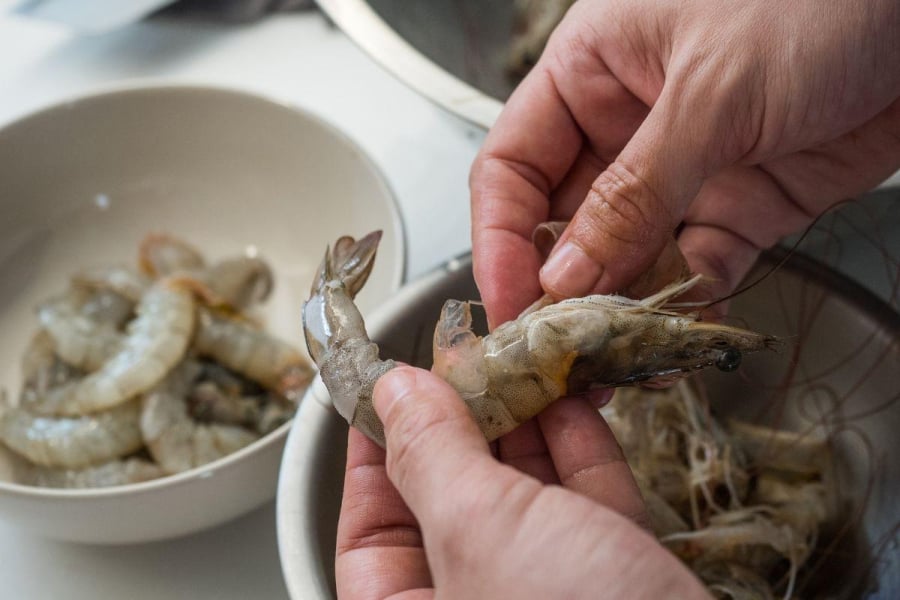
9. Fresh Shrimp or Frozen Shrimp: Which Is Better?
Many shoppers assume fresh shrimp sold at a market must be better than frozen shrimp. In reality, the answer depends on when the shrimp were caught, how quickly they were chilled or frozen, and how they were handled afterward.
Shrimp are highly perishable. Their quality can deteriorate quickly if they remain at unsuitable temperatures. Rapid chilling after harvest helps slow deterioration, while appropriate freezing can preserve quality for extended periods.
Frozen shrimp may be processed and frozen soon after harvest, allowing them to retain good quality. By contrast, shrimp displayed as fresh may have spent time in transport and storage before reaching the market.
This does not mean frozen shrimp are always better. Properly handled fresh shrimp can also be excellent. The important factor is the actual cold chain and the product's history, not whether the label says fresh or frozen.
Some seafood counters display previously frozen shrimp on ice. That can be perfectly acceptable when the product has been handled and stored appropriately, but consumers should not assume that shrimp displayed on ice have never been frozen.
If buying frozen shrimp, look for intact packaging and follow storage instructions. Excessive ice buildup or large ice crystals can sometimes indicate temperature fluctuations, although glazing and normal ice formation are common in frozen seafood.
After purchasing, transport shrimp home promptly. If they are raw and refrigerated, keep them cold and cook them soon, following reliable food-safety guidance. If you will not use them within a short period, freezing may be appropriate.
Thaw frozen shrimp in the refrigerator, in cold water in a sealed package, or by using a microwave when you will cook them immediately. Avoid leaving shrimp on the counter at room temperature for extended periods.
Whether straight or curved, properly chilled shrimp are generally a better choice than shrimp with an uncertain storage history.
10. Does the Way Shrimp Curl Reveal Whether They Were Alive When Caught?
This is one of the most persistent beliefs surrounding shrimp.
Some people say that a shrimp that curls tightly must have been alive when caught, while a straight shrimp must have been dead for a long time. Although muscle contraction can influence posture, the shape of a shrimp cannot reliably establish the exact circumstances of its death.
A shrimp's body can change position during muscle contraction and relaxation. Temperature, handling, species, and the way the shrimp is stored can also affect its appearance.
Even if a particular posture is associated with a physiological response, it does not provide a dependable timeline. It cannot tell you exactly how long the shrimp has been dead, how quickly it was chilled, or whether it has remained at a safe temperature.
This distinction matters because shoppers sometimes rely on a simple visual rule instead of examining the entire product.
A tightly curved shrimp may still be of poor quality if it has been stored improperly. A relatively straight shrimp may still be in good condition if it was chilled promptly and handled correctly.
There is also a difference between observing a biological pattern and using that pattern as a practical food-safety test. A feature may have a biological explanation without being accurate enough to guide a purchasing decision.
For consumers, the useful approach is to evaluate the shrimp's condition and handling rather than trying to reconstruct its history from its posture.
11. Can the Shape Tell You Whether Shrimp Are Safe to Eat?
No. Shape alone cannot establish food safety.
Food safety depends on several factors, including contamination, storage temperature, time, handling hygiene, and cooking. Harmful bacteria and other hazards may not cause obvious changes in appearance or smell.