The structure may have experienced corrosion, loose connections, or damage that is difficult to see from the street.
Even if the grille appears solid, it should not be used to support a person's weight unless it has been specifically designed and inspected for that purpose.
Safety: What Homeowners Should Know
Curved window bars can be attractive and practical, but they also require careful consideration.
The first concern is the condition of the metal.
Iron and steel can corrode over time, particularly when exposed to rain, humidity, and pollution. Rust may weaken joints or reduce the thickness of the bars.
A grille that was secure when first installed may become less reliable after years of exposure.
The second concern is the attachment to the building.
The strength of the grille depends not only on the metal itself but also on the anchors, brackets, and surrounding masonry.
If the wall is cracked or the anchors are loose, the grille may not provide the intended protection.
The third concern is the weight of objects placed in the curved section.
Flower boxes, soil, water, and decorative containers can become surprisingly heavy. A planter that seems light when empty may weigh much more after being filled and watered.
Homeowners should use appropriate supports and avoid placing heavy objects on grilles that were not designed to carry them.
Finally, security grilles can create an emergency safety issue.
A fixed grille may make it difficult for occupants to escape during a fire or other emergency. Local building regulations may require specific escape openings, removable sections, or approved locking systems.
A grille should never be installed in a way that prevents safe emergency exit where one is required.
The best design balances protection with the ability to escape and obtain assistance when necessary.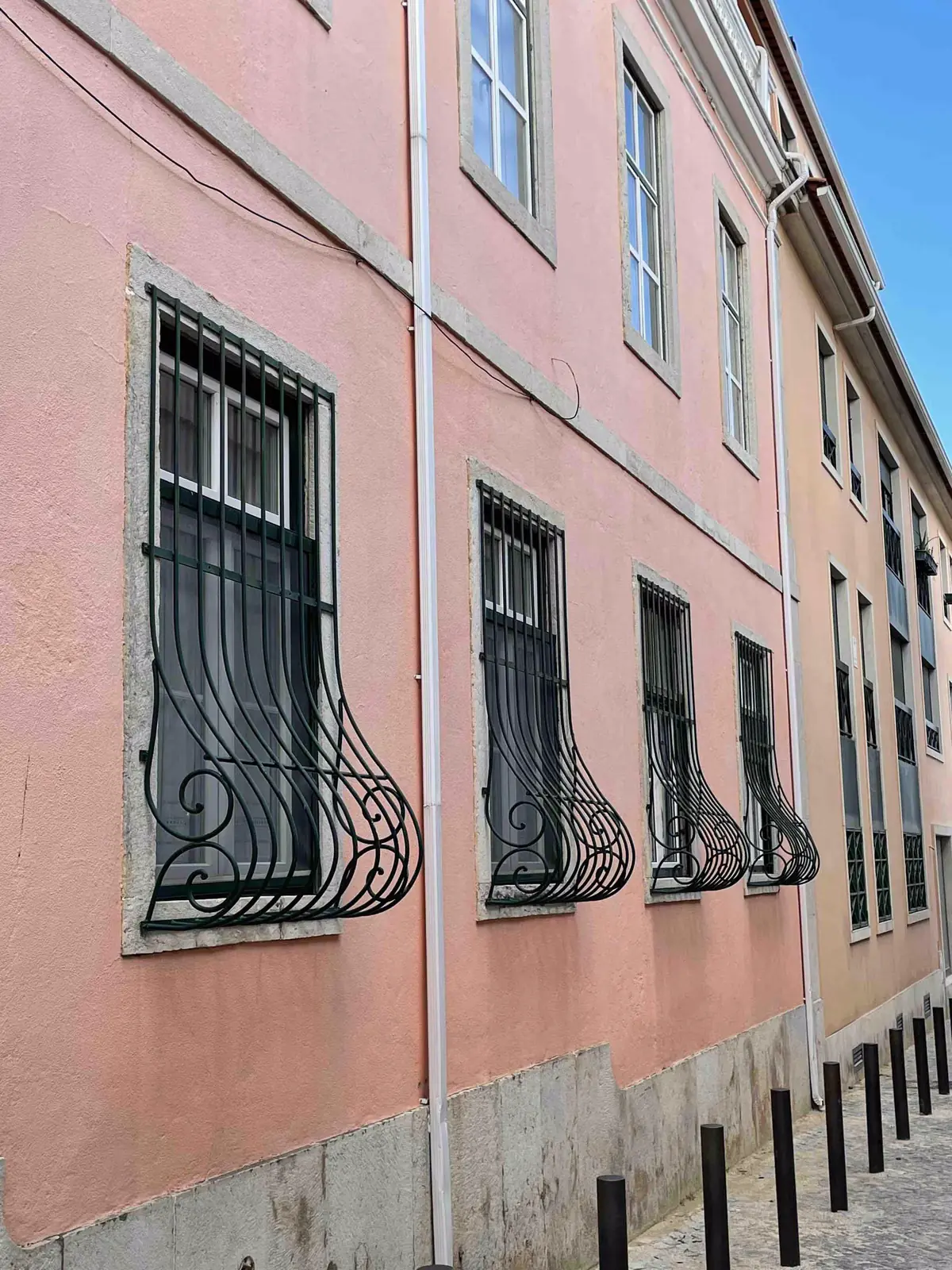
How to Recognize a Traditional Potbelly Grille
If you see a window grille with a rounded lower section, there are several details worth observing.
First, look at how far the bars project from the wall.
A shallow curve may create only a small amount of additional clearance, while a deeper curve can form a basket-like space.
Second, examine the lower horizontal bar.
Some grilles include a metal rail that can help define the curved area. Others use individual vertical bars that bend outward and return toward the wall.
Third, look for signs of previous use.
Flower boxes, planter brackets, or marks from old supports may suggest that residents used the space for plants.
However, the absence of plants does not mean the grille was never intended for them. The original purpose may have been different, or the building's current occupants may simply prefer a plain exterior.
Finally, consider the building itself.
A traditional iron grille on an older masonry façade may reflect a local architectural style. A newer grille may imitate that appearance while being designed for contemporary security requirements.
The shape offers clues, but it cannot tell the entire story.
Why This Small Architectural Detail Still Matters
The curved window grille is a good example of how architecture often solves several problems at once.
A window needs to provide light and ventilation. In some locations, it also needs protection.
Residents may want to decorate it, grow plants, or make use of limited exterior space.
A flat grille can provide security, but it may leave little room for anything else.
A curved grille introduces a small projection that can make the window more adaptable.
That does not mean the design is perfect for every building. It does mean that the shape has a practical logic.
The most successful architectural features are often those that combine everyday usefulness with visual character.
A curved window grille may protect an opening, create room for flowers, and give a building a distinctive appearance at the same time.
The curve is small, but its effect is easy to recognize.
The Real Reason Behind the Curved Bottom
So, why are some window bars curved at the bottom?
The simplest answer is that the outward curve creates extra space in front of the window.
That space can be useful for flower boxes, planters, certain window arrangements, and other small exterior features. The grille can continue serving as a security barrier while allowing residents to use the window area more effectively.
The design also has an architectural purpose. Its rounded shape adds depth, softens the appearance of the metalwork, and can complement the style of older buildings.
But there is no single explanation that applies to every grille.
Some were made mainly for practical reasons. Others were shaped by decorative traditions. Many combine both.
The next time you walk past an old apartment building and notice a window grille that seems to have a little belly, look closely at the space it creates.
What first appears to be an unusual design may actually be a thoughtful solution to a familiar problem: how to make a small window more useful without giving up its protective barrier.