Finding a toad inside your home can be a surprisingly memorable experience.
You may walk into the kitchen, bathroom, garage, or hallway and suddenly notice a small, quiet creature sitting near the wall. At first, you might wonder how it got there. Then another question often follows:
Why did it come inside in the first place?
Toads generally prefer outdoor environments, but under the right conditions, they can occasionally make their way into houses, garages, sheds, basements, and other enclosed spaces.
Their appearance may seem mysterious, especially when they show up unexpectedly. In reality, there are usually practical environmental reasons behind their behavior. At the same time, toads have been associated with symbolism, folklore, and traditional beliefs for centuries, giving their unexpected appearance a second layer of meaning.
So what does it really mean when a toad appears in your home?
The answer depends on whether you're looking at the situation from a biological, environmental, or cultural perspective.
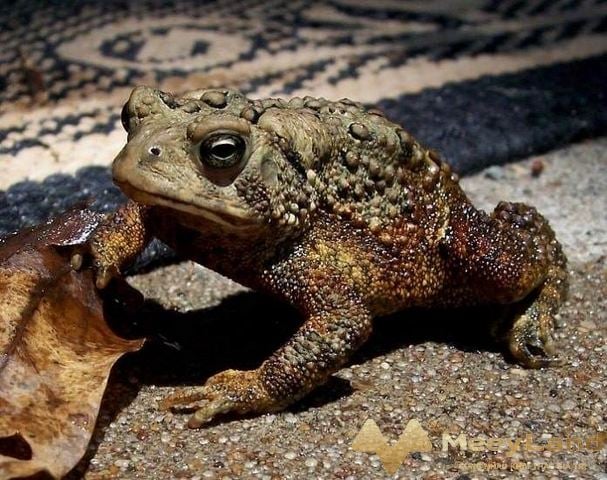
Why Would a Toad Enter a House?
The simplest explanation is that the toad is looking for something it needs.
Toads require moisture, shelter, suitable temperatures, and access to food. A house can accidentally provide some or all of these things.
During hot or dry weather, a cool, damp area around a home can become attractive.
After heavy rain, toads may become much more active and travel farther than usual.
At night, outdoor lights can attract insects, and insects can attract toads.
A small opening beneath a door or gap around a pipe may provide an easy entrance.
In other words, the toad probably isn't trying to "move into" your house.
It may simply have found an environment that temporarily looked useful.
1. Moisture Is One of the Biggest Attractions
Toads depend heavily on moisture.
Unlike many mammals, amphibians have skin that plays an important role in maintaining their water balance. They can lose moisture relatively easily, especially in hot and dry conditions.
That's why toads often seek:
-
Damp soil
-
Wet leaves
-
Shaded areas
-
Garden beds
-
Areas near water
-
Spaces beneath rocks
-
Moist spaces around buildings
If your home has a humid basement, damp garage, leaky outdoor faucet, or shaded entrance, it may accidentally create conditions that attract amphibians.
A toad isn't necessarily looking for your living room.
It may simply be following moisture.
2. Rain Can Bring Toads Out
If you've recently experienced heavy rain, don't be surprised if you notice more toads around your property.
Rain changes the environment dramatically.
The ground becomes softer.
Humidity increases.
Temporary pools may form.
Insects become more active.
And toads may emerge from hiding places to feed or move toward breeding areas.
This is why people sometimes notice several amphibians appearing around their homes after a storm.
If a door is open or there is a small gap underneath it, an adventurous toad may accidentally end up indoors.
3. Outdoor Lights Can Indirectly Attract Toads
This is one of the more interesting explanations.
Toads don't necessarily come toward a porch light because they are attracted to the light itself.
Instead, the insects attracted to the light can become the attraction.
A bright outdoor lamp can draw moths, flies, beetles, and other insects.
A toad sitting nearby may see an easy food source.
So the chain can look like this:
Outdoor light → insects → toad.
If your home has bright lights near doors, windows, patios, or gardens, you may notice more toad activity around those areas at night.
4. Your Garden Could Be Creating a Perfect Habitat
Gardens can be extremely attractive to toads.
Plants provide shade.
Mulch retains moisture.
Leaves provide hiding places.
Watering creates damp soil.
And gardens often contain plenty of insects.
From a toad's perspective, that's basically a combination of shelter and a food supply.