This isn't necessarily a bad thing.
In fact, many gardeners appreciate having toads around because they consume a variety of insects and other small invertebrates.
A toad in the garden can therefore be a useful part of the local ecosystem.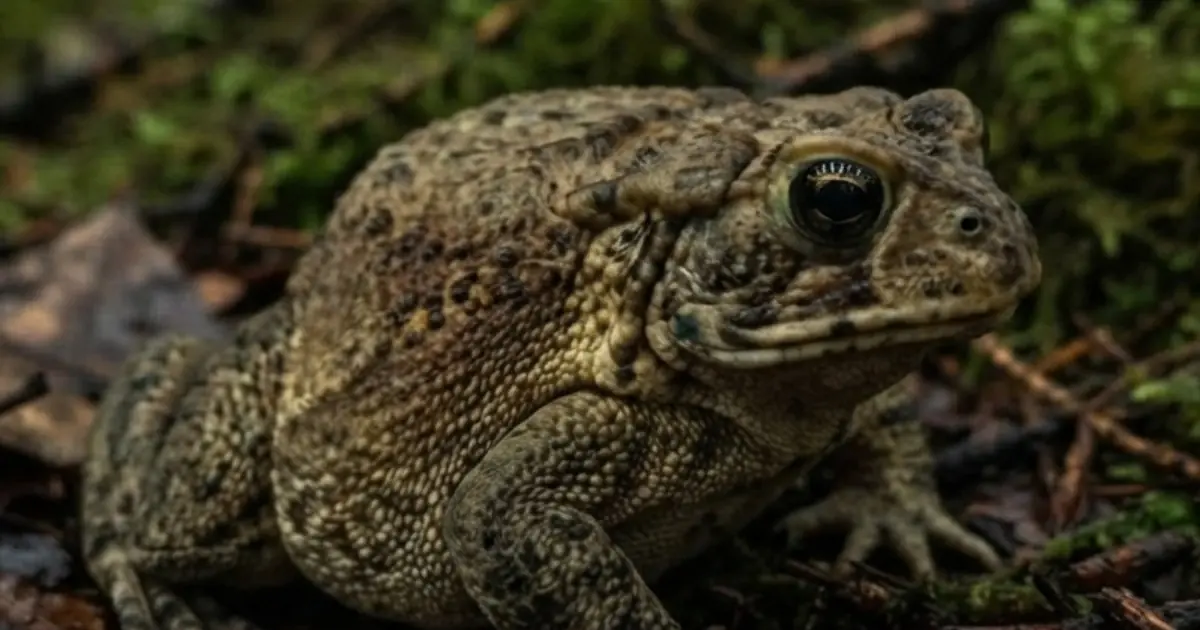
5. Small Gaps Can Become Unexpected Entrances
Toads are surprisingly capable of squeezing through small spaces.
They may enter through:
-
Gaps beneath doors
-
Open garage doors
-
Cracks around foundations
-
Basement entrances
-
Spaces around pipes
-
Drainage areas
-
Open windows or low openings
A doorway that looks completely secure to you may have enough space for a small amphibian to pass underneath.
Once inside, the toad may have difficulty finding its way back out.
That's why people sometimes discover one sitting quietly in a corner.
It isn't necessarily hiding.
It may simply be lost.
6. Toads Often Move at Night
Toads are generally more active during cooler, darker periods.
Nighttime provides lower temperatures and higher humidity, which can make traveling and hunting easier.
This also explains why people may encounter them unexpectedly in the evening.
You may not notice a toad around your property during the day.
But after sunset, it may become active and begin moving around your garden, driveway, porch, or yard.
If an entrance happens to be nearby, it can wander inside.
7. Food May Be the Real Reason
A toad entering your home can sometimes indicate that there are plenty of insects nearby.
Toads eat various small prey, including insects and other invertebrates.
If your home has an abundance of flies, moths, beetles, crickets, or similar creatures, a toad may find the surrounding environment attractive.
This doesn't mean that finding a toad automatically indicates an insect infestation.
But if you repeatedly see both toads and large numbers of insects, it may be worth examining the conditions around your property.
8. Temperature Can Also Matter
Weather plays an important role in amphibian behavior.
During periods of extreme heat, a toad may seek a cooler, shaded environment.
During unusually dry conditions, it may search for moisture.
During colder periods, it may seek shelter.
A garage, basement, covered porch, or storage area can sometimes provide more stable conditions than the outdoor environment.
So an indoor visitor may simply be responding to changing weather.
What Does a Toad Mean in Folklore?
While biology provides practical explanations, toads have also carried symbolic meanings across different cultures.
Their symbolism isn't universal.
In one tradition, a toad may represent prosperity.
In another, it may be associated with transformation.
Some traditions connect frogs and toads with rain, fertility, renewal, or good fortune.
These interpretations are part of folklore rather than established scientific facts.
Still, they can make an unexpected encounter feel more meaningful.
Toads and Good Fortune
One common association is luck and prosperity.
In various cultural traditions, frogs and toads have been connected with abundance, wealth, and good fortune.
This symbolism may partly come from their relationship with rain and water.
Rain supports crops.
Water supports life.
And amphibians often become more visible after rainfall.
As a result, their appearance has sometimes been interpreted as a positive environmental sign.
If you enjoy traditional symbolism, you might choose to see a toad near your home as a reminder of abundance and renewal.