If you've ever traveled on an older train, you may have noticed something unusual about the toilet design: the waste seemed to disappear through an opening beneath the carriage.
It sounds unpleasant by modern standards—and in many places, it was.
But there was a practical reason behind this surprisingly simple system.
For much of railway history, train toilets were designed with direct discharge systems, meaning human waste could pass through the bottom of the carriage and fall onto the railway track below. There was no holding tank, no complex treatment system, and no need for railway workers to empty a large waste container after every journey.
Today, that idea seems almost unbelievable.
So why was it ever considered acceptable?
The answer has a lot to do with the technology available at the time, the way trains operated, and the very different standards surrounding sanitation and environmental protection.
The Simplest Possible Waste System
Early railway engineers faced a basic problem.
A train could carry hundreds of passengers over long distances, but passengers still needed access to toilets.
A conventional toilet connected to a sewer system was obviously impossible while the train was moving.
Modern trains solve this problem using sealed waste tanks and specialized treatment systems.
Early trains often used a much simpler approach.
The toilet was essentially connected to an opening underneath the carriage.
When a passenger flushed or used the toilet, the waste passed through the system and was discharged onto the railway right-of-way.
There was no large tank waiting to be emptied at the station.
From an engineering perspective, the system was extremely straightforward.
From a sanitation perspective, however, it created obvious problems.
Why Didn't They Simply Install Holding Tanks?
A natural question is:
Why not collect the waste in a tank and empty it later?
The answer is partly technological and partly practical.
Early railway carriages had limited space beneath the passenger compartment.
A large waste tank would have added weight, required maintenance, and needed a reliable system for emptying and cleaning it.
Remember that railway technology developed dramatically over time.
Today's passenger trains benefit from advanced plumbing systems, pumps, sensors, sealed tanks, corrosion-resistant materials, and sophisticated wastewater infrastructure.
Those technologies either didn't exist or weren't practical in the early days of rail transportation.
Engineers therefore often chose the simplest system that could perform the required function.
And that meant allowing waste to leave the train directly.
Railways Were Built Around Different Sanitation Standards
Another important factor is historical context.
Modern passengers are accustomed to strict sanitation regulations.
We expect wastewater to be contained, treated, and disposed of in controlled ways.
But those expectations developed gradually.
During the 19th and early 20th centuries, sanitation standards varied enormously between countries, cities, industries, and transportation systems.
Many communities lacked modern sewage infrastructure.
Waste disposal practices that would be unacceptable today were once relatively common.
Railways were not operating in the same regulatory and environmental environment that exists today.
That doesn't mean people thought contamination was completely harmless.
It means that the technology, regulations, infrastructure, and public expectations surrounding waste disposal were very different.
What Happened to the Waste?
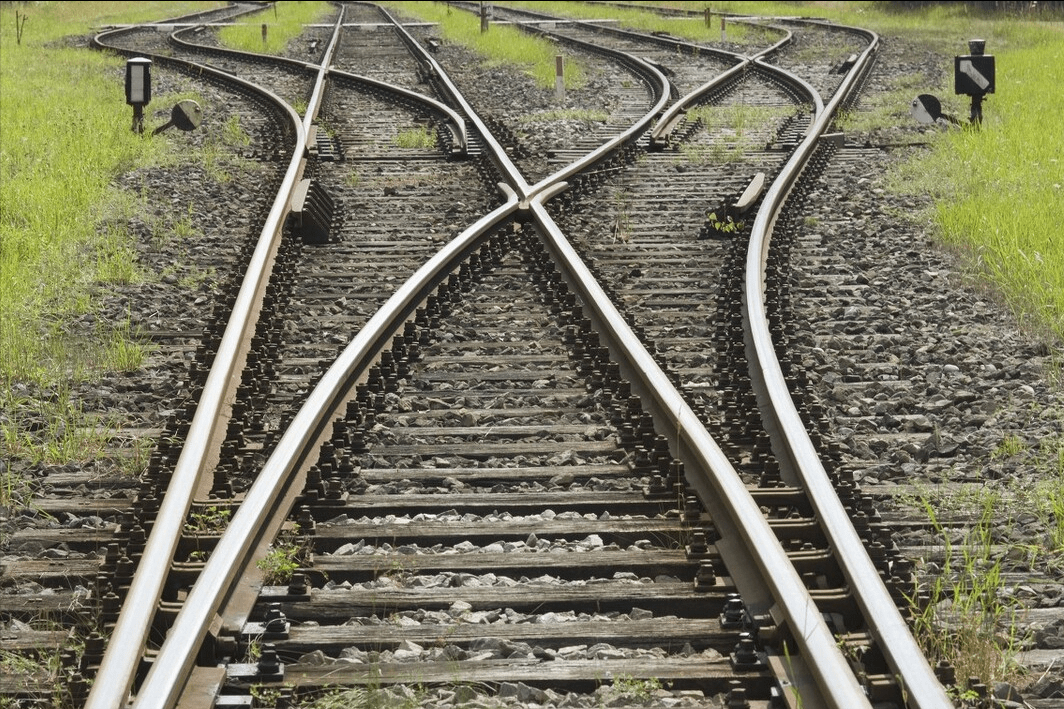
With a direct-discharge toilet, waste could fall onto the track area beneath the moving train.
This created an obvious sanitation issue.
Railway workers could encounter human waste while maintaining tracks, and stations or areas where trains stopped could experience greater contamination.
There were also concerns about unpleasant odors and the general cleanliness of railway facilities.
The problem became more obvious as rail networks became busier.
A railway carrying only a small number of trains presented one set of challenges.
A heavily used passenger railway carrying thousands of travelers every day was a completely different situation.
As passenger volumes increased, the shortcomings of direct discharge became increasingly difficult to ignore.
Why Wasn't It Immediately Banned?
Because changing an entire railway system is not as simple as changing a household toilet.
Imagine a railway company operating thousands of carriages.
Replacing every toilet would require:
-
New plumbing
-
New tanks or waste systems
-
Structural modifications
-
Maintenance facilities
-
Waste-disposal infrastructure
-
Additional staff training
-
New operating procedures
-
Significant investment
Railway equipment is designed to operate for many years.
Even when a better technology becomes available, older trains don't simply disappear overnight.
Instead, transportation systems usually transition gradually.
Newer carriages receive improved technology first, while older equipment continues operating until it is refurbished or retired.
The Problem Became Especially Noticeable at Stations
Direct discharge was particularly problematic when trains were stationary.
A toilet that discharged waste while a train was moving could spread waste along a long stretch of track.
But if the train stopped in a station, the waste could accumulate in one location.
That created unpleasant conditions for passengers and railway employees.
It also created a public-health concern in areas where people were walking close to the tracks.
As railways became more modern and passenger expectations increased, this became harder to justify.
Environmental Concerns Changed the Conversation
Another major factor was growing awareness of environmental pollution.
Railway tracks pass through towns, agricultural areas, waterways, and environmentally sensitive regions.
Allowing untreated human waste to fall directly onto the railway corridor meant that contaminants could enter the surrounding environment.
Rain could wash material away from the tracks.
Nearby water sources could potentially be affected.
The environmental impact depended on the location, volume of waste, railway design, and local conditions, but the basic problem was clear:
The waste wasn't being contained.
Modern environmental regulation increasingly favored systems that collected and managed wastewater rather than simply releasing it.
Modern Trains Use a Very Different System
Walk into a modern passenger train toilet and the technology may be far more sophisticated than it appears.
Many contemporary trains use sealed retention tanks.
Instead of allowing waste to leave the train, the toilet directs it into a contained tank.
When the train reaches an appropriate maintenance facility, the tank can be emptied using specialized equipment.
Some modern systems also use vacuum toilets.
You may recognize the characteristic loud suction sound when flushing on an airplane or modern train.
Vacuum technology allows toilets to use relatively small amounts of water while moving waste through sealed pipes.
This is especially useful in transportation because water and space are both limited resources.
Why Do Modern Train Toilets Sound So Different?
If you've ever used a modern train toilet, you may have noticed that the flush can sound much stronger than the one in your home.
That's often because transportation toilets may use vacuum-assisted flushing.
Instead of relying primarily on gravity and a large volume of water, a vacuum system creates pressure differences that rapidly move waste through the plumbing.
This provides several advantages.
It can:
-
Reduce water consumption
-
Allow smaller pipes
-
Help move waste efficiently
-
Reduce the amount of water that must be carried onboard
-
Support sealed waste systems
For a moving vehicle, these characteristics are extremely useful.
Not Every Old Train Used Exactly the Same System
It's also important not to oversimplify railway history.
There was never one universal toilet design used on every train in every country.