Different railways used different technologies depending on:
-
The country
-
The railway operator
-
The age of the train
-
The type of carriage
-
The route
-
Local regulations
-
Available maintenance infrastructure
Some trains used direct-discharge toilets.
Others eventually adopted holding tanks or different collection systems.
Some carriages were retrofitted during their service lives.
So the statement that “all old trains emptied toilets directly onto the tracks” would be inaccurate.
The practice was widespread historically, but railway sanitation developed differently in different places.
Why You Sometimes Saw Signs Telling Passengers Not to Use Toilets in Stations
If you've ever seen historical photographs or accounts mentioning restrictions on train toilets while stopped at stations, there's a logical reason.
If a toilet discharged directly onto the track, using it while stationary could concentrate waste in an area where railway employees and passengers were nearby.
Operators could therefore restrict toilet use while trains were in stations or in certain locations.
Such rules were an imperfect solution to a problem created by the underlying design.
The long-term solution was better technology.
The Transition to Sealed Toilets
The move away from direct-discharge toilets happened gradually.
As trains became more advanced, sealed toilet systems became increasingly practical.
At the same time, sanitation regulations became stricter.
Environmental awareness increased.
Railway companies also had to respond to changing passenger expectations.
A modern passenger expects a train to provide a clean and hygienic environment.
A toilet that simply discharged waste beneath the carriage was increasingly incompatible with that expectation.
The result was a gradual transition toward contained wastewater systems.
What Happens to Waste on a Modern Train?
When you flush a modern train toilet, the waste generally goes into a sealed onboard system rather than directly onto the track.
At a maintenance depot, specialized equipment connects to the train and removes the collected waste.
The wastewater can then be transferred into appropriate treatment or disposal systems.
This requires infrastructure that older railways simply didn't have.
Modern railway depots therefore aren't just places where trains are cleaned and repaired.
They can also function as specialized facilities for handling wastewater and other operational waste.
Why Didn't Engineers Just Use More Water?
Using large amounts of water sounds like an obvious solution.
But on a train, water is heavy.
A single liter of water weighs approximately one kilogram.
A large train carrying hundreds or thousands of liters of additional water would have to carry that weight throughout its journey.
More weight means greater energy requirements and additional operating costs.
That's one reason transportation systems have historically looked for ways to minimize water consumption.
Vacuum toilets and other low-water systems solve part of this problem by moving waste efficiently without requiring the enormous volumes of water used by some conventional toilets.
The Same Challenge Exists on Airplanes
Train toilets aren't the only transportation toilets to evolve dramatically.
Aircraft face an even greater challenge.
Every additional kilogram matters when an aircraft is flying.
That's why modern airplanes commonly use vacuum toilet systems.
When you press the flush button, a powerful suction system moves the waste into a sealed holding tank.
The waste remains onboard until the aircraft reaches an airport where ground crews can safely service the system.
The underlying engineering principle is similar to what modern trains use:
Contain the waste, minimize water, and remove it under controlled conditions.
Why the Old System Seems So Strange Today
Perhaps the strangest part of the story is not that direct-discharge toilets existed.
It's that they once seemed like a perfectly practical solution.
From the perspective of an engineer working with the materials and technology available at the time, the concept was simple:
The train is moving.
The waste needs to leave the carriage.
The track is already beneath the carriage.
So why build a complicated storage system?
Today, of course, we understand the environmental and sanitation consequences much better.
But historical technologies need to be understood in the context in which they were developed.
It Wasn't Simply About Being “Cheap”
It's tempting to look at old railway toilets and conclude that railway companies simply didn't care about hygiene.
The reality is more complicated.
Cost certainly mattered, as it does with every engineering decision.
But engineers also had to consider weight, reliability, maintenance, space, water consumption, and the technological capabilities of the period.
A system with fewer moving parts can sometimes be extremely attractive in transportation because mechanical failures can disrupt an entire service.
Direct discharge had an obvious disadvantage, but it was also mechanically simple.
As better alternatives became feasible, the balance changed.
Technology Often Changes Because the Old Solution Becomes Unacceptable
The history of train toilets is a small example of a much larger pattern in engineering.
A technology can be perfectly functional for decades.
Then circumstances change.
Population increases.
Environmental knowledge improves.
Regulations become stricter.
Passengers expect better standards.
New technology becomes affordable.
Suddenly, the old system no longer makes sense.
That's exactly what happened with railway sanitation.
The direct-discharge toilet wasn't necessarily replaced because engineers suddenly discovered that toilets could work differently.
It was replaced because the entire environment surrounding railway transportation had changed.
What Looks Primitive Today Was Once an Engineering Solution
The next time you step onto a modern train and hear the powerful suction of the toilet flush, you may never think about what happens underneath the carriage.
But that sound represents decades of engineering development.
Modern systems are designed around containment, efficiency, hygiene, and controlled disposal.
The old systems were built around a much simpler idea.
And that contrast tells us something fascinating about technological progress.
Engineering isn't always about inventing something completely new. Sometimes it's about taking an old problem and finding a cleaner, safer, and more efficient way to solve it.
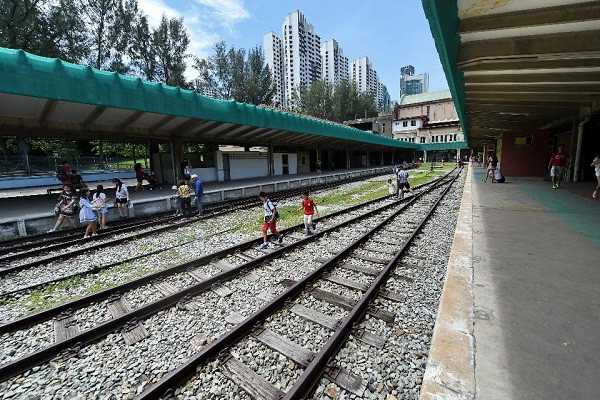
The Strange History Beneath the Rails
For generations of railway passengers, using a train toilet could mean something very different from what passengers experience today.
Instead of waste disappearing into a sealed tank, it could pass through the bottom of the carriage and end up directly on the railway.
By modern standards, that sounds astonishing.
But the practice existed because it was simple, practical, and compatible with the technology and infrastructure available at the time.
Eventually, sanitation standards, environmental concerns, passenger expectations, and engineering capabilities changed.
Sealed tanks, controlled disposal, and vacuum-assisted toilets gradually replaced the old approach.
So the next time you board a modern train and use its toilet, there's a fascinating piece of engineering history beneath your feet.
That ordinary flush represents a long evolution - from waste simply falling onto the tracks to sophisticated systems designed to contain, transport, and properly manage it.
And perhaps that's the most surprising part of the story: something as ordinary as a train toilet can reveal just how dramatically transportation technology and society's expectations of cleanliness and environmental responsibility have changed over time.