Rice is one of the most widely consumed foods in the world. It is inexpensive, versatile, easy to prepare, and an essential part of everyday meals in many households. From steamed white rice and fried rice to rice porridge, casseroles, and countless traditional dishes, it is difficult to imagine many kitchens without it.
Because rice is often prepared in large quantities, leftovers are common. A pot of rice cooked for dinner may be placed in the refrigerator and saved for lunch the next day. Some families leave the rice cooker switched to its warming setting, while others allow leftover rice to cool on the counter before storing it for later.
These habits may seem harmless, especially when the rice looks normal and smells perfectly fine. However, improperly stored cooked rice can create conditions that allow harmful bacteria to grow and produce toxins. Eating contaminated rice can cause food poisoning, sometimes resulting in sudden nausea, vomiting, abdominal cramps, and diarrhea.
The concern is not that reheating rice is inherently dangerous. Properly handled leftover rice can generally be reheated and eaten safely. The real issue is how the rice is cooled, stored, and reheated before it reaches the plate.
Understanding the risks can help you avoid unnecessary food waste while protecting yourself and your family. A few simple changes to your kitchen routine can make a significant difference.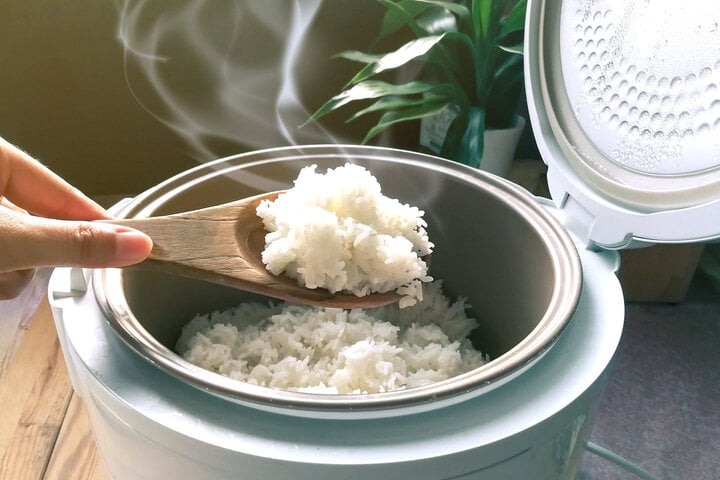
1. The Hidden Risk: A Bacterium That Can Survive Cooking
One of the main food-safety concerns associated with cooked rice is a bacterium called Bacillus cereus.
This microorganism can be found in the environment, including soil and dust. Rice and other agricultural products may contain its spores before cooking. These spores are particularly important because they can survive conditions that kill many ordinary bacterial cells, including the heat used during normal cooking.
When rice is cooked, the heat kills many active bacteria, but it may not destroy every bacterial spore. If the cooked rice is then left at an unsuitable temperature for an extended period, surviving spores can germinate, allowing bacteria to multiply.
Cooked rice provides moisture and nutrients that can support microbial growth. When it remains warm or at room temperature for too long, the conditions may become favorable for Bacillus cereus to increase in number.
This is why food-safety professionals emphasize what happens after cooking just as strongly as what happens during cooking.
A common misunderstanding is that boiling or steaming rice makes it permanently safe. Cooking is an essential step, but it does not eliminate every possible hazard associated with later storage.
The same general principle applies to several other cooked foods. Pasta, potatoes, sauces, and other moist dishes can also become unsafe if they are cooled and stored improperly.
The important lesson is simple: freshly cooked rice should not be treated as a food that can remain at room temperature indefinitely.
2. Why Cooked Rice Can Become Dangerous While It Still Looks Normal
One of the most unsettling aspects of foodborne illness is that contaminated food does not always show obvious signs of spoilage.
Rice that contains harmful bacteria or toxins may look exactly like freshly cooked rice. Its color may remain unchanged, its texture may appear normal, and its smell may provide no warning.
This makes visual inspection an unreliable way to determine whether leftover rice is safe.
People sometimes assume that food is safe if it does not smell sour or show mold. Although unpleasant odors, visible mold, and unusual textures can indicate spoilage, their absence does not prove that food is safe to eat.
Some foodborne hazards develop without producing obvious changes that people can detect with their senses.
For example, rice may sit in a rice cooker after the warming function has been switched off. Several hours later, it may still appear soft and smell pleasant. Yet parts of the rice may have spent enough time at an unsafe temperature to allow bacterial growth.
Similarly, a container of rice left on a kitchen counter may look harmless the following morning even though it has been stored unsafely.
This is why food-safety decisions should be based on handling time and temperature, not simply on appearance.
If cooked rice has been left out for too long, do not taste a small portion to see whether it is safe. Tasting cannot reliably detect contamination, and even a small amount of contaminated food may cause illness.
When the storage history is uncertain, the safer choice is to discard the rice rather than gamble on its appearance.
3. The Temperature Danger Zone: Why Time Matters
Bacteria generally multiply more rapidly within certain temperature ranges. For food safety, the commonly used temperature danger zone is approximately 40°F to 140°F, or 4°C to 60°C.
Within this range, some bacteria can grow quickly when moisture and nutrients are available.
Cooked rice that is left on a countertop gradually cools through this temperature range. The longer it remains there, the more opportunity bacteria may have to multiply.