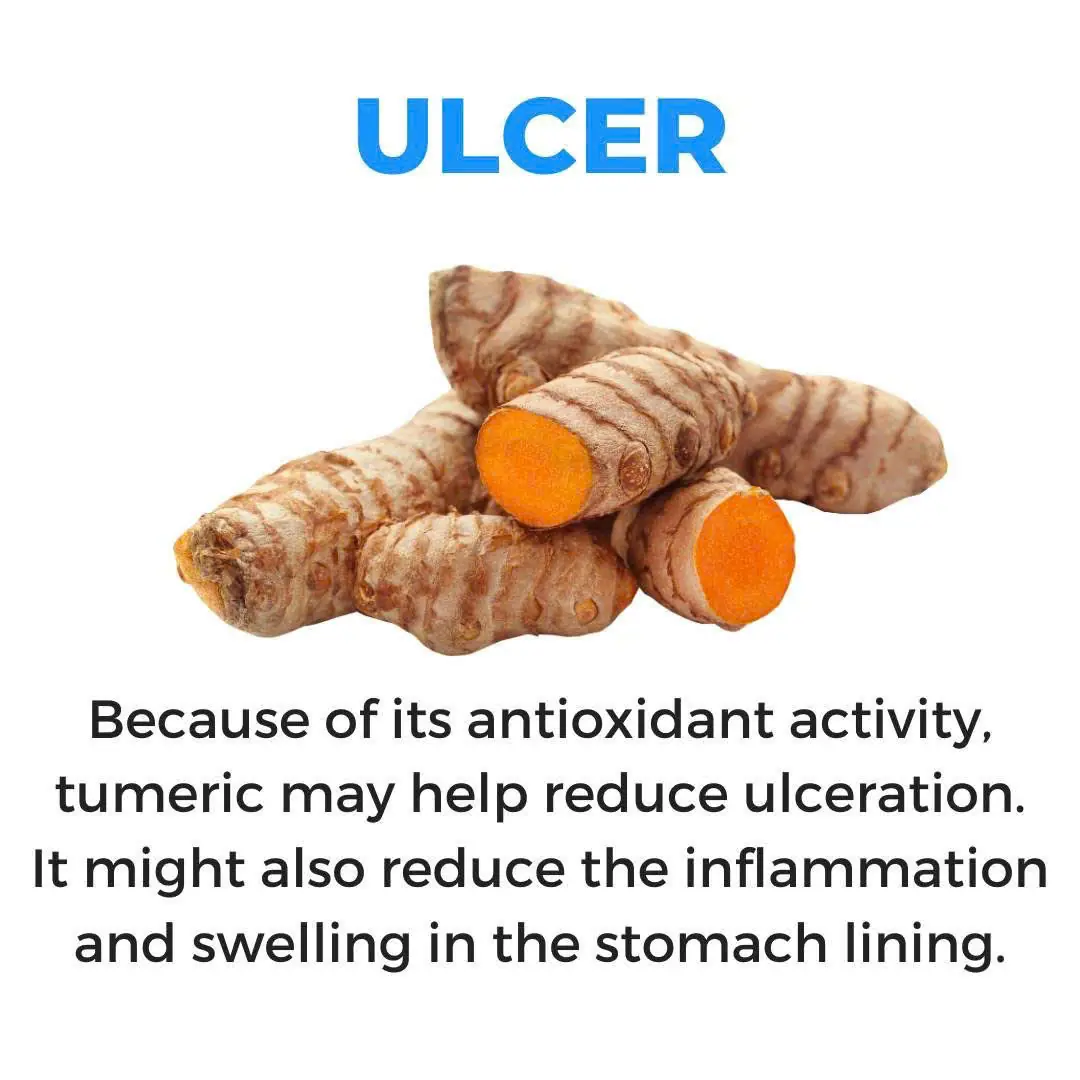
• Curcumin, the main active compound in turmeric, has anti-inflammatory and antioxidant properties, which help:
• Reduce inflammation and swelling in the stomach lining
• Support ulcer healing
• It may help inhibit Helicobacter pylori, one of the most common causes of gastric ulcers.
• It helps increase protective mucus secretion in the stomach lining, reducing damage caused by gastric acid.
To what extent does turmeric help?
👉 Turmeric is not a curative drug, but:
• It is suitable as a supportive therapy alongside medical treatment
• It may be beneficial during the recovery phase or in mild ulcer cases
• It can help relieve symptoms such as dull stomach pain and burning sensations
Important precautions
• Turmeric should not be used when:
❌ Experiencing acute gastric pain or gastrointestinal bleeding
❌ Taken in high doses over a long period
❌ In people with liver disease or gallstones (medical advice is required)
• Curcumin has poor bioavailability and is often more effective when combined with black pepper or dietary fats.
👉 Turmeric may help support the improvement of gastric ulcers,
👉 but it does not replace medical treatment and must be used at the right dose and at the right time.