The photo did more than appear on social media. It exploded into the conversation.
One frame. Two men. A father and son standing side by side in bold Versace looks, seemingly unconcerned with the invisible rules that have long dictated how men - especially Black men are expected to dress, behave, and present themselves to the world.
The image immediately became the kind of photograph people could not simply scroll past. Some praised it. Others mocked it. Some admired the confidence and creativity behind the styling, while others questioned why a father and son would choose to dress in a way that challenged traditional ideas of masculinity.
But as the initial reactions faded and timelines moved on to the next viral moment, something more meaningful remained.
The clothes were never really the whole story.
What made the photograph so striking was the tension it exposed between self-expression and social expectation. It raised a much bigger question about why men are so often encouraged to make themselves smaller, quieter, tougher, and less emotionally expressive in order to fit an image of what “real masculinity” is supposed to look like.
For Will and Jaden, the photograph offered a very different possibility.
It suggested that masculinity does not have to be one-dimensional. A man can be confident without being intimidating. He can be stylish without worrying that fashion will make him appear less masculine. He can embrace softness without surrendering strength. And perhaps most importantly, he can allow himself to be seen without constantly worrying about whether everyone else approves.
More Than Just an Outfit
At first glance, it would be easy to reduce the entire moment to fashion.
The bold prints. The unconventional silhouettes. The confidence of two people wearing something that refuses to blend into the background.
But reducing the photograph to clothing misses the larger idea behind it.
Fashion has always been more than fabric. What people wear can communicate identity, confidence, culture, creativity, rebellion, and even vulnerability. Clothing can become a language, particularly when someone chooses a style that does not conform to expectations.
That is part of what made the photograph so memorable.
The image did not ask for permission.
There was no attempt to soften the message or make the outfits more acceptable to people who preferred something more traditional. Instead, the styling appeared to embrace individuality completely.
And that can be uncomfortable for people who have spent their lives learning that certain forms of self-expression are acceptable only for certain people.
For men, those expectations can be especially rigid.
From childhood, many boys are taught—sometimes directly and sometimes indirectly—that they should be tough, restrained, competitive, emotionally controlled, and visually conservative. Certain colors are considered “too feminine.” Certain clothes are considered inappropriate. Certain gestures, poses, or expressions are treated as signs that a man is somehow stepping outside the boundaries of masculinity.
The photograph quietly challenged all of that.
When Softness Becomes a Statement
Perhaps one of the most interesting aspects of the image was its sense of softness.
Not weakness.
Softness.
The two are not the same.
For generations, society has often presented strength and tenderness as opposing forces. Men are expected to be strong, while tenderness is frequently associated with vulnerability. Yet real life is far more complicated.
A person can be strong and gentle at the same time.
A father can be protective without being emotionally distant. A son can be confident without pretending to be invulnerable. A man can care deeply about appearance, art, fashion, beauty, and self-expression without having to apologize for any of it.
That is why the photograph resonated beyond the clothes themselves.
It represented a version of masculinity that did not depend entirely on armor.
There was no need to appear hardened. No need to perform toughness for the camera. No need to prove strength through aggression or emotional distance.
Instead, the message was communicated through presence.
Here we are. This is how we choose to express ourselves.
And sometimes, simply making that choice publicly can be powerful.
A Father and Son Seen Through a Different Lens
There was also something significant about the fact that the photograph featured a father and son.
Family images often come with their own expectations. A father and son are frequently imagined through familiar stereotypes: the older generation teaching the younger one how to be strong, responsible, disciplined, and “manly.”
But this image suggested another kind of relationship—one in which individuality could be shared rather than suppressed.
Instead of presenting masculinity as a strict set of rules passed down from one generation to the next, the photograph opened the door to something more flexible.
A father and son could stand together while expressing themselves differently.
They could share confidence without needing to look identical.
They could embrace fashion, creativity, and individuality without treating those qualities as incompatible with strength.
That makes the image feel less like a simple fashion moment and more like a snapshot of changing attitudes between generations.
Younger men today are increasingly willing to question ideas that previous generations may have accepted without much discussion. They are more comfortable discussing mental health, personal identity, emotional vulnerability, fashion, beauty, and self-expression.
That does not mean every old definition of masculinity has disappeared.
Far from it.
But the conversation is changing.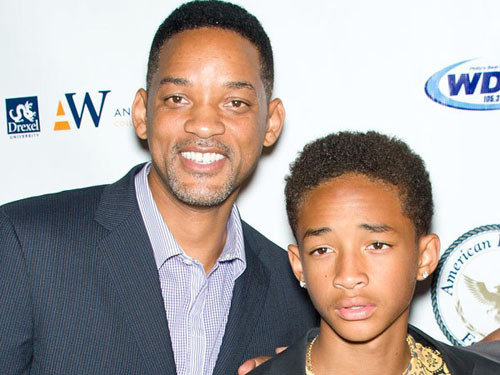
Why Reactions Were So Strong
The strongest reactions to images like this often have less to do with the clothing itself and more to do with what the clothing represents.
People bring their own assumptions to what they see.
For one viewer, the image might represent creativity and confidence. For another, it might seem unnecessarily provocative. Someone else might simply see two people enjoying fashion.
That difference is important because photographs do not exist in isolation.
They interact with the expectations people have already absorbed from family, culture, media, and society.
When an image challenges those expectations, the reaction can be surprisingly emotional.
People may laugh because they are uncomfortable. Others may criticize because the image challenges something familiar. Still others may celebrate it because they recognize a freedom they wish they had experienced themselves.
In that sense, the photograph became almost like a mirror.
It revealed more than the people standing in front of the camera. It revealed the expectations of the people looking at them.
Redefining What Strength Looks Like
For years, popular culture has often relied on a narrow visual vocabulary for masculinity.
Broad shoulders.
Serious expressions.