Younger men today are increasingly willing to question ideas that previous generations may have accepted without much discussion. They are more comfortable discussing mental health, personal identity, emotional vulnerability, fashion, beauty, and self-expression.
That does not mean every old definition of masculinity has disappeared.
Far from it.
But the conversation is changing.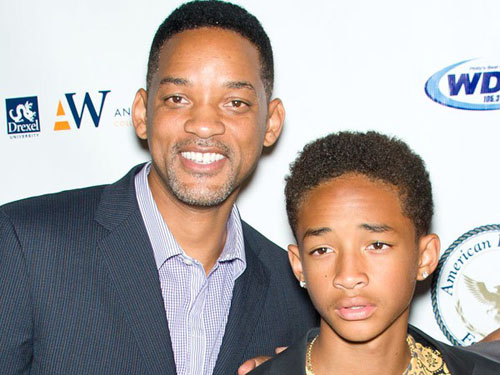
Why Reactions Were So Strong
The strongest reactions to images like this often have less to do with the clothing itself and more to do with what the clothing represents.
People bring their own assumptions to what they see.
For one viewer, the image might represent creativity and confidence. For another, it might seem unnecessarily provocative. Someone else might simply see two people enjoying fashion.
That difference is important because photographs do not exist in isolation.
They interact with the expectations people have already absorbed from family, culture, media, and society.
When an image challenges those expectations, the reaction can be surprisingly emotional.
People may laugh because they are uncomfortable. Others may criticize because the image challenges something familiar. Still others may celebrate it because they recognize a freedom they wish they had experienced themselves.
In that sense, the photograph became almost like a mirror.
It revealed more than the people standing in front of the camera. It revealed the expectations of the people looking at them.
Redefining What Strength Looks Like
For years, popular culture has often relied on a narrow visual vocabulary for masculinity.
Broad shoulders.
Serious expressions.
Traditional suits.
Muted colors.
Controlled emotions.
A certain kind of physical presence.
But strength has never belonged exclusively to one aesthetic.
Confidence can look elegant.
Strength can look gentle.
Masculinity can exist alongside creativity.
And style can be playful without becoming meaningless.
The photograph challenged the assumption that a man has to choose between being respected and being expressive.
Perhaps the more interesting question is why such a choice was ever considered necessary.
Why should a man have to sacrifice softness to be taken seriously?
Why should fashion be treated as a threat to masculinity?
Why should vulnerability automatically be interpreted as weakness?
And why should self-expression require approval?
Those questions remain relevant far beyond one image.
The Power of Being Unapologetically Yourself
The lasting impact of moments like this does not necessarily come from changing everyone's mind.
It comes from showing that another possibility exists.
Someone watching that photograph might see a father and son wearing bold clothes.
Someone else might see confidence.
Another person might see rebellion.
And someone who has spent years worrying about whether they are “masculine enough” might simply see permission to relax.
Permission to experiment.
Permission to wear something they genuinely like.
Permission to be softer.
Permission to be different.
Permission to stop performing for an imaginary audience.
That may be the most powerful part of the entire moment.
The image did not need to be a speech or a political statement. It did not need a long explanation.
Sometimes a photograph can communicate an idea simply by refusing to conform.
The Rules Were Never as Permanent as They Seemed
Perhaps the biggest realization hidden inside the photograph is that many of the “rules” surrounding masculinity are not universal truths.
They are cultural expectations.
And cultural expectations can change.
What one generation considers unusual can become completely ordinary to the next. Fashion evolves. Social attitudes shift. Definitions of identity become more expansive. People begin questioning traditions that once seemed untouchable.
That does not mean everyone has to dress the same way or share the same definition of masculinity.
Quite the opposite.
The point is that people should have room to define themselves without automatically being forced into a narrow category.
For Will and Jaden, the photograph became one visible example of that freedom.
Not because the clothes were revolutionary on their own, but because the confidence behind the choice was impossible to ignore.
A Photo That Asked a Bigger Question
Long after the initial reactions disappeared, the image still carried one simple question:
Who would you be if you stopped dressing, behaving, and presenting yourself entirely for other people's comfort?
That question extends beyond fashion.
It applies to the way people speak, love, create, express emotion, raise children, build relationships, and move through the world.
The photograph became memorable not because everyone agreed with it, but because it gave people something to debate.
It challenged assumptions.
It created discomfort.
It inspired admiration.
And ultimately, it reminded viewers that identity does not have to fit neatly inside someone else's definition.
Maybe that was the real statement behind the outfits.
Not that everyone should dress the same way.
Not that traditional masculinity should disappear.
But that strength and softness can exist in the same person. Confidence does not require conformity. And self-expression does not become less valuable simply because someone else does not understand it.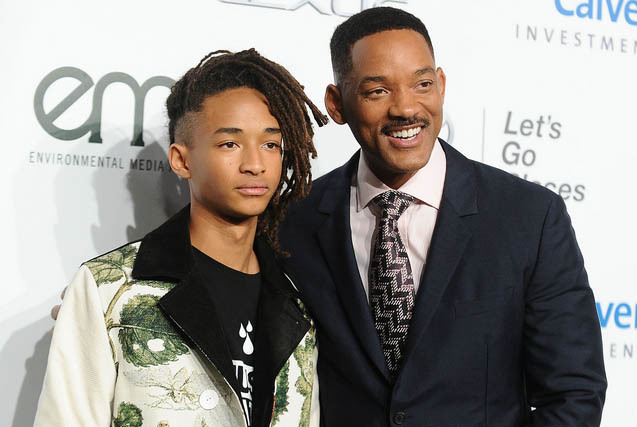
The clothes caught attention.
The relationship between father and son gave the image warmth.