Why the incident mattered to the investigation
The April incident changed the nature of the reported case.
Repeated messages can be difficult to assess without context. A large volume of communication may be disturbing, but investigators still need to examine its content, frequency, history, and relationship to other conduct.
An alleged unauthorized entry into a home introduces a separate and concrete concern.
It can help establish that the situation involved more than digital communication. It may also provide evidence relevant to whether the recipient's privacy and safety were being repeatedly violated.
The police statement records the residential trespass charge and later threatening messages. It does not suggest that the case was limited to a misunderstanding after a date.
The Scottsdale business incident
The police account describes another incident on May 4, 2018.
Scottsdale police were called to a business after a woman was reportedly behaving irrationally and claiming to be the business owner's wife. Officers contacted Ades and were told that she claimed to be married to the owner, who was the same man involved in the Paradise Valley residential trespass case.
She was removed from the business property.
This detail is important because it shows how the reported conduct extended into the man's professional life.
A person who is being stalked may worry not only about their home but also about their workplace, colleagues, customers, and reputation. An unwanted appearance at a business can disrupt work and place other people in an uncomfortable position.
It can also create practical concerns. Staff may not know whether to intervene, whether the visitor has a legitimate reason to be there, or whether the situation could become dangerous.
The May 8 arrest
After learning about the Scottsdale incident, Paradise Valley investigators began searching for Ades. The department said she was located in Phoenix on May 8, 2018, and taken into custody without incident.
The press release stated that charges of threatening and intimidating, stalking, and harassment were filed. It also said she was booked on a failure-to-appear warrant connected to the original residential trespass case.
This is the point at which the case became widely known beyond the local community.
The arrest did not mean that every allegation had been proven. It meant that law enforcement had taken action and filed charges. Ades was entitled to the legal presumption of innocence and the opportunity to respond through the court process.
The distinction remains important even in a case involving disturbing allegations.
Why the story became national news
The combination of a single reported date, an extraordinary number of messages, threats, a home entry, and an arrest created a story that attracted widespread attention.
The figure of 159,000 messages was especially striking. But the broader pattern was what made the case so serious.
The story also challenged familiar assumptions about stalking. Popular culture often portrays stalking as something committed by a former partner or someone who has been in a long-term relationship with the victim.
This case involved two people who reportedly met through an online dating platform and had only a limited romantic encounter.
It showed that repeated unwanted pursuit can occur even when there has been no established relationship.
A first date does not create a continuing obligation. A brief romantic interaction does not grant someone access to another person's home, workplace, or private life.
Chapter 4: The Human Impact of Digital Stalking
The number of messages is shocking, but the human impact is harder to measure.
A person receiving persistent unwanted contact may feel that their privacy has disappeared. Their phone, which once connected them to friends and family, becomes a source of stress. Their home may no longer feel completely secure. Their workplace may become another location where they fear an unexpected encounter.
The impact can extend well beyond the moment a message arrives.
The constant expectation of another message
Repeated unwanted communication can create a sense of anticipation.
The recipient may begin checking their phone more often, not because they want to communicate, but because they want to know whether the contact has escalated. They may feel anxious when an unfamiliar number appears or when a social media account receives a new follow request.
Even when notifications are turned off, the uncertainty can remain.
The person may wonder whether the sender has moved to another platform, created another account, or contacted someone they know.
This constant vigilance can make it difficult to relax.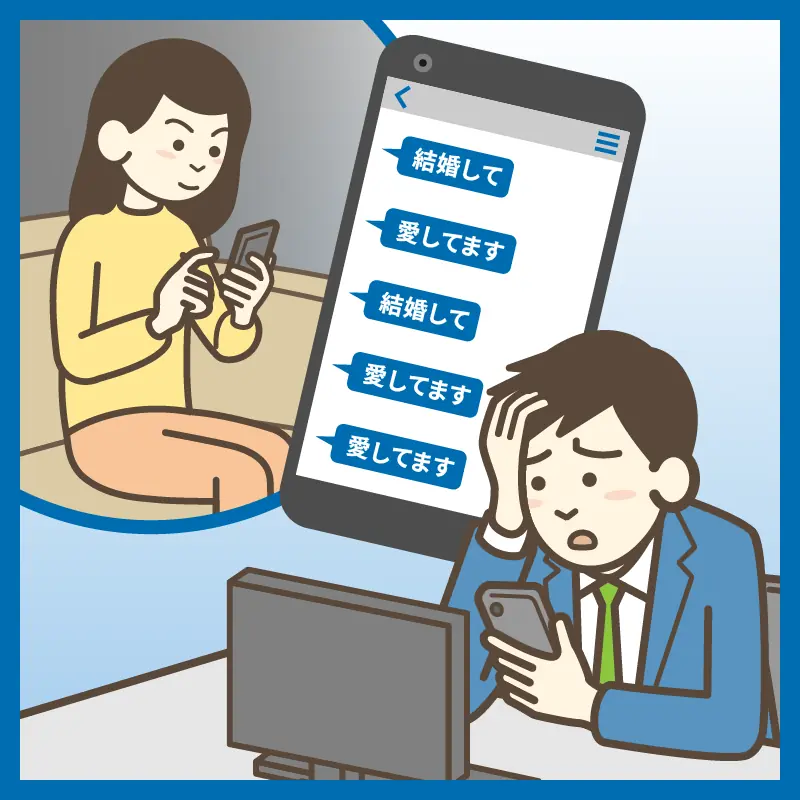
How stalking can affect sleep and concentration
Persistent harassment can interfere with everyday functioning.
Someone who is worried about being contacted may struggle to concentrate at work, sleep normally, or enjoy social activities. They may spend time documenting messages, changing privacy settings, speaking with police, or explaining the situation to people around them.
The time and attention required to manage unwanted contact can become a burden in itself.
A person may also feel embarrassed about the situation, even though they are not responsible for another person's behaviour.
This is one reason support from friends, relatives, employers, and professional services can be important.
Why people sometimes remain silent
Not everyone who experiences stalking immediately reports it.
Some people fear that authorities will not take them seriously. Others worry that reporting will provoke the sender or make the situation worse. Some may feel embarrassed because the contact began through dating or a social relationship.
There can also be uncertainty about whether the behaviour is serious enough to report.
The Ades case illustrates why repeated unwanted contact should not be dismissed simply because the sender and recipient once met socially.
A person does not have to wait for physical violence before seeking help. Threats, repeated unwanted messages, monitoring, and unwanted appearances may all be relevant to a stalking report.
The importance of believing the recipient
When someone describes being stalked, the response from others can make a difference.
Friends may be tempted to say that the sender is simply lonely, that the recipient should answer one final time, or that the behaviour will eventually stop.
But minimizing repeated unwanted contact can leave the recipient feeling isolated.
A better response is to listen, ask what support is needed, and avoid pressuring the person into direct contact.
If the recipient feels unsafe, help them consider practical safety steps and professional advice. Do not confront the alleged stalker yourself if doing so could increase risk.
The wider effect on family and colleagues
Stalking can affect more than the person receiving the messages.
Family members may worry about safety. Friends may be asked to screen calls or accompany someone when travelling. Colleagues may need to respond if an unwanted person appears at the workplace.
In the Arizona case, police described incidents at both the man's residence and his business. That suggests the reported conduct affected more than one part of his daily life.
When a person's home and workplace become connected to an ongoing harassment situation, the feeling of having a safe place to retreat can be undermined.
Digital contact can make harassment difficult to escape
Traditional forms of stalking may involve following someone physically or appearing at places they regularly visit. Digital communication adds another dimension.
A person can send messages from almost anywhere, at any hour. They can create new accounts, use different platforms, or contact someone through mutual acquaintances.
The eSafety Commissioner explains that cyberstalking can include repeated unwanted messages, monitoring online activity, and using location technology to track a person.
This means that blocking one account may not always end the problem.
Digital safety may require reviewing privacy settings, limiting who can see personal information, checking location-sharing permissions, and preserving evidence of repeated contact.
Why the recipient should not be blamed
A recurring problem in stalking cases is the tendency to question the recipient's choices.
People may ask why they went on the date, why they shared a phone number, why they did not block the sender sooner, or why they did not move.