Yellow, Moldy Pillow Filling? A Simple Soaking Method Can Restore It Like New
Pillows are items we use every single day, yet they are often overlooked during routine cleaning. Over time, the inner filling of pillows can turn yellow, develop tiny mold-like spots, and emit unpleasant odors. Many people try washing the pillow with regular laundry detergent, only to discover that the stains remain unchanged.
Cleaning experts now reveal a surprisingly effective method: a soaking solution that can lift stubborn stains, kill mold spores, and restore pillow stuffing to a fresh, clean state — even if it has been heavily soiled for years.
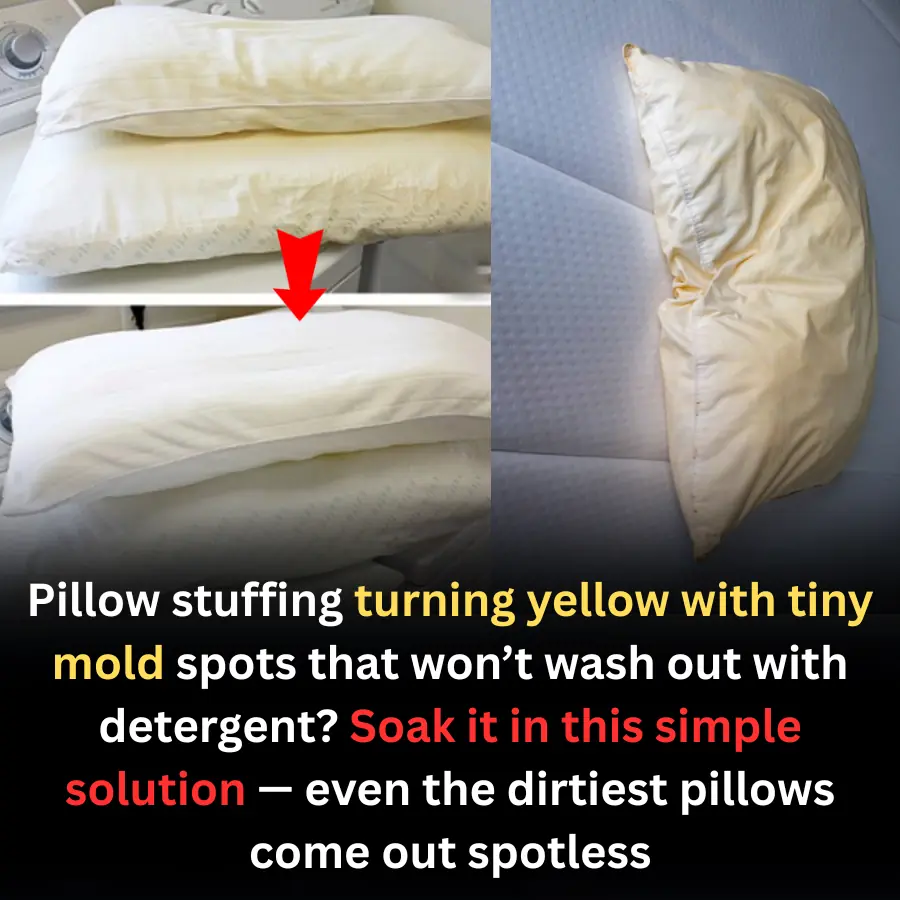
Why Pillow Filling Turns Yellow or Moldy
According to household hygiene specialists, several common factors cause pillow stuffing to discolor or develop spots:
-
Sweat and body oils seeping through pillowcases over time
-
Humidity in the bedroom, allowing mold spores to grow
-
Not drying pillows completely after washing
-
Dust mites and bacteria trapped in the fibers
These stains often bind into the pillow material, making them resistant to ordinary detergents.
The Soaking Method That Cleans Even the Worst Pillows
Experts recommend a powerful but safe cleaning formula using inexpensive household ingredients. This soaking solution works by breaking down oils, dissolving buildup, and killing mold spores.
Ingredients Needed
-
Warm water
-
Baking soda
-
White vinegar
-
A mild oxygen-based cleanser (optional for stubborn stains)
How to Clean the Pillow Filling
-
Fill a large basin or bathtub with warm water.
-
Add ½ cup of baking soda and 1 cup of white vinegar. The mixture will fizz — this reaction helps lift grime and mold.
-
Submerge the pillow thoroughly, pressing gently to allow the solution to reach deep inside the filling.
-
Soak for 1–2 hours. For pillows with heavy yellowing or mold spots, extend the soaking time to 3 hours.
-
Rinse multiple times with clean water.
-
Dry completely in sunlight or use a dryer at low heat. Moisture left behind may encourage mold to return.
After drying, the pillow will look significantly brighter, feel softer, and smell fresh — often like new.
Why This Method Works
-
Baking soda neutralizes odors and loosens embedded dirt.
-
Vinegar kills bacteria and mold spores while breaking down oils.
-
Oxygen-based cleaners (if added) help lift old yellow stains without damaging the fabric.
This combination is far more effective than using laundry detergent alone.
When to Replace a Pillow Instead of Cleaning It
Even with deep cleaning, pillows should not be used indefinitely. Experts advise replacing pillows every 1–2 years if you notice:
-
Persistent odors
-
Lumps in the filling
-
Flattened shape
-
Mold returning frequently
Clean pillows play an important role in preventing allergies, improving sleep quality, and protecting respiratory health.
Final Advice
A moldy, yellow pillow is not just unpleasant — it can also affect your long-term health. Fortunately, with the right cleaning technique, most pillows can be restored easily and inexpensively.
This simple soaking solution has helped many households rescue pillows they thought were beyond saving. Now, instead of throwing them away, you can refresh them to a near-new state — safely and effectively.