CHAPTER 1 — THE SMALL CHANGE THAT COULD MAKE A BIG DIFFERENCE
For many women, the first sign that something may be wrong with their breast health is not dramatic. It may not involve pain, sudden illness, or a symptom that immediately sends them to the hospital. Instead, it could be something so subtle that they barely notice it at first—a small lump, a slight change in shape, an unusual area of skin, or a difference that appears when they are getting dressed in the morning.
That is one reason breast cancer awareness remains so important.
Breast cancer does not always announce itself in a way that is easy to recognize. Some women notice a lump. Others experience changes in the nipple or skin. Some discover an abnormality during a routine mammogram before they feel anything unusual. In certain cases, there may be no noticeable symptoms at all during the early stages.
The challenge is that many breast changes are completely benign.
A lump may be caused by a cyst, hormonal changes, fibroadenoma, or another noncancerous condition. Breast tenderness may occur during the menstrual cycle. Changes in breast size or sensitivity can happen during pregnancy, breastfeeding, or menopause.
But because certain changes can also be associated with breast cancer, knowing what is unusual for your own body can make an important difference.
The goal is not to make women afraid of every small change. It is to encourage them to pay attention rather than dismiss something that persists, progresses, or feels distinctly different.
Imagine noticing a small area of thickening in one breast while showering. At first, you may assume it is related to your menstrual cycle. You might wait a few days, expecting it to disappear. If it remains, you may wonder whether it is worth making an appointment.
Many women face exactly this kind of uncertainty.
They may worry about wasting a doctor's time. They may feel embarrassed discussing changes in their breasts. They may fear what an examination could reveal and postpone seeking medical advice because they would rather not think about the possibility of cancer.
Yet early evaluation can provide something incredibly valuable: clarity.
A medical professional can determine whether the change appears benign, requires additional imaging, or needs further investigation. Depending on the person's age, symptoms, medical history, and examination findings, evaluation may include a clinical breast examination, ultrasound, mammography, or other testing.
Breast cancer is not one single disease. It includes different types that may develop and behave differently. Some grow slowly, while others can be more aggressive. Treatment and prognosis depend on factors such as the type of cancer, stage, tumor characteristics, and overall health.
This is why recognizing a possible warning sign should never be followed by self-diagnosis.
A symptom does not automatically mean cancer.
But a symptom that is new, persistent, unexplained, or worsening deserves attention.
There are ten breast changes that women should understand—not because every one of them signals a dangerous disease, but because recognizing them can help people know when to seek medical advice.
Some may be obvious.
Others may be subtle enough to overlook.
And the first sign may not be a lump at all.
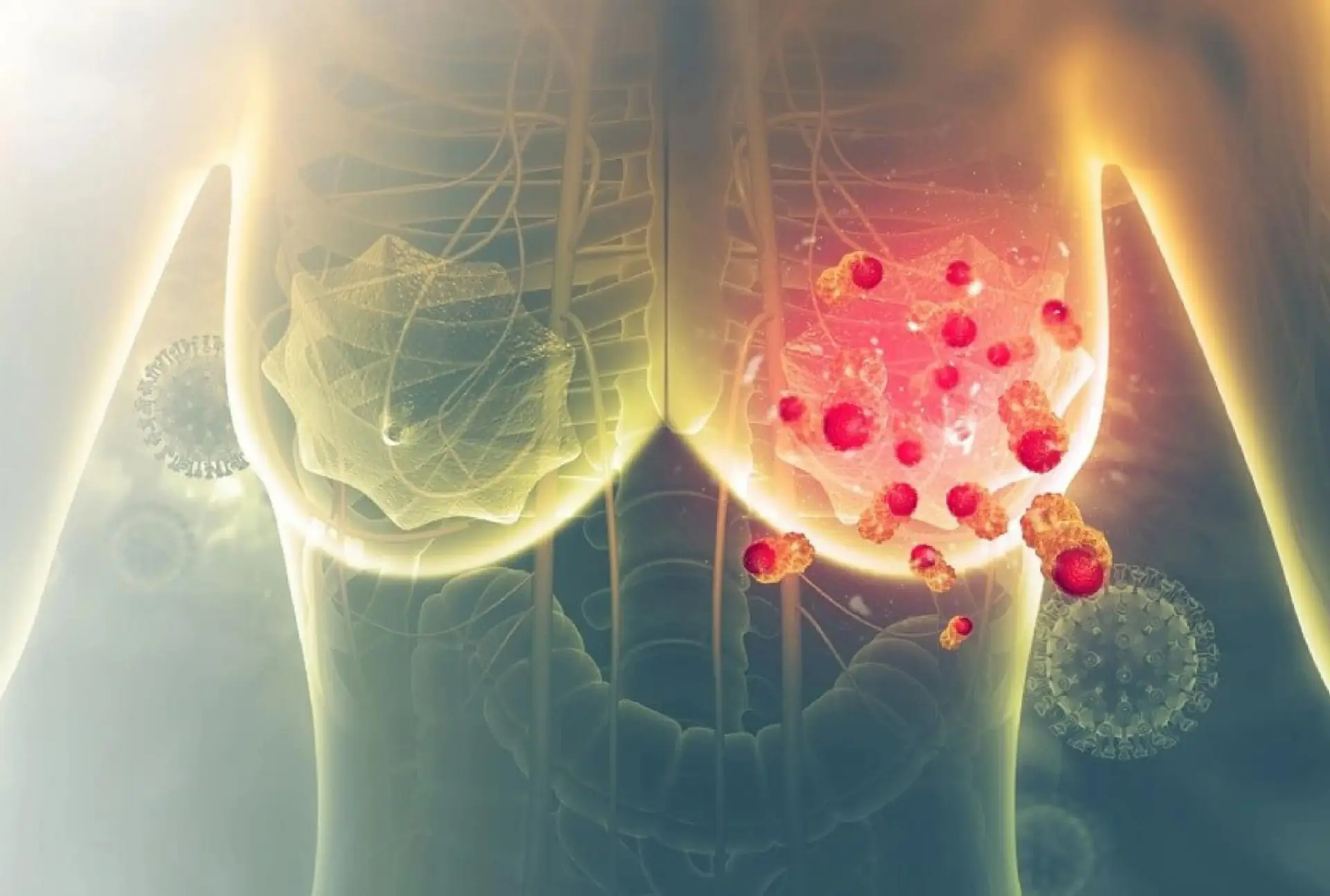
CHAPTER 2 — THE FIRST FIVE WARNING SIGNS THAT MAY BE EASY TO OVERLOOK
1. A NEW LUMP OR THICKENED AREA
A new lump in the breast is one of the most widely recognized possible signs of breast cancer. Yet not every lump is dangerous, and not every cancer presents as a clearly defined mass.
Some lumps feel hard. Others are soft, round, movable, or tender. A lump may appear near the nipple, deeper inside the breast, or close to the armpit. In some cases, a woman may notice an area that simply feels thicker than the surrounding tissue.
Breast tissue naturally changes throughout life. Hormonal fluctuations can cause temporary swelling or tenderness, particularly around menstruation. Benign cysts and fibroadenomas can also create lumps that may be discovered during a self-examination or routine medical visit.
The important distinction is whether the change is new or unusual for that person.
A lump that persists, grows, feels different from surrounding tissue, or appears without an obvious explanation should be evaluated by a healthcare professional. Even a lump that is painless deserves attention.
Pain is not a reliable way to determine whether a lump is harmless.
Some benign lumps hurt. Some cancerous lumps do not.
If a new lump appears, do not repeatedly press or squeeze it in an attempt to determine what it is. Arrange an appropriate medical evaluation instead.
2. A CHANGE IN BREAST SIZE OR SHAPE
Breasts are not perfectly symmetrical. Many women naturally have one breast that is slightly larger than the other. Changes can also occur because of pregnancy, weight fluctuations, hormonal shifts, aging, or breastfeeding.
However, a new and unexplained change in the size or shape of one breast may be worth investigating.
One breast may appear swollen. The shape may seem different when looking in the mirror. A previously subtle difference may become more noticeable. In some cases, the breast may appear to have changed in a specific area rather than becoming larger overall.
The key is recognizing a change that is unusual compared with the person's normal appearance.
A sudden difference does not automatically indicate cancer. Inflammation, infection, fluid accumulation, hormonal changes, and other conditions can produce similar effects.