These Are the Consequences of Sleeping With Your Cell Phone: How Nighttime Notifications Can Wreck Your Sleep
A phone beside your pillow may seem harmless, but its light, alerts, and endless stream of updates can quietly interfere with the rest your body needs.
You turn off the bedroom light, settle beneath the covers, and tell yourself you will check your phone for just one minute. A message appears. You answer it. Then a social media notification catches your attention, followed by a short video that looks interesting enough to watch before closing your eyes. Before you realize it, another twenty minutes have passed.
Eventually, you put the phone down and try to sleep. But your mind does not immediately become quiet. You begin thinking about the message you received, wondering whether someone has replied, or remembering a headline you just read. Even when your eyes feel heavy, your thoughts continue moving.
For many people, this is no longer an occasional habit. It has become part of the nightly routine: the phone goes into bed with them, stays within reach throughout the night, and is often the first thing they touch in the morning.
The consequences may be more significant than simply losing a few minutes of sleep. Bright screens can interfere with the body's natural evening signals, stimulating content can keep the brain engaged, and notifications may interrupt sleep after a person has already drifted off. Repeated over time, these habits can leave people feeling tired, distracted, and less emotionally refreshed during the day.
The surprising part is that the problem is not necessarily one dramatic event. It can develop through a series of small interruptions that seem too ordinary to notice. A quick glance at a notification, a few extra minutes of scrolling, or a phone vibrating beside the pillow may each appear insignificant. Together, however, they can make it harder to establish a healthy boundary between waking life and sleep.
So what actually happens when a phone becomes the final companion of the night? Is the screen light responsible, or are notifications and online content just as important? And can keeping a smartphone near the bed affect sleep even when its owner does not actively use it?
Understanding these questions is the first step toward changing a habit that millions of people have come to accept as normal.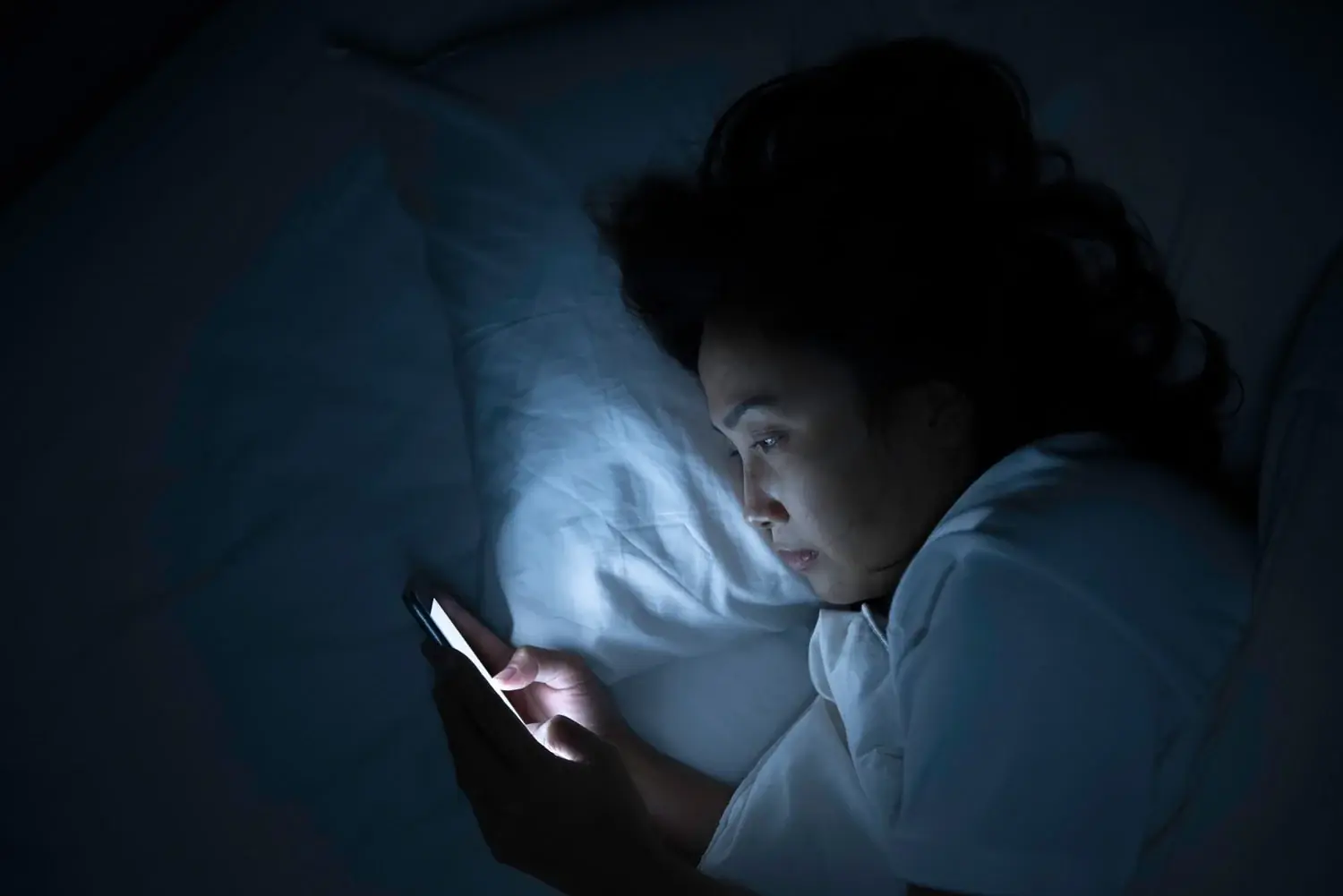
Chapter 1: Why Sleeping With Your Phone Can Keep Your Brain Awake
The bedtime habit that slowly takes over the evening
Smartphones have made communication, entertainment, and information available at almost every moment of the day. People use them to work, study, shop, watch videos, read news, speak with family, and maintain friendships. Because the device is so deeply connected to everyday life, it is understandable that many people bring it into the bedroom.
For some, the phone is an alarm clock. Others keep it nearby because they are waiting for an important message or want to remain available in case a family member needs help. Many simply enjoy browsing social media while lying comfortably in bed.
The difficulty begins when the phone stops being an occasional tool and becomes the center of the bedtime routine.
A person may initially intend to check only one message. However, modern applications are designed to present new information continuously. A single notification can lead to another conversation, a recommended video, a news update, or a post that encourages further browsing.
This creates a pattern in which bedtime is repeatedly delayed. The person may feel that they are relaxing because they are lying down, but their attention remains focused on changing information.
The distinction matters. Physical rest and mental relaxation are not necessarily the same thing. A person can be lying motionless while their brain is still processing conversations, images, decisions, and emotional reactions.
When this happens close to bedtime, the transition from an active day to a restful night may become more difficult.
How screen light interacts with the body's sleep signals
The human body follows an internal timing system known as the circadian rhythm. This roughly 24-hour cycle helps coordinate sleepiness, alertness, body temperature, hormone release, and many other biological processes.
Light is one of the most important signals that helps regulate this rhythm. During the day, natural light supports alertness. As evening approaches and the environment becomes darker, the body begins preparing for sleep.
One important part of this process involves melatonin, a hormone produced by the brain's pineal gland. Melatonin helps signal that nighttime has arrived. Its release is influenced by the light-dark cycle, although it is not the only factor controlling sleep.
Smartphone screens emit visible light, including short-wavelength light often described as blue light. Exposure to light in the evening can influence the body's biological timing and may suppress or delay the normal rise in melatonin.
The size of this effect depends on several factors, including screen brightness, the distance between the device and the eyes, how long the person looks at it, and the time of evening when exposure occurs.
This does not mean that every brief glance at a phone will prevent someone from sleeping. The concern is more relevant when a person spends a long time looking at a bright screen in a dark room, particularly when this happens regularly.
The contrast can be especially noticeable when someone turns off the bedroom lights but continues browsing with a bright display close to their face. Their surroundings suggest that it is time to rest, while the illuminated screen continues providing a source of visual stimulation.
Night mode and reduced brightness may make a screen more comfortable to view, but they do not remove every possible effect of nighttime phone use. The activity itself, the content being viewed, and the time spent on the device still matter.
Why notifications make it difficult to switch off
Light is only one part of the problem. Notifications can create a different kind of disruption by repeatedly directing attention toward something new.
A message notification may prompt a person to wonder who sent it. A vibration may create an immediate urge to check the screen. Even when the alert is not important, the possibility that it might contain something meaningful can be enough to draw attention away from relaxation.
This response is connected to anticipation. People often feel compelled to check a device because they do not know what information is waiting for them.
The message could be from a friend, a family member, a colleague, or someone they have been expecting to hear from. It could also be an ordinary application update. The uncertainty encourages checking.
Once the phone is unlocked, the original notification may lead to more activity. A person who intended to read one message might discover several missed updates and decide to respond to them immediately.
The result is a cycle:
-
An alert attracts attention.
-
The user checks the phone.
-
New information creates additional interest or concern.
-
The user continues interacting with the device.
-
Bedtime becomes delayed, and the mind remains engaged.
This cycle can be particularly difficult to interrupt because it does not always feel like a deliberate decision. People may open applications automatically, almost without thinking.
Emotional content can be more stimulating than the screen itself
Imagine reading a stressful message just before closing your eyes. Perhaps it concerns a disagreement, an unfinished task, a financial worry, or a family problem. Even after putting the phone away, you may continue thinking about what happened.
The same can occur after reading disturbing news, watching an intense video, or becoming involved in an online argument.
The brain does not necessarily stop processing emotionally significant information when the screen goes dark. Thoughts can continue, and the body may remain more alert than it would after a calm bedtime routine.